

Private Capital · Nov 22, 2026 · 41m · 30m saved
With Paul Desmarais III, Founder and CEO of Sagard
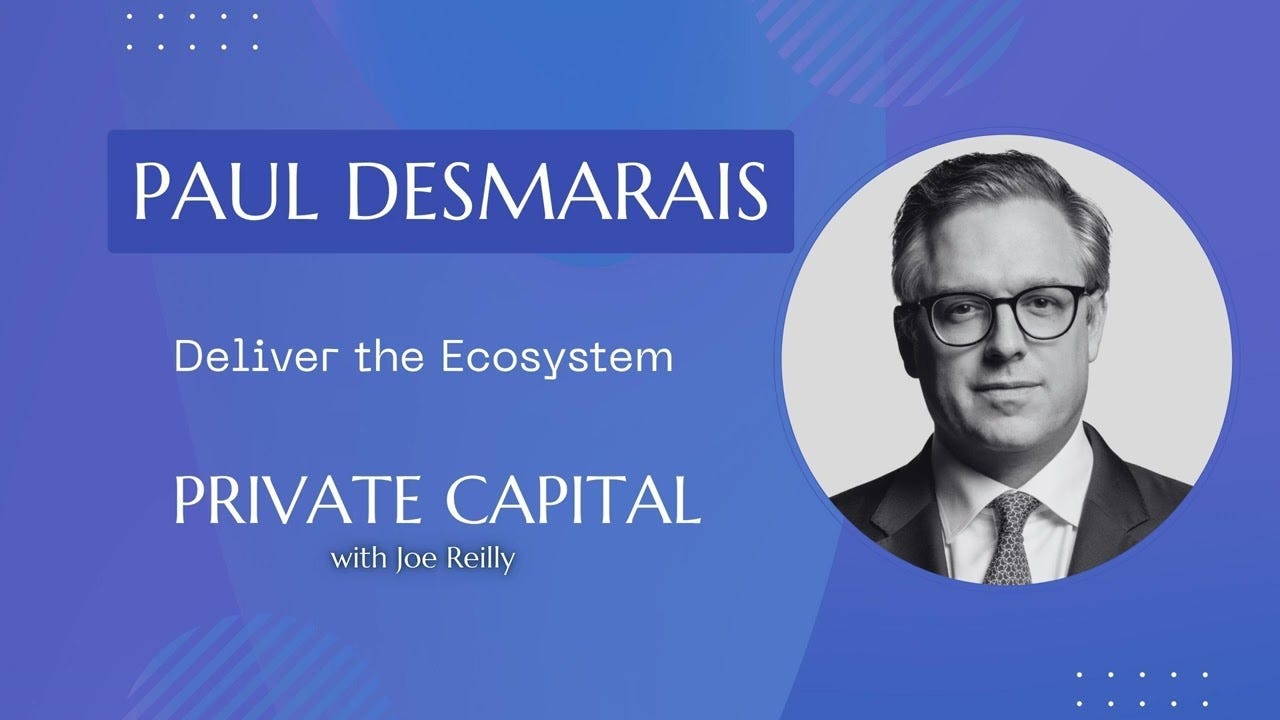
Paul Desmarais III, founder and CEO of Sagard, told Joe Reilly on Private Capital that he started the firm in 2016 with no clients and no team, and that it now manages more than $50 billion across 24 strategies.
Large asset managers tend to sell scale and a single investment process. Paul's pitch to allocators is the opposite: specialist teams in the gaps the biggest platforms leave, with a large share of each fund's money coming from Sagard's own side.
"For most of our strategies, between 10 and 20% of the capital in the strategy comes either from our teams, our shareholders, or my family businesses. That is a level of alignment that is very different from most of the industry." — Paul Desmarais III
Paul is the third generation of a family that built one of Canada's largest holding companies, and he learned to invest across a company's capital structure at Goldman Sachs before founding Sagard.
The full interview is covered here so you can skip it. 41 minutes of audio, 11 minutes of reading.
Here are the 14 principles that matter.
Key Takeaways
The family is "a family in business," not a family business, so it sold its biggest asset before it declined
Sagard's first deal, a chain of fertility clinics, went bankrupt because Paul never spent time with the doctors
Sagard hit its 2023 asset goal in two years instead of five
Founding teams at Sagard's venture studio get 70% of the economics up front
Sagard's credit funds hold none of the software and data-center loans that fill most private-credit books
10–20% of the capital in most Sagard strategies comes from its teams, shareholders or the family
Paul assigns office seats so that teams with overlapping deals run into each other
1. A Bankrupt Bus Line
Joe Reilly, who heads Circulus Group and hosts Private Capital, started with the family's history. Paul traced it to his great-grandfather's bus line in Sudbury, Northern Ontario, which had gone bankrupt.
Paul Desmarais III says his grandfather took over a bankrupt bus line to save the family house
"My grandfather was in his early 20s. In order to save the family house, he took that business over, took over the liabilities, and showed up at work... He gets in the bus, hits the gas, goes into reverse instead of forward, and drives the bus into the grease pit. Great lesson in humility." — Paul Desmarais III
His grandfather inherited a walkout by senior staff and a strike by drivers. He paid for the turnaround with loans from his parish priest and from Inco, the nickel miner that needed the buses to get workers to its mine.
From that base he built one of Canada's largest holding companies. He bought newspapers, radio stations, a shipping line and what became Great-West Life and IGM, borrowing heavily at a time when bank interest rates were capped.
