

Pioneers of AI · Nov 9, 2026 · 1h 7m · 58m saved
With Meredith Whittaker, President of Signal · Neil Chilson, Head of AI Policy at the Abundance Institute
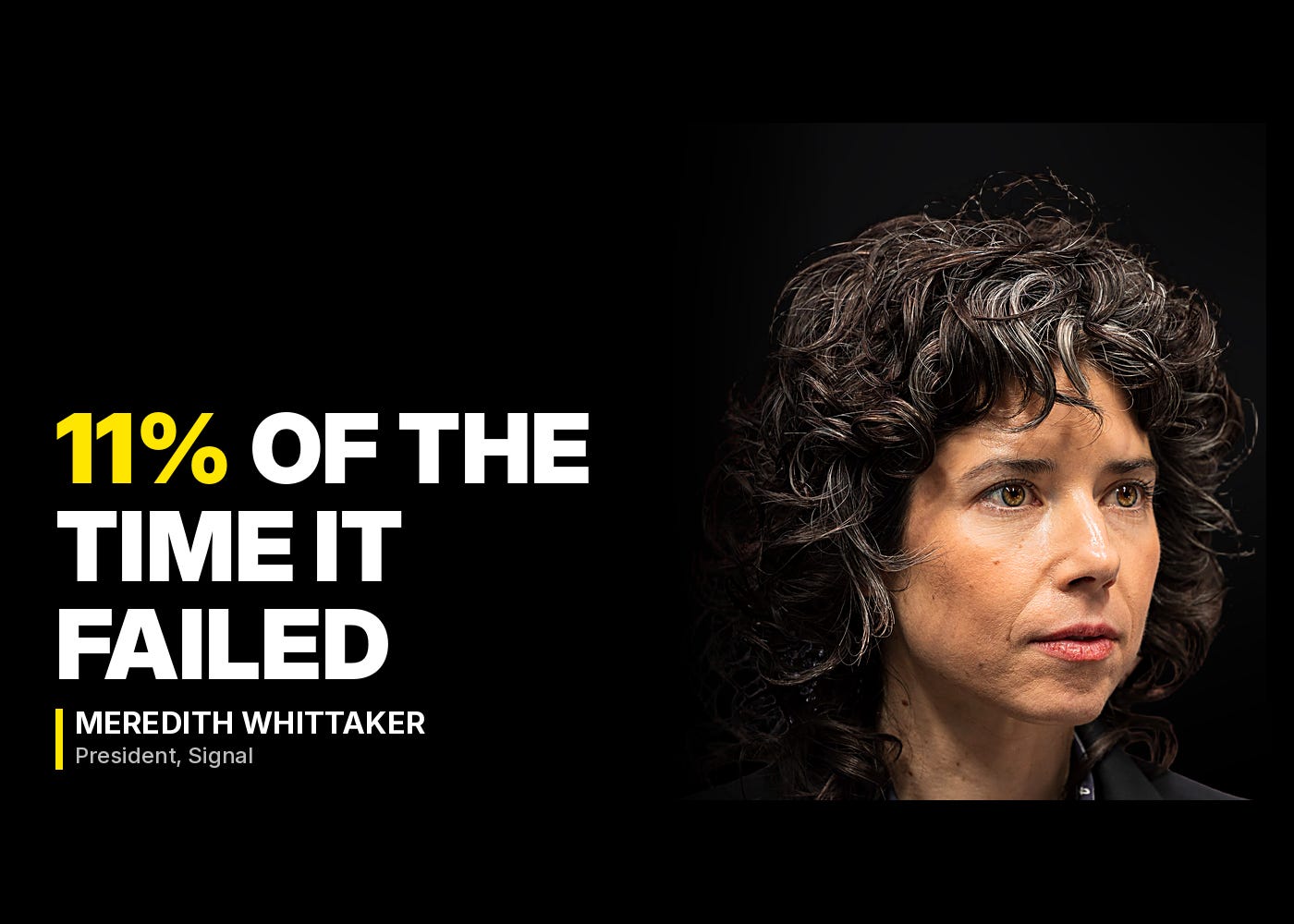
Photo: Martin Kraft, CC BY-SA 4.0 via Wikipedia
Anthropic's own testing found that a Claude agent running in Chrome still fell for prompt injection 11% of the time with guardrails on. Meredith Whittaker, president of Signal, put that figure at the center of her case in an Open to Debate program on Pioneers of AI, arguing that people should stop trusting AI agents with their information. Most of the industry treats agent security as a problem it will patch. Meredith argued the flaw is in how the agents are built.
"11% of the time with these guard rails, it failed. So why would we trust it now?" — Meredith Whittaker
Meredith runs a messaging app that people use where a leak can cost a life, and she started at Google in 2006. Neil Chilson, head of AI policy at the Abundance Institute and a former chief technologist at the FTC, argued the other side: that agents only need to beat a status quo that already leaves most people unprotected. The debate was recorded live at the Masters of Scale Summit in San Francisco on October 22 and cross-posted to the Pioneers of AI feed.
The full episode is covered here so you can skip it. 67 minutes of audio, 9 minutes of reading.
Here are the 11 arguments that matter.
Key Takeaways
Even with guardrails, Anthropic's Claude agent failed 11% of the time against prompt injection
Agents need root access to be useful, and Meredith says that access breaks the sandboxing apps rely on
Meta's Muse gave a stranger a user's home address, in a case Meredith cited
Chase Bank has blocked Muse because it cannot tell a real user from a hijacked agent
Neil Chilson opted out of five data brokers with a six-word prompt
There is no such thing as 100% safety, Neil says, so the test is whether agents beat today's internet
Meredith asks people to trust code they can inspect, not a company's promises
1. Did We Choose Agents?
The resolution asked whether we should stop trusting AI agents with our information. Jeff Berman, co-host of Masters of Scale, moderated on stage. Meredith argued yes, and opened by questioning whether anyone had decided to trust agents at all.
Meredith Whittaker says people use agents because they need to, not because they chose to trust them
Her point was that reliance is not the same as trust, so the question of whether to keep trusting agents assumes a choice most users never made. She grounded her stake in her own job. Signal's users rely on it in places where privacy is a safety issue, not a preference.
"I run Signal and my job is pretty serious. I need to protect people's data because they use Signal for privacy in contexts where it's often a life or death situation." — Meredith Whittaker
