

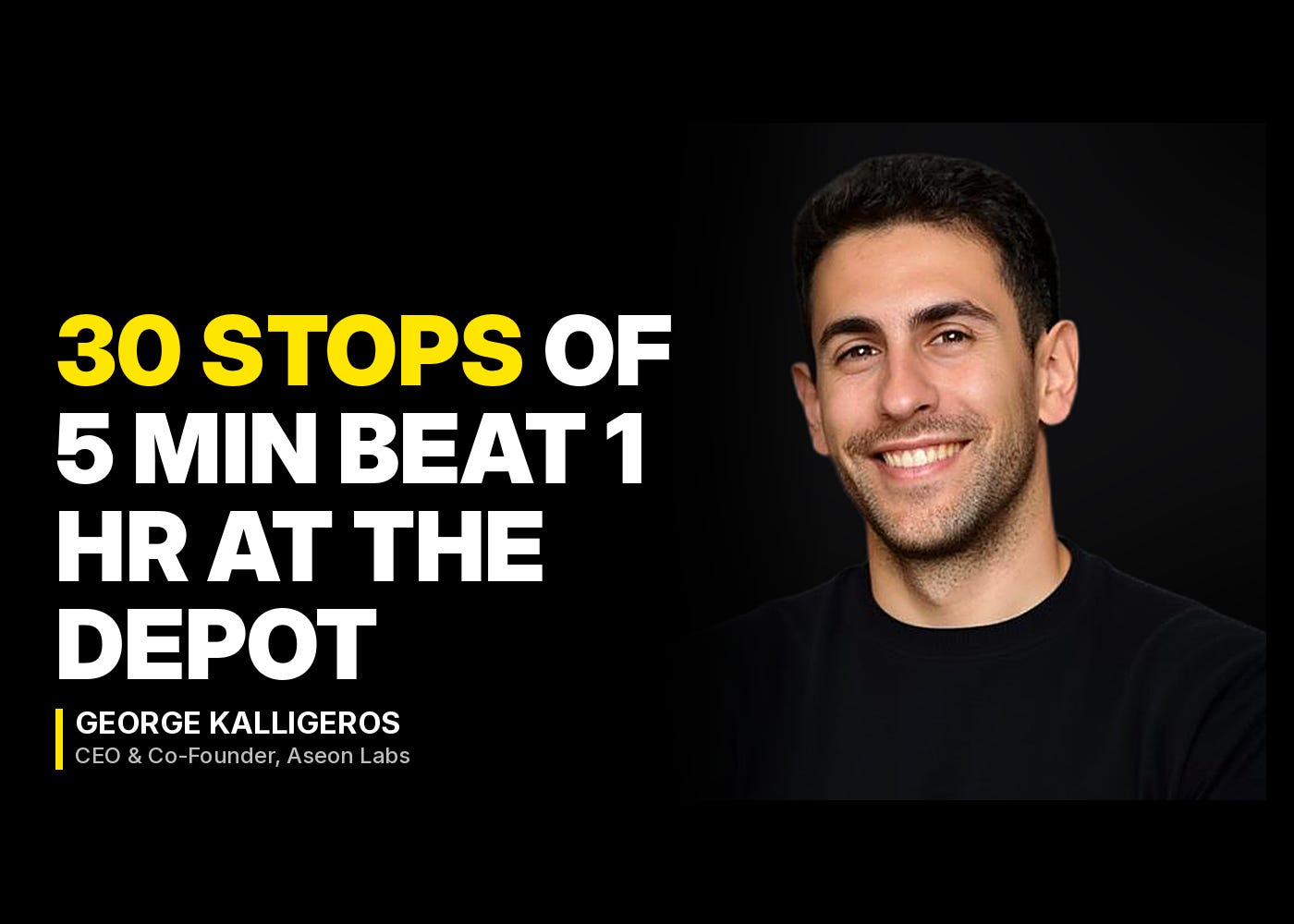
Photo via fastcompany.com
A robotaxi that spends an hour at a depot every visit earns nothing for that hour, and George Kalligeros, co-founder and CEO of Aseon Labs, told Semafor's Future Proof that his company's robotic pods cut each servicing stop to about five minutes instead.
Most fleet operators still pull cars back to large central depots to be charged, cleaned and inspected, a model George said was borrowed from an earlier decade. Aseon wants to bring the servicing to the cars, in short stops spread through the day near where they already pick up riders.
"Instead of having the car at the depot for an hour at a time, we in fact have designed a system where we have the car for five minutes, thirty times a day."
George, a hardware engineer whose first job was at Tesla in Palo Alto, is a second-time founder who went through Y Combinator with his co-founder to build Aseon as a Silicon Valley company.
The full interview is covered here so you can skip it. 54 minutes of audio, 7 minutes of reading.
Here are the 8 insights that matter.
Semafor · Oct 28, 2026 · 54m · 47m saved
With George Kalligeros, Co-Founder and CEO of Aseon Labs
Key Takeaways
Aseon services a robotaxi in five-minute stops, about 30 a day, instead of one hour-long depot visit
Daily servicing of a robotaxi fleet cannot be eliminated, only redesigned
Parking idle robotaxis at the curb will get more expensive, as cities run short of curb space
Aseon's robotic arms need classical robotics, not humanoid-level AI
Vision-guided path planning does the work
Aseon spends about $30K per person per month on AI tools, which George said compressed 20 people's work into 2
A new robotaxi model can be onboarded in about a week, by running millions of simulated cleaning operations first
With robotics no longer the constraint, finding space for the pods in dense cities becomes the hard part, in Reed Albergotti's reading
1. Servicing Can't Be Avoided
Reed Albergotti, Semafor's technology editor, who hosts Future Proof, opened on a suspicion: the self-driving car could end up employing more people than the human-driven taxi system it replaces. Keeping a robotaxi fleet clean, charged and inspected takes constant physical work at central depots.
George agrees that daily servicing of a robotaxi fleet is permanent
"Daily operations for a robo-taxi fleet is a necessary evil — you have to replenish energy, inspect the vehicles, clean the car, and do physical operations on it. That's not going to go away." — George Kalligeros
His objection is to how that work is done. The depot model takes cars out of paid service for long stretches at a time, which is the cost Aseon is trying to cut.
