

Masters of Scale · Nov 21, 2026 · 35m · 24m saved
With George Kurtz, Co-founder and CEO of CrowdStrike
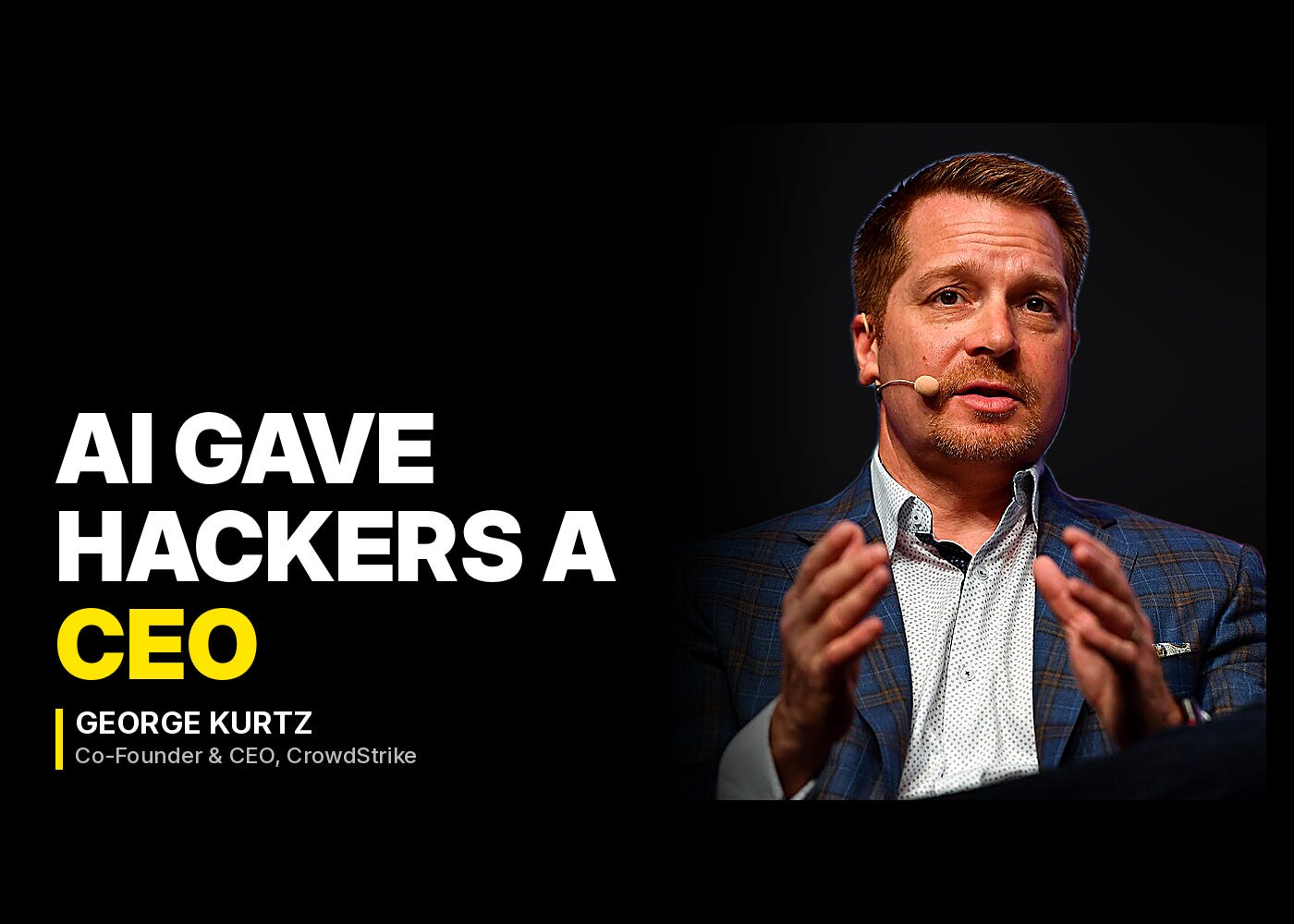
George Kurtz, co-founder and CEO of CrowdStrike, told Bob Safian on Masters of Scale that attackers can now turn a freshly released software patch into a working exploit in about an hour, work he said used to take a nation-state team weeks.
The week's failures at Microsoft, air traffic systems, JPMorgan Chase and Apple left many asking whether they were connected. George says they are the cost of an industry trying to fix more security flaws, faster, than it ever has, and that IT teams now choose between two kinds of damage.
"They're making the decision: breach or break, breach or break. That is, are we going to get breached because we can't patch fast enough, or are we just going to break something and hopefully fix it if we roll it out?" — George Kurtz
George co-founded CrowdStrike, lived through its own 2024 Windows outage, and now trains CrowdStrike's own AI models on 15 years of its threat data.
The full interview is covered here so you can skip it. 35 minutes of audio, 11 minutes of reading.
Here are the 10 arguments that matter.
Key Takeaways
The week's outages are the cost of a record rush to patch AI-found flaws, not a coordinated attack
Teams choose between "breach or break": a rushed patch, or the risk of being hacked
Change, not any single technology, causes most outages, George says
AI turns a new patch into a working exploit in about an hour, against weeks for a nation-state team before
A hacktivist now has the attack tools of a nation-state, using uncensored open-weight models
Western frontier models refused to help Hugging Face analyze an attack on it, so it used a Chinese model
Small and mid-sized firms are the new volume target, because an overnight run of AI agents costs $50
Slowing the frontier labs will not slow attackers, because open-weight models follow close behind with no refusals
Some CEOs now take major services offline on purpose rather than risk a breach
1. A Rush to Patch Broke Things
Bob Safian, who hosts the Rapid Response episodes of Masters of Scale, opened on the run of failures at Microsoft, air traffic systems, JPMorgan Chase and Apple, and asked whether it was really coincidence. George said his phone had been full of people asking whether the world was ending. His answer was that the outages are "the bill" for a boom in vulnerability hunting by frontier AI models that began about nine months earlier.
George Kurtz traces the outage wave to a record push to find and fix software flaws
"The reality is it's the bill for the Mythos moment... The whole industry has been racing to find as many vulnerabilities as it can and create as many patches as it can." — George Kurtz
Mythos is Anthropic's vulnerability-finding model, which the company withheld from public release. George said the industry has now hit "the sound barrier" on how fast patches can be rolled out. That forces IT teams into the "breach or break" choice: ship a rushed patch and risk breaking production systems, or hold back and risk being hacked.
He named two live examples of the current wave. One is a recent flaw in PHP, a widely used web programming language. The other is an incoming Java vulnerability, which he said already has working exploits.
