

The Julia La Roche Show · Sep 24, 2026 · 49m · 32m saved
With Michael Pento, Founder and President of Pento Portfolio Strategies
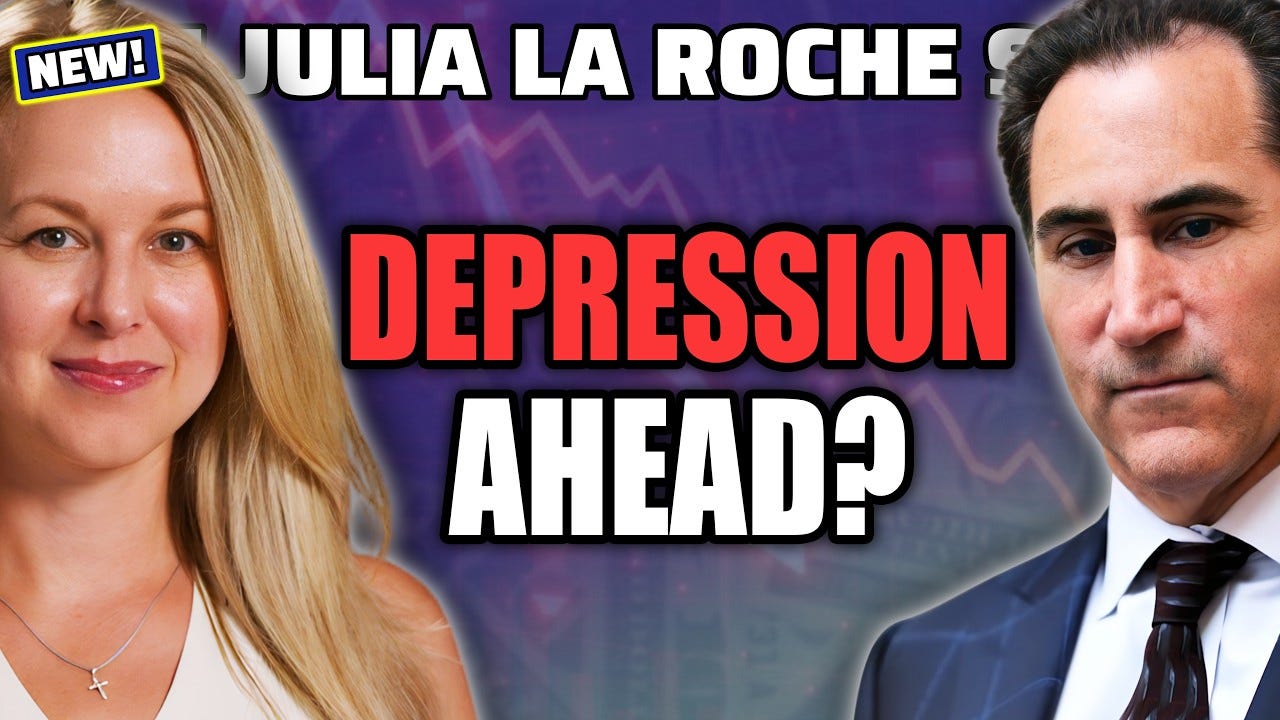
Michael Pento has not given a market timeline since the end of 2021. On The Julia La Roche Show he gave one: 2027, which he expects to be the start of a depression.
A depression call usually comes with a bet against the market. Pento has not placed one. He is net long, and he says his model will tell him when the best-informed investors start to worry.
"So, if that's the case, we're gonna have a real problem in 2027."
Michael Pento, founder and president of Pento Portfolio Strategies, on The Julia La Roche Show, has been in the business for 35 years and manages money for more than 800 client families, using a 12-point model built around credit markets and financial conditions.
The full interview is covered here so you can skip it. 49 minutes of audio, 17 minutes of reading.
Here are the 12 arguments that matter.
Key Takeaways
2027 will be a very difficult year, the first time he has put a date on a downturn since the end of 2021
Stocks, housing and credit are all in bubbles at once, which he says has never happened before
Credit markets are what burst every bubble, so that is where his model looks
The Fed and the Treasury are working against each other, and he expects the Fed to win
He expects a depression, not a recession, and years of what he calls hyper stagflation after it
The passive 60/40 portfolio is the most dangerous holding for people near retirement
Precious metals, energy, base metals and agriculture are what his back-testing favors if inflation runs while growth stalls
He is still net long, holding short-term government notes, dividend stocks and about 10% in precious metals
The investors he tracks through credit spreads are "not worrying yet"
Rising long-term interest rates are the biggest risk, more than any single bubble
1. Six Forces Pushing Up Yields
The host asked for his big-picture view. Pento began with consumers at the bottom of the income ladder, who he said have had about five years of inflation, made worse by oil back at $100 a barrel on both Brent and WTI after the war escalated, and by higher fertilizer, commodity and borrowing costs. Consumption is about 70% of GDP, he said, so pressure on the consumer is pressure on the economy. He then listed the reasons he thinks Treasury yields have further to rise.
The first is that benchmark Treasury yields tend to track nominal GDP growth, which he put at about 6%.
Treasuries yield well below where nominal growth says they should
"So we're actually way below where Treasuries should yield." — Michael Pento
He added that he does not think nominal growth of 6% will last, and that the real part of it is what will come down. The second force is almost six years of inflation above the Fed's 2% target. The third is what he called insolvency.
Federal debt is several times federal revenue
"So, we have debt that's now 720% of our revenue." — Michael Pento
He said a commentator on CNBC, whom he did not name, had argued the US does not have a debt problem because debt is about 100% of GDP. Pento said the true figure is 123% of GDP, and that the lower number leaves out what the government owes the Social Security and Medicare trust funds. He asked the host whether she would go to work if every dollar she earned for a year were taxed at 100%. She said no, and he said that is why the debt cannot be paid off in a year: nobody can tax 100% of GDP. He added that the US has $2 trillion annual deficits "as far as the eye can see."
The fourth force is foreign creditors leaving the dollar and the Treasury market, which he put down to sanctions and confiscations. The Bank of Japan, he said, is selling Treasuries and dollars to support the yen. That puts the yen carry trade (borrowing in yen at near 0% to buy higher-yielding Treasuries) at risk of unwinding. The fifth is the loss of what he called the global anchors: Japanese and German government bonds yielded 0% from 2015 to 2022 and now yield 3% or more, so the carry trade pays less and carries more currency risk.
Zero-rate bonds abroad no longer hold US yields down
"So the global anchors are gone." — Michael Pento
The sixth is the Fed. He said he hopes and believes the new chair, Kevin Warsh, will raise the federal funds rate and slow the growth of the Fed's balance sheet, which he put at about $6.7 trillion, up from $700 billion 20 years ago.
