

Summation with Auren Hoffman · Oct 20, 2026 · 58m · 49m saved
With Noah Glass, Founder and CEO of Olo
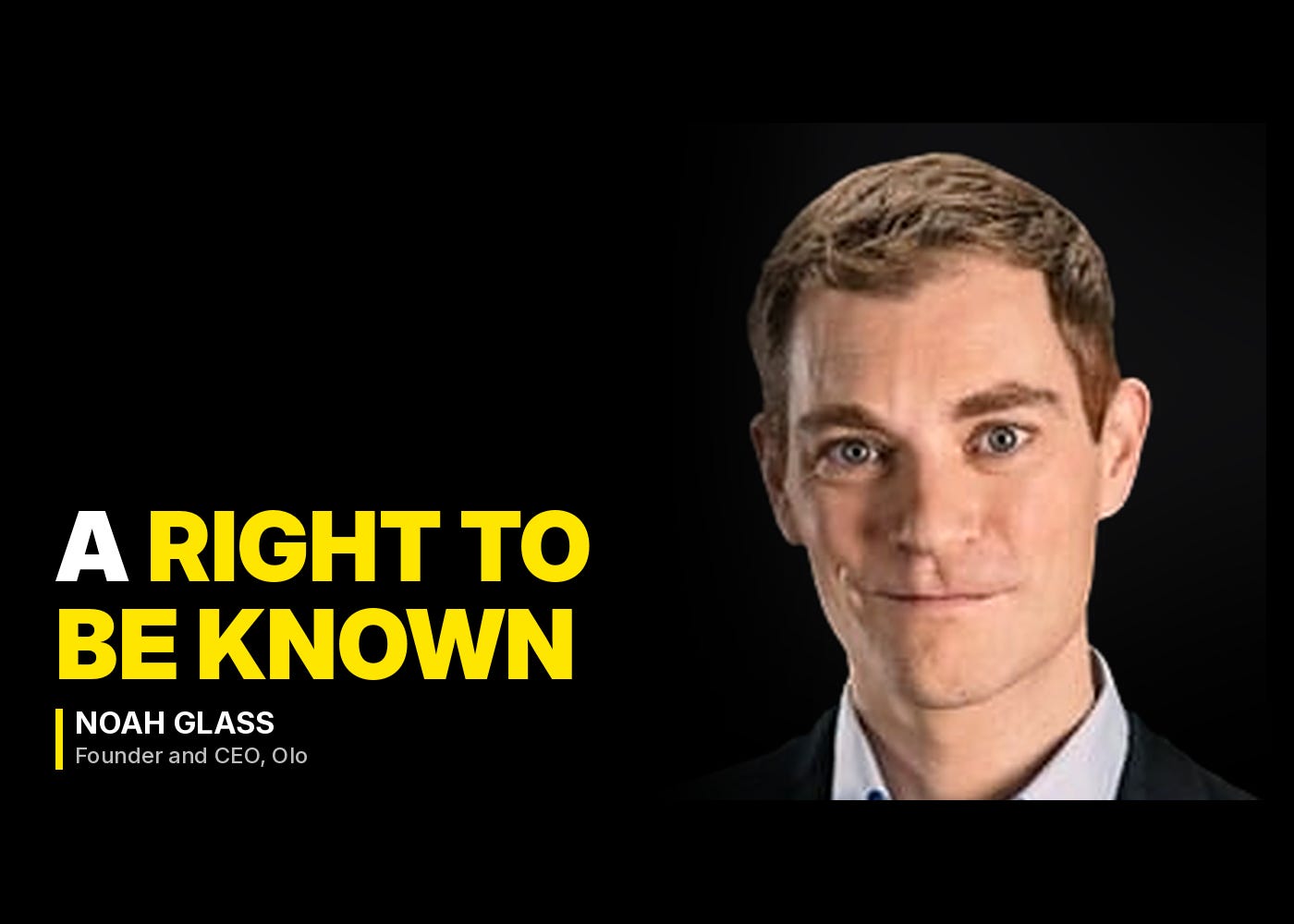
Photo via olo.com
Seventy-five of every 100 restaurant orders in the US now happen outside the restaurant's four walls. Most of the industry built its business model around the other 25.
Noah Glass, founder and CEO of Olo, started the company in 2005 betting the opposite way, on a channel that barely existed yet: mobile ordering, sent by text message, because fewer than 5% of phones were smartphones.
"There's no difference between being too early and being wrong... I think we were just early and right, and it took a long time for product market fit to happen."
Noah, who has spent 21 years building the guest-data layer underneath more than 850 restaurant brands, told Auren Hoffman on Summation that this long, unglamorous middle is the normal shape of vertical software, not a warning sign.
The full interview is covered here so you can skip it. 58 minutes of audio, 9 minutes of reading.
Here are the 7 principles that matter.
Key Takeaways
Olo took about eight years to reach product-market fit, then another eight to IPO — a "long middle" Noah says is normal for vertical SaaS
A sale for $65 million fell through years before the eventual roughly $2 billion take-private
Five Guys had to threaten to switch point-of-sale vendors before they'd open their systems to Olo
Olo now has more than 400 integrated technology partners in the US and Canada
The new Olo app charges restaurants no commission and diners no markup, unlike marketplaces that take 20-30% and mark up menus 15-30%
Noah argues there should be a "right to be known," the mirror image of the right to be forgotten
His own wife opts out, he says, and "feels creeped out" when she is known without giving permission
Olo's 40 million guest accounts and 21 years of order history solve the "cold start" problem other apps face
The data also shows a quirk: guests save healthy favorites but reorder comfort food more often
Noah wants AI ordering agents routed through Olo's network so restaurants keep guest data and full profit even when an agent places the order
Thoma Bravo took Olo private for about $2 billion; Noah, his wife and son put 75% of their proceeds back into the deal
Olo processes about $30 billion of a $1.5 trillion addressable market — under 2% penetration
1. Two Eight-Year Climbs
Noah splits Olo's history into two eight-year blocks: roughly 2005 to 2013 getting from MVP to product-market fit, then 2013 to the 2021 IPO scaling the company from 12 employees to about 600. He says the advice against a long gestation is simply wrong for this category of software.
Text-message ordering had to be Olo's MVP because under 5% of phones were smartphones in 2005
"It took us really about eight years" from launch to product-market fit; "text message ordering had to be the MVP of Olo because under 5% of mobile phone users had smartphones back then." — Noah Glass
A long middle is normal for vertical SaaS, not a sign something is wrong
"There's no difference between being too early and being wrong... I think we were just early and right, and it took a long time for product market fit to happen." — Noah Glass
Noah points to Shopify, Veeva and especially Procore (whose own gestation ran 18 to 19 years) as peers with the same shape. A near-sale of Olo for $65 million fell through at the last minute years before Thoma Bravo eventually took the company private for roughly $2 billion.
