

Forbes: The Enterprise Zone · Sep 24, 2026 · 45m · 31m saved
With Davyeon Ross, Co-Founder and CEO of ShotTracker
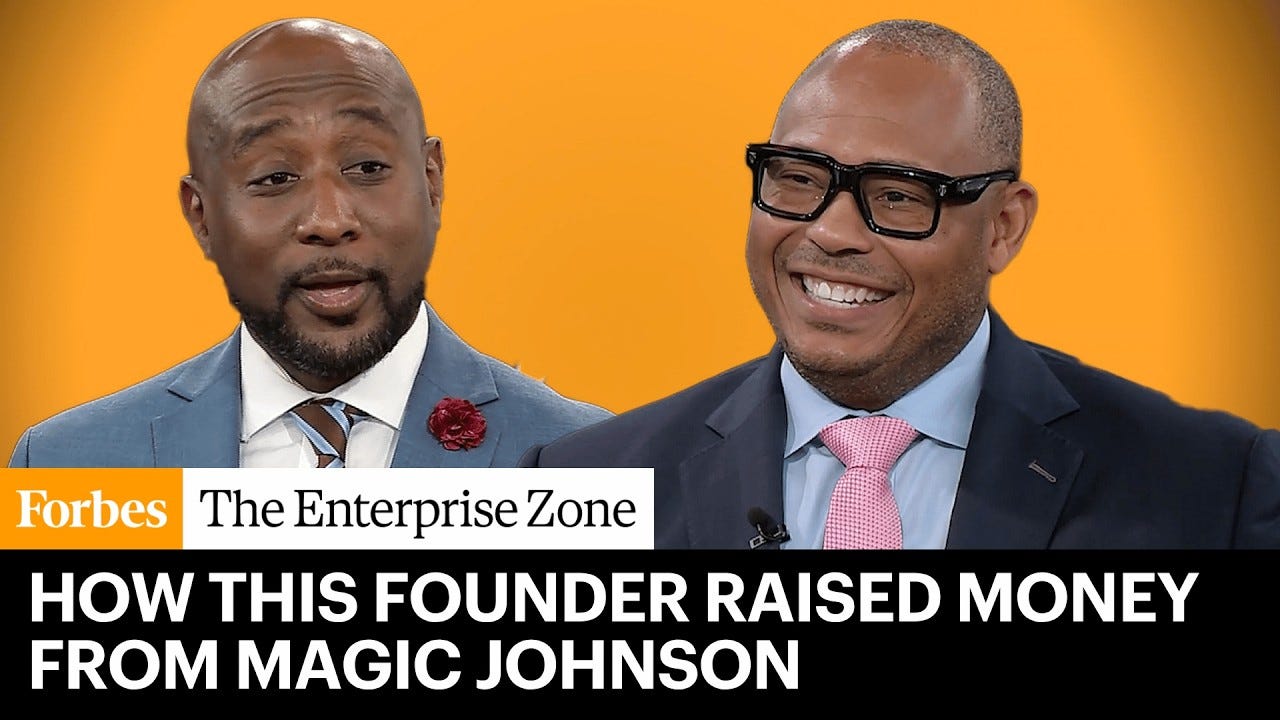
ShotTracker has raised a little over $50 million, Davyeon Ross said, not the more than $80 million the host had seen reported, and it now sells five products where it once sold one.
The host asked whether AI coding tools would let someone quickly build a cheaper rival. Ross said the sensors ShotTracker puts in basketballs and arenas need Federal Communications Commission approval and months-long hardware cycles, and that is what protects it.
"This is not one of those things that you throw Claude at and it rebuilds for you."
Davyeon Ross, co-founder and CEO of ShotTracker, on Forbes: The Enterprise Zone. He came from Trinidad to Kansas on a basketball scholarship, sold an earlier sports startup, and persuaded Magic Johnson to invest after a visit to a warehouse where players were shooting on concrete.
The full interview is covered here so you can skip it. 45 minutes of audio, 14 minutes of reading.
Here are the 17 moments that matter.
Key Takeaways
ShotTracker has raised a little over $50M, much of it in inside rounds after the pandemic, one at a flat valuation
One sensor product has become five, including an AI video search tool and a product that sells game data to broadcasters
Sensors work in any basketball, and ShotTracker has them in balls from almost every maker
Customers pay yearly subscriptions on 3- to 5-year contracts, with no large upfront installation fee
FCC approvals and slow hardware cycles are his answer to AI-built rivals
A board-appointed CEO who lasted a couple of years was "rough", and Ross later took the job himself
Magic Johnson invested after stopping in Kansas on his way to Chicago
The pandemic almost ended the company, when a deal to put ShotTracker in about 60 schools fell through
1. Investing Like He Plays
The host asked what kind of investor Ross is.
He takes risk in startups and leaves stocks to his adviser
"I invest like I play basketball." — Davyeon Ross
He called himself aggressive. His financial adviser runs the stock portfolio conservatively, while Ross puts money into startup deals he sees as an entrepreneur. He said the adviser often tries to talk him out of a bet.
A small founders' pool returned 10 times its money
A group of entrepreneurs from a program he belonged to pooled about $100,000, or $10,000 to $15,000 each, to back another member's company. Last December the founder sold and sent checks.
"It pays off all the ones where you don't get that return." — Davyeon Ross
He follows AI and tech stocks and talks them over with his brothers.
