

All-In · Nov 17, 2026 · 1h 2m · 52m saved
With Ali Ghodsi, Co-founder and CEO of Databricks
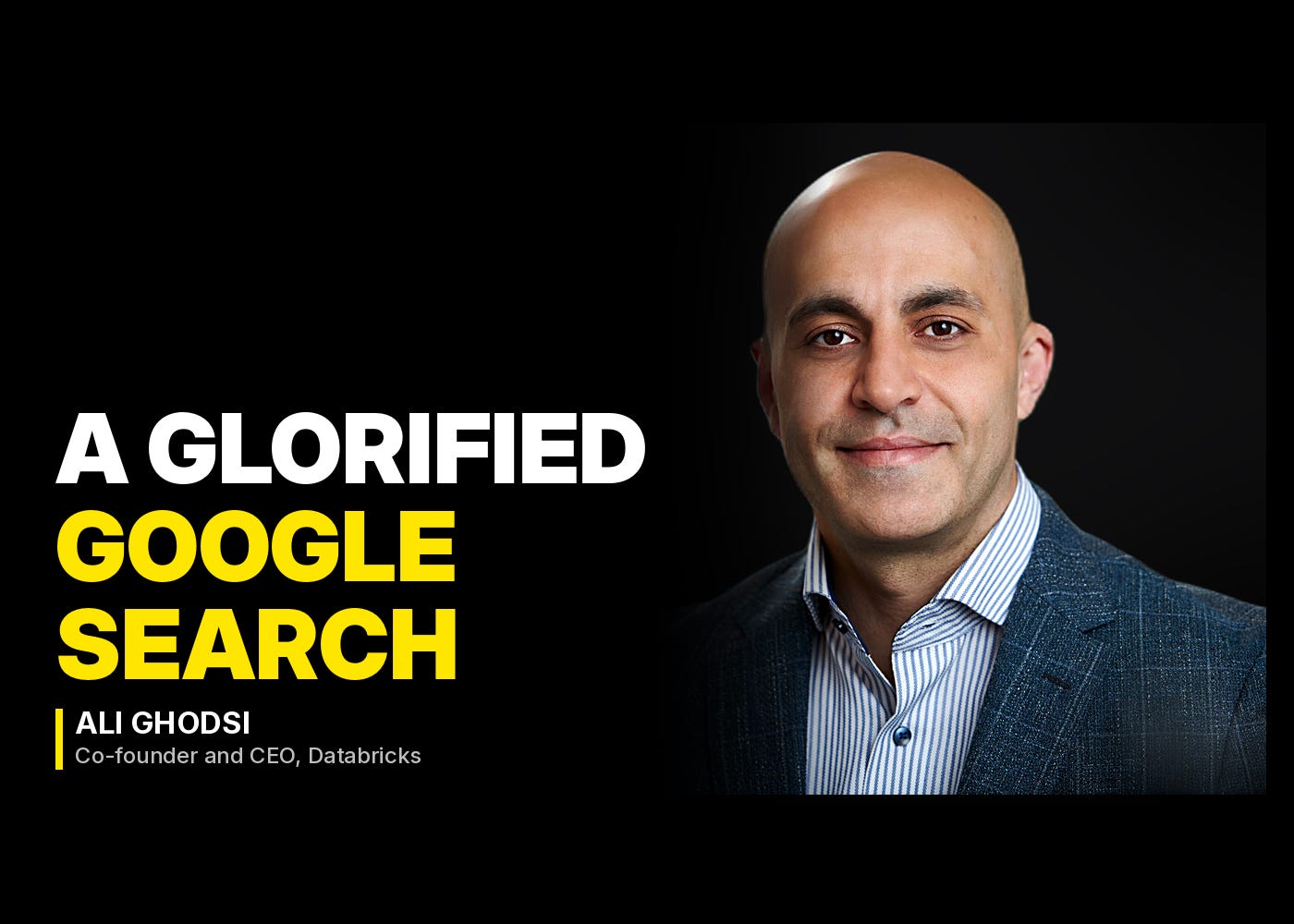
Photo: DKP415, CC BY-SA 4.0 via Wikipedia
Ali Ghodsi, co-founder and CEO of Databricks, told All-In that artificial general intelligence already exists and has since last year, yet most large companies still use AI as little more than a search box.
Much of Silicon Valley talks about AI as a race toward superintelligence and runaway self-improvement. Ali argued the opposite on both counts: the intelligence is already here, and the takeoff is not.
"I actually think we already have artificial general intelligence. I've been saying it since last year... I actually think we have all the intelligence we need to completely transform the planet." — Ali Ghodsi
Ali came out of UC Berkeley's AMPLab, where his cohort set the definition of AGI he still uses, and his company sells the data and AI tools that large enterprises are struggling to put to work.
The full interview is covered here so you can skip it. 62 minutes of audio, 10 minutes of reading.
Here are the 13 calls that matter.
Key Takeaways
AGI arrived last year by the definition Ali's Berkeley lab used in 2009–2010
None of the 4 conditions for runaway self-improvement holds today, and training runs are getting slower
Enterprises use AI as "a glorified Google search," with coding speedups of only 20–30%
Most companies never capture the context AI would need, such as their own meetings
Token costs are rising faster than any company's revenue, Ali said
Anthropic is moving into the products its customers sell, from spreadsheets to image editing
Databricks will go public, but not during this volatile AI build-out
The real near-term AI danger is cyber, not extinction, which Ali put "close to zero"
1. Born Out of Despair
All-In co-host Jason Calacanis introduced Ali and walked through Databricks' growth. Ali traced the company back to UC Berkeley's AMPLab, a group of roughly 20 researchers that he called the largest AI lab in the world at the time.
Ali Ghodsi says Databricks started because nobody else would build on the lab's work
"It was kind of out of despair that we started Databricks... because no one else is listening to it. At that time there is zero interest in AI." — Ali Ghodsi
The lab had tried combining data processing with AI, including an early recommendation use case for Netflix, and found no industry appetite. Databricks was founded in 2013.
