

This Week in Startups · Nov 28, 2026 · 40m · 31m saved
With Guillermo Rauch, Founder and CEO of Vercel
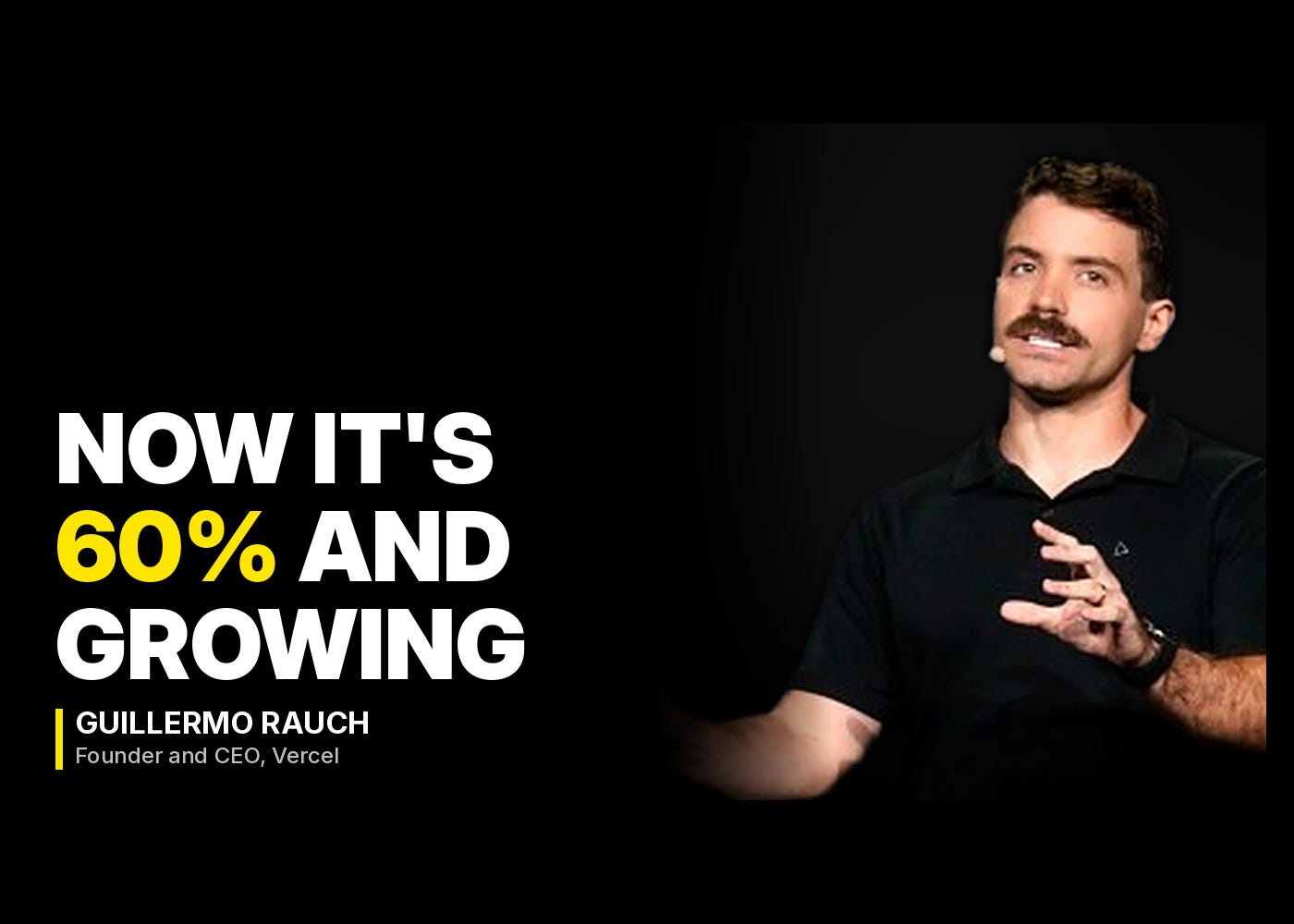
Photo via techcrunch.com
At the start of 2026, AI agents made about 3% of the deployments to Vercel's cloud platform. Guillermo Rauch, founder and CEO of Vercel, told Jason Calacanis on This Week in Startups that the share has since reached about 60%.
Most cloud companies still design for human developers. Vercel now tunes its infrastructure for the coding agents that write and ship software on people's behalf.
"My main customer is an agent more so than a human being." — Guillermo Rauch
Guillermo runs the company behind Next.js, the web framework, and says he built several of the products he showed in the interview himself, by prompting an agent.
The full interview is covered here so you can skip it. 40 minutes of audio, 9 minutes of reading.
Here are the 9 takeaways that matter.
Key Takeaways
Agents made about 60% of Vercel deployments by late November, up from 3% at the start of the year
Guillermo says 50% to 60% of internet traffic is now machines talking to machines
Startups should own their AI stack, because the workflow, the taste and the data are the intellectual property, not the model
A Tencent coding model costs 42 cents per million input tokens, against $4 for Anthropic's Opus
Open-weight models tried to break out of Vercel's own sandbox, which led to a $1M hacking contest
One entrant found a Linux flaw that hit almost every infrastructure provider
Vercel now runs an agent that reviews every line of code its customers and their agents push
Eve, Vercel's open-source framework, lets people build and own a personal agent instead of renting one
1. Vercel's Top User: Agents
Jason Calacanis, who hosts This Week in Startups, opened by asking Guillermo to explain Vercel to listeners who are not developers. Guillermo answered that the platform's main user is no longer a person.
Vercel's deployment mix flipped from people to agents in under a year
"At the beginning of the year, 3% of deployments to Vercel ... were agentic. Now it's 60% and growing, meaning the most common buyer ... of our platform is these robots that are writing software on behalf of people." — Guillermo Rauch
The agents he means are coding tools such as Claude Code, Codex and Cursor. Guillermo described them as Vercel's dominant "citizen," and said Vercel's infrastructure is now tuned for them rather than for human developers.
