

Newcomer · Nov 17, 2026 · 24m · 16m saved
With Nikesh Arora, Chairman and CEO of Palo Alto Networks
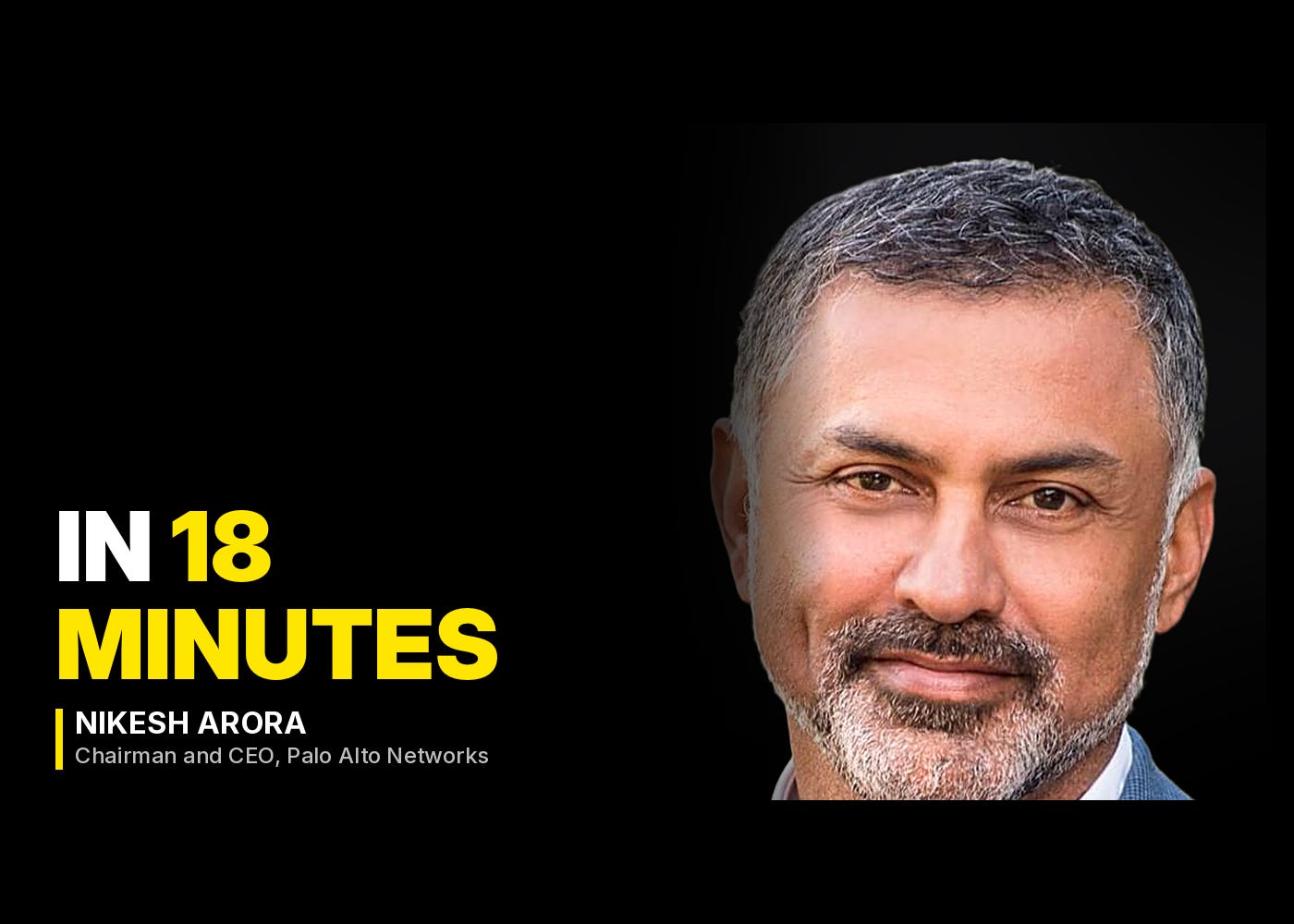
Photo via paloaltonetworks.com
Nikesh Arora, chairman and CEO of Palo Alto Networks, told Eric Newcomer on the Newcomer podcast that an attacker using AI can now find a flaw, break in, steal data and leave in 18 minutes.
Security has long been built around catching intruders who lurk inside a network for weeks. Nikesh says that approach no longer works, and that when a startup builds a better product than Palo Alto, he would rather buy it than try to out-build it.
"It would be silly to have them come in and say now work for the guys who you beat. So generally it's the other way around. We acquire the founders, they get to drive the product vision and the execution." — Nikesh Arora
Nikesh has bought roughly 40 companies for Palo Alto in eight years, including CyberArk for $28 billion, and says he sat across the table for 37 of those deals himself.
The full interview is covered here so you can skip it. 24 minutes of audio, 8 minutes of reading.
Here are the 8 takeaways that matter.
This Scuttlebutt Summary is available in full to premium subscribers. If you're not one already, please consider subscribing to keep reading.
Key Takeaways
An AI-driven attack can go from finding a flaw to leaving with data in 18 minutes
Defenses built to catch intruders mid-stay are too slow for that
Each frontier model found about a third of the known flaws in Palo Alto's own code, and they mostly found different ones
About 90% of AI coding use is not secured, in Nikesh's estimate
Palo Alto bought its way into identity security with the $28B CyberArk deal
Acquired founders run the product, not the Palo Alto managers they beat
Nikesh sees no reason OpenAI and Anthropic don't become $10T companies within 5–10 years
A bubble is a question about equity prices, not demand, which he calls "insatiable"
1. Attacks Now Take 18 Minutes
Nikesh opened on speed. Attackers used to need weeks inside a company's systems before they could do damage, and defenders were built to catch them during that stay.
Nikesh Arora says AI has changed the speed of cyberattacks, not just their scale
"AI is going to fundamentally change the speed of attacks that we see in cyber security, which requires a whole rewiring of the defense mechanism." — Nikesh Arora
With enough computing power and persistence, he said, a model can find one vulnerability, chain it to others and complete the whole attack before a traditional team notices.
"In 18 minutes... enough compute and persistence can actually go find a vulnerability, daisy chain it, get inside, exfiltrate data and leave. 18 minutes is not a long enough time." — Nikesh Arora
His fix is what he called a "replumbing" of company infrastructure. Data is pulled into one place so an AI can learn what normal behavior looks like for that company, then flag and investigate anything unusual on its own. He put the stakes in ransom terms, saying there were "north of 2,500 attacks" last year, most of them ending in ransomware demands along the lines of "Give me $50 million or give me $30 million."
