

FidelityConnects · Sep 28, 2026 · 28m · 15m saved
With Evan Zehnal, Assistant Portfolio Manager at Fidelity Investments, who works with Mark Schmehl
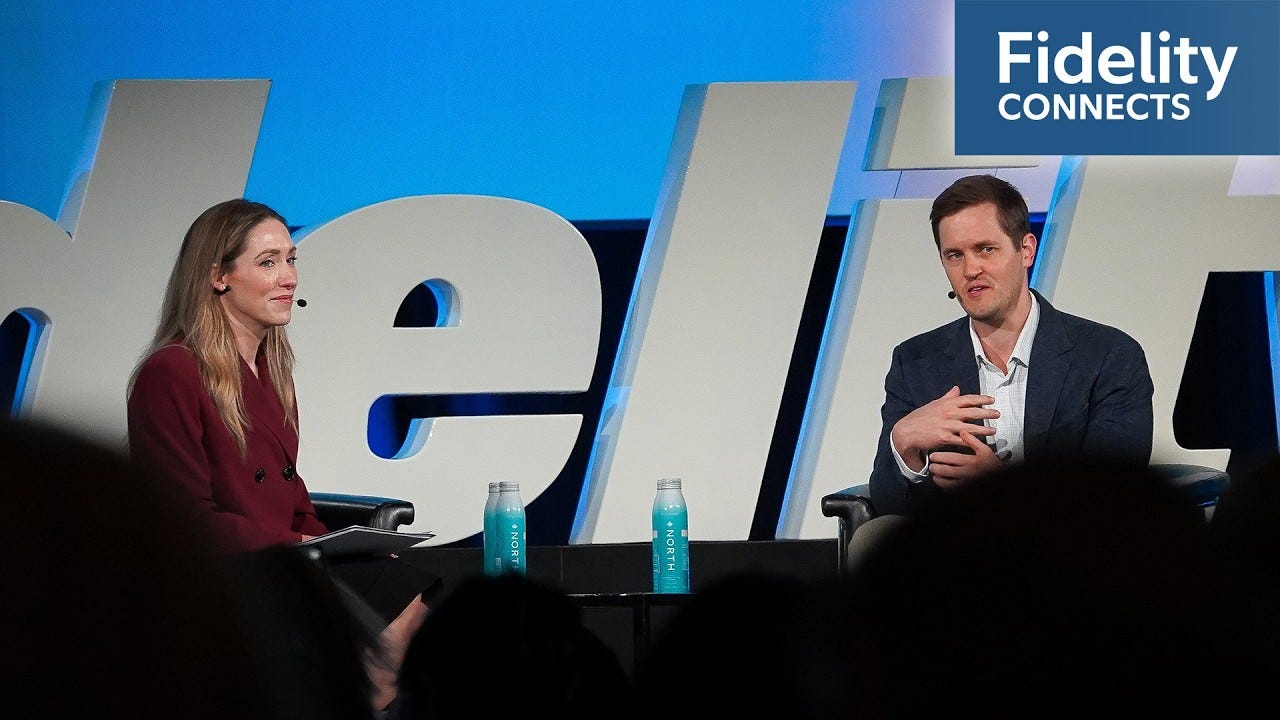
A year ago nobody would have predicted more than $100 billion of revenue from AI coding tools, said Evan Zehnal of Fidelity.
Bulls now assume the next uses of AI, from cybersecurity to drug development, will grow the same way. Zehnal said that is the assumption he and Mark Schmehl are most wary of, and their funds have become more balanced on AI as a result.
"I think the optimist might be leaning too heavily on the success of coding as an analog for some of these other use cases."
Evan Zehnal, Assistant Portfolio Manager at Fidelity Investments, on FidelityConnects, sits across the hall from Mark Schmehl in San Francisco and spent four years on Fidelity Canada's investment team before that. He was recently given mandates of his own. He spoke on stage at Fidelity's VISION2026 event in Vancouver, recorded September 10.
The full interview is covered here so you can skip it. 28 minutes of audio, 13 minutes of reading.
Here are the 14 insights that matter.
Key Takeaways
AI is now a "show me" story for Fidelity's Schmehl team, still optimistic but more balanced
Coding revenue passed $100 billion, and he doubts the next use cases will match it
Judging AI capex only by frontier lab revenue undersells the return
Almost every company is wrapping itself in the AI label, often for old machine learning
The market treated all of software as a loser, but he has not heard of AI-written code replacing a company's critical systems
Health care's AI problem is data, not intelligence, and companies that control trial data should benefit first
Long-term supply contracts changed the memory chip trade, a lesson Schmehl took from materials
Financials have wide lending spreads and no credit cycle yet, plus room to cut costs with AI
Narratives follow the price, and 30% to 50% swings in months are where stock pickers earn their keep
1. The Move to San Francisco
The moderator introduced Zehnal as Canadian, from Woodstock, Ontario, a graduate of McMaster and Columbia who worked at TD and CPPIB and on Fidelity's investment team in Toronto, and asked how he came to work for Mark Schmehl in San Francisco.
Four years in Toronto first
"I think in terms of the journey to San Francisco, really one of the things that happened was I spent four years here with the Canadian team and I had an amazing experience." — Evan Zehnal
The move came when his wife got a job at OpenAI, he said. Zehnal contacted Schmehl, who wanted him on the team, and has now been in San Francisco for two years.
