

Milk Road AI · Sep 28, 2026 · recorded Sep 21, 2026 · 46m · 34m saved
With Brett Winton, Chief Futurist at ARK Invest · Ovid Amadi, Multiomics Portfolio Manager and Director of Research at ARK Invest
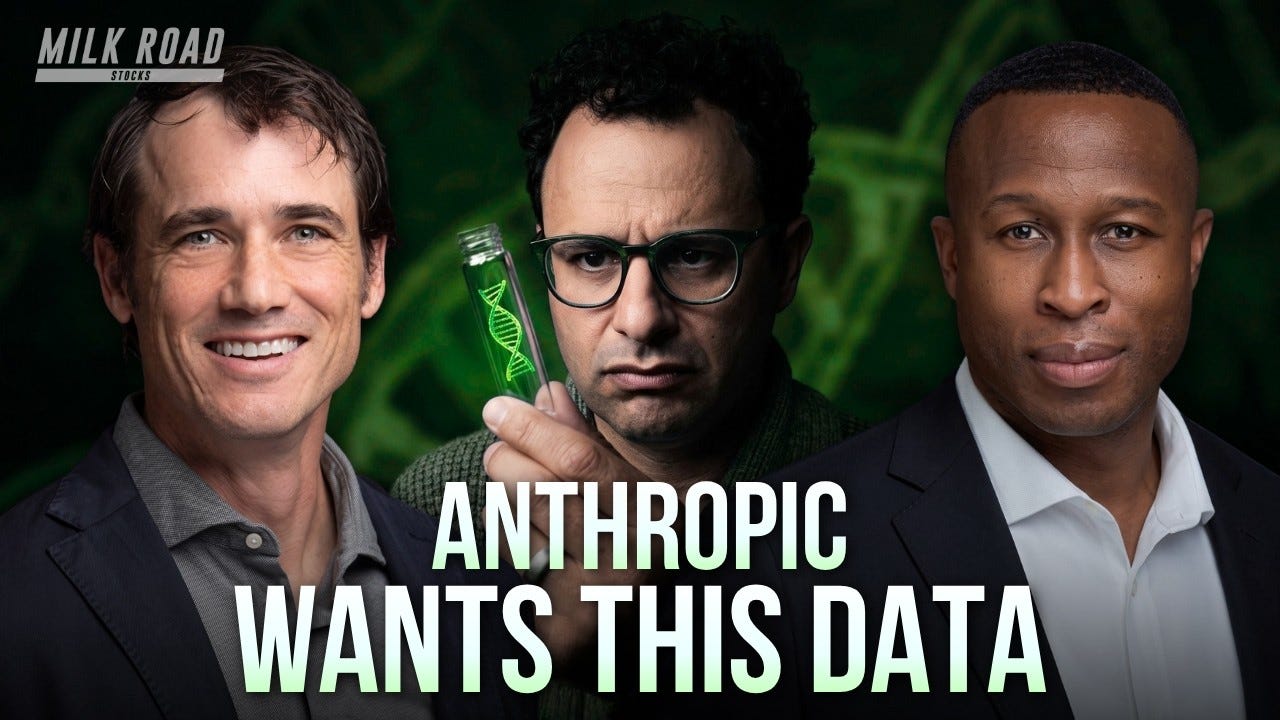
A few years ago the return on money invested in drug research was about 4%, which Brett Winton said is worse than holding Treasuries. ARK's own work says AI could cut the cost of developing a drug by as much as 75%.
Most of the AI trade has been about chips and data centers. Winton and his colleague Ovid Amadi argued that biology is where the next large returns sit, because the tests that diagnose cancer now produce more data than the open internet.
"I can just own Treasuries and do better than this."
Brett Winton, Chief Futurist at ARK Invest, forecasts cost declines across ARK's technology platforms and sits on its venture investment committee. Ovid Amadi, ARK's Multiomics Portfolio Manager and Director of Research, runs the firm's genomics portfolios. They spoke on Milk Road AI's stocks show.
The full interview is covered here so you can skip it. 46 minutes of audio, 12 minutes of reading.
Here are the 11 insights that matter.
Key Takeaways
Cancer diagnostics generated more than 15 trillion tokens of data last year on ARK's estimate, about what frontier AI models train on
Return on drug R&D was about 4%, too low to justify equity capital, Winton said
AI could cut drug development costs by as much as 75% and time to market by 40%, in ARK's work
Halving the clinical failure rate could mean four times as many drugs, Amadi said
A one-time gene-editing cure can cost millions and still save the health system money
The lifelong treatment it replaces costs about $500,000 a year, Winton said
Anthropic is now the biggest customer of Twist Bioscience, an ARK holding
Winton expects an injection at about age 25 against heart attack and stroke within 15 years
1. Two Jobs at ARK
Winton said his job is to study how ARK's technology platforms intersect and speed each other up.
"So, I forecast cost declines." — Brett Winton
He said he passes that top-down work to the directors of research and analysts, has spent a lot of time on SpaceX, xAI and the frontier AI labs, and underwrites positions in ARK's venture portfolio.
Anthropic is buying biology data
Winton said Anthropic "is suddenly becoming the key customer to some of these data providers within the multiomic space," because frontier labs see drug development as a profitable place to use their tools.
Amadi said his work is to translate technologies into market sizes and work out how those markets will be divided among the companies in them. He said Winton's requests usually arrive with a spreadsheet attached.
