

Forbes · Nov 22, 2026 · 24m · 16m saved
With Igor Tulchinsky, Founder, Chairman and CEO of WorldQuant
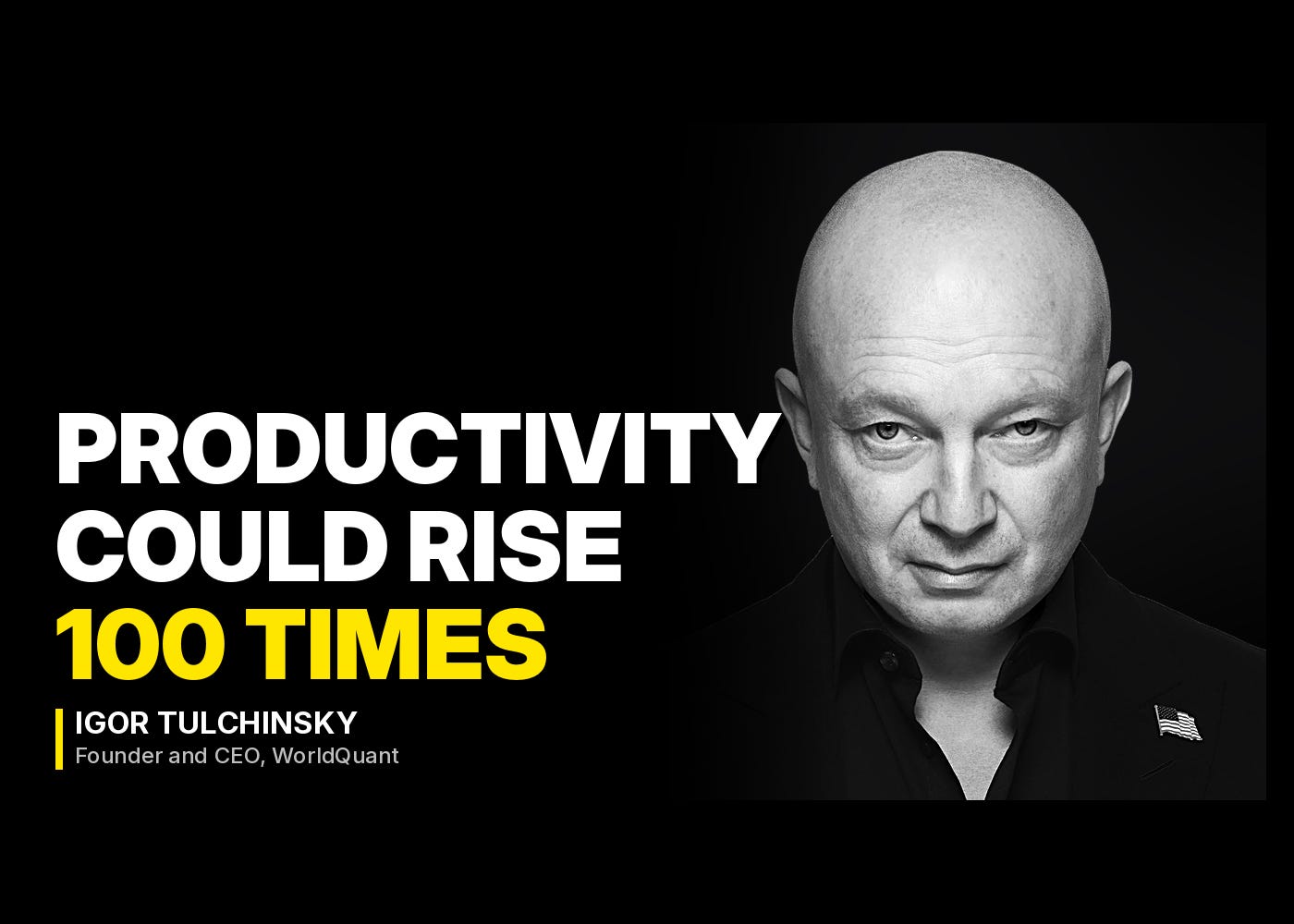
Photo via worldquant.com
Igor Tulchinsky, founder, chairman and CEO of WorldQuant, told Forbes senior editor Alex Knapp that he believes AI could raise productivity at his quantitative investment firm a hundredfold, and that his own staff are not yet willing to go that fast.
Most quant firms of his era hunted for a small number of independent trading signals and traded each one on its own. Igor bet the other way, that almost any signal could be useful if it was combined well with others.
"I had a different philosophy. Any signal is a good signal, and find ways to combine them and get the most out of them." — Igor Tulchinsky
Igor arrived in the US as a refugee at 11, after his family left the Soviet Union with one ruble. He took WorldQuant from roughly 30 signals to hundreds of thousands, and he says almost nobody at the firm writes code by hand anymore.
The full interview is covered here so you can skip it. 24 minutes of audio, 8 minutes of reading.
Here are the 9 lessons that matter.
Key Takeaways
Igor's family left Belarus in 1977 with the one ruble the authorities let them keep
Bell Labs was so bureaucratic that only three lines of code got written a day
WorldQuant was built on the bet that any signal can help if it is combined well, scaling from about 30 signals to hundreds of thousands
Igor thinks AI could raise productivity 100 times, but his firm is targeting 10–30% gains first
The real AI risk, in Igor's view, is a system that does not do what was intended, not a machine takeover
WorldQuant's answer is layers of AI agents watching other agents, as much policing as it wants
There is no European dream, only American, because Europe never fully accepts an immigrant
1. One Ruble Out of Belarus
The interview opened on how the family got out. Igor's parents applied for an exit visa from Belarus in 1977. The application alone got them denounced at a party meeting and cost them their jobs. They waited three or four months, knowing a refusal would make them "refuseniks" who survived on odd jobs.
The Soviet authorities let the family leave with a single ruble, which went on a piece of gum
"On the Polish border, my father spent his last ruble because they only let us take out one ruble. He bought some Polish gum. Gave it to me. I chewed it. It melted. Very symbolic." — Igor Tulchinsky
They had taken a train from Minsk to Vienna. Igor said the push to leave came mainly on his behalf.
Igor's parents left because Jewish families faced quotas on where they could live and study
"We were Jewish and there were clear limits on how many Jews could be in certain places — quotas, in the universities, so on and so forth." — Igor Tulchinsky
