

TBPN · Nov 18, 2026
With Scott DeBoer, President and CTO of Micron
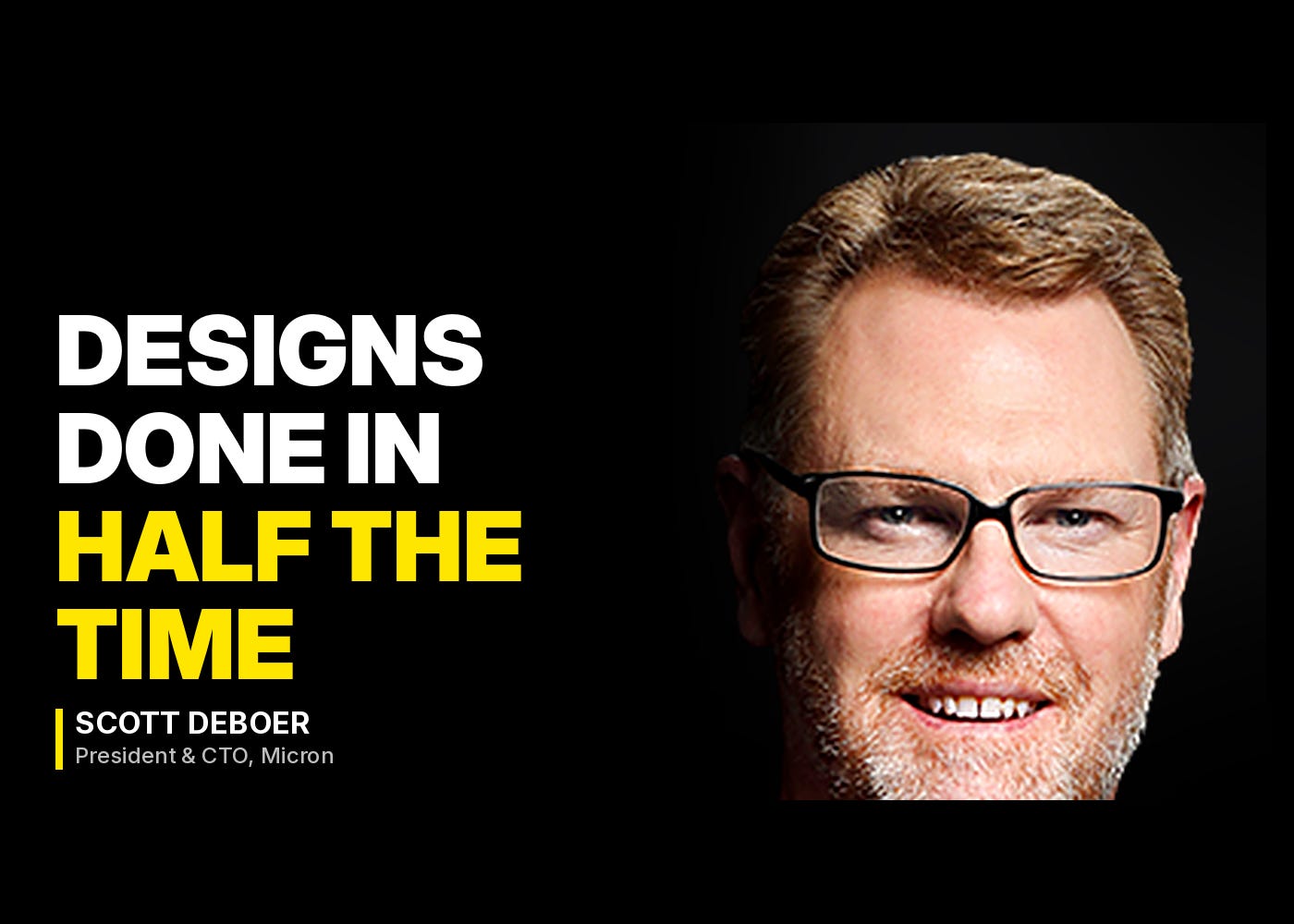
Photo via nist.gov
Scott DeBoer, president and CTO of Micron, told TBPN that AI demand has cut the company's chip-design timelines roughly in half over the past few years.
Where Micron's engineering team used to chase raw "bits per wafer" growth, Scott says the goal now is performance and designing memory alongside the customers who will use it.
"We're majorly focused in expansion across the globe, certainly especially in The US, with more than $250 billion of investment coming." — Scott DeBoer
Scott has led Micron's technology organization through the buildout of new US fabs, alongside parallel expansion in Asia.
The full segment is covered here so you can skip it.
Here are the 2 takeaways that matter.
Key Takeaways
Micron has shifted its engineering focus from raw bit growth to performance and customer co-design, driven by AI demand
More than $250 billion of US manufacturing investment is underway, justified mainly by proximity to US customers
AI has cut chip-design timelines roughly in half and doubled design throughput per engineer
1. From Bits to Performance
Scott described a shift in how Micron's engineers measure success. The old metric, bits per wafer, rewarded packing in more raw capacity; the new one rewards performance and working directly with customers on what they actually need.
Scott DeBoer says Micron's R&D increase lets it "say yes more often" to customers' roadmaps
"Because of how important and how centric memory is to AI, it's really a key piece of everything about how tokenomics work... The company has raised up in terms of understanding they're part of a bigger and a different kind of ecosystem now than ever before." — Scott DeBoer
That closer customer relationship now means Micron helps shape customers' product roadmaps years in advance. Scott was careful to add that Micron still sometimes has to say no, when capacity is genuinely constrained.
