

Inside The Silicon Mind · Nov 25, 2026 · 1h 20m · 71m saved
With Scott Dietzen, Vice Chairman of Pure Storage and Executive Chairman of Augment Code · Benny Chen, Co-Founder of Fireworks AI · Andrew Dai, Co-Founder and CEO of Elorian AI
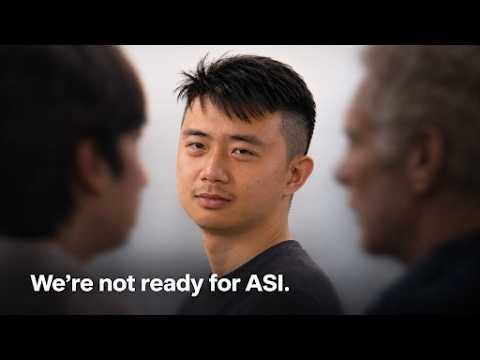
Anthropic was turned down by about 22 venture investors before one funded it, Benny Chen, co-founder of Fireworks AI, told the first AI Insiders roundtable on Inside The Silicon Mind. He sat on the panel with Scott Dietzen, vice chairman of Pure Storage and executive chairman of Augment Code, and Andrew Dai, co-founder and CEO of Elorian AI.
The race to build the smartest model gets most of the attention. The three panelists spent much of the episode arguing that most businesses don't need the smartest model, and that the real limits on AI sit in model architecture, regulation and the labs' own conduct.
"If you don't have the model aligned, then don't ship it." — Scott Dietzen
Each of them has built what they are arguing about. Scott took Pure Storage from startup through its 2015 IPO. Benny's Fireworks AI raised a $1.5 billion Series D at a $17.5 billion valuation in July 2026. Andrew spent nearly 14 years at Google Brain and DeepMind, co-leading pre-training data work for Gemini, before starting Elorian AI, which builds visual-reasoning models.
The full episode is covered here so you can skip it. 80 minutes of audio, 9 minutes of reading.
Here are the 11 arguments that matter.
Key Takeaways
Most business tasks don't need the smartest model, once a company formalizes its processes
Nvidia's stock falling on good open-source releases makes no sense to Benny, since cheaper models should lift the compute layer
Fine-tuning cannot add a genuinely new capability, in Andrew's view; that takes a model trained from scratch
He names visual reasoning about the physical world as the next such leap
Regulation, not intelligence, may be what keeps AI from curing cancer, Benny argues
Anthropic was turned down by about 22 VCs, which Benny uses to argue for joining startups early
Labs that can't align their models shouldn't ship them, in Scott's view, and shouldn't ask government for help behaving responsibly
1. Smaller Models Will Do
The episode was the show's first roundtable. Firas Sozan, who hosts Inside The Silicon Mind, read out statements, the three panelists voted to agree or disagree, and then they argued it out. The first statement was that most of what companies want from AI does not need the smartest models in the world, and the panel leaned toward agreeing.
Andrew Dai says no single model needs to beat humans at everything
"We do not need one single super intelligent model that is better than humans at every different thing." — Andrew Dai
Models can specialize. Once a business turns its processes into a more constrained setting, cheaper and less sophisticated models capture most of the value. A frontier agent may simply coordinate a swarm of smaller agents doing routine work.
Benny Chen says businesses are getting better at using open-source models
"One thing I feel is the businesses are getting better at using open source models. They are formalizing their process." — Benny Chen
Rising memory and compute costs add to the case for using only as much model as a task needs. The panel's example was cleaning up dead code, which does not take superintelligence.
