

Closing Bell Overtime · Nov 6, 2026 · 1h 0m · 53m saved
With Steven Wieting, Chief Investment Strategist at Citi Wealth · Mark Zandi, Chief Economist at Moody's Analytics · Courtney Breen, Analyst at Bernstein · Bob Elliott, CEO/CIO of Unlimited
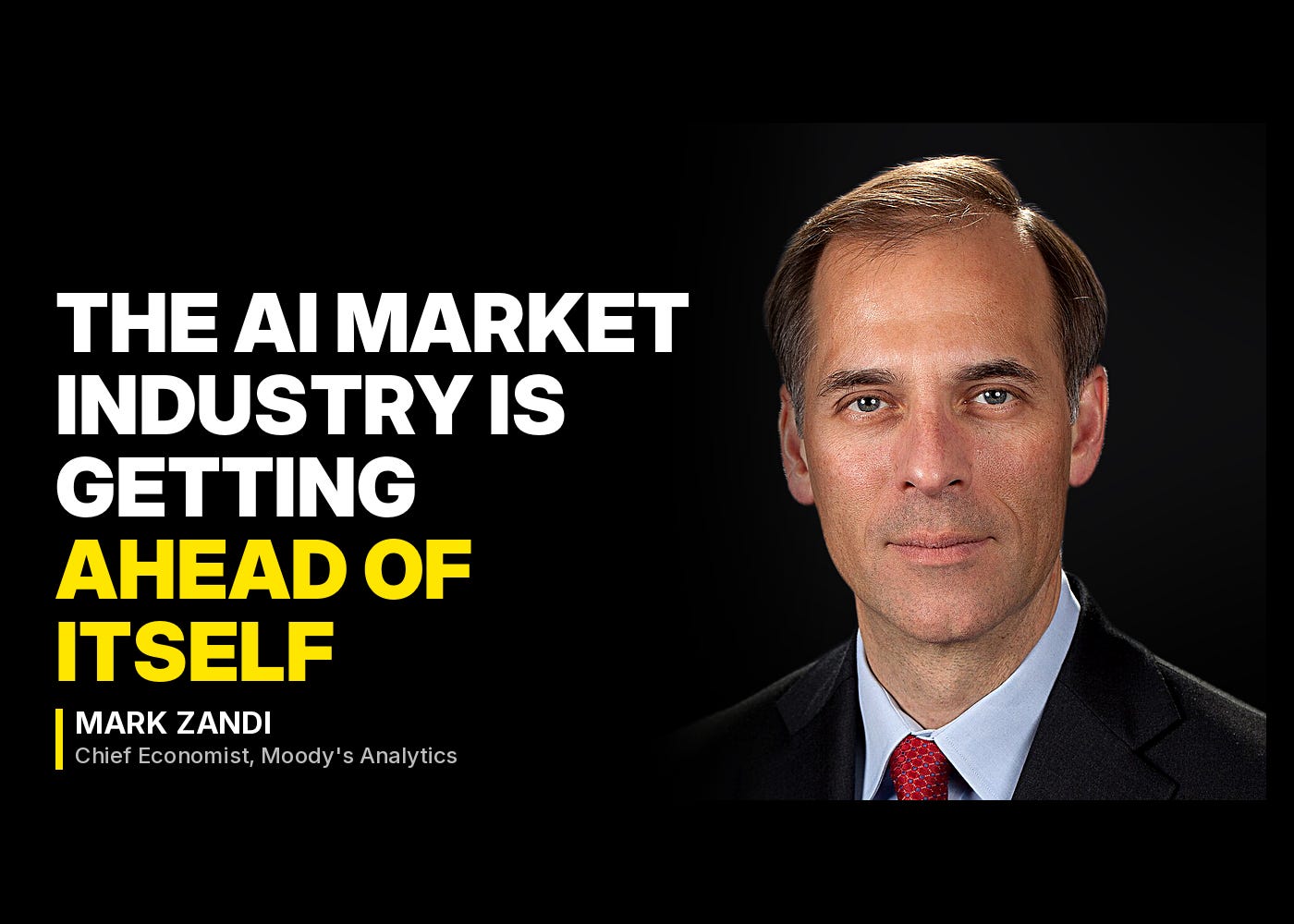
Photo: Rodrigsa, CC BY-SA 3.0 via Wikimedia Commons
Semiconductors have returned just 2% over the past 12 months even as their earnings climbed 135%. Most traders read this week's AI-stock selloff as the start of something bigger; four analysts who appeared one after another on CNBC's Closing Bell Overtime on November 6 read it differently, each from a different corner of the market.
"We still have valuations and expectations built into the AI trade that are relatively extraordinary compared to where we were... we have by no means unwound the mania in its entirety." — Bob Elliott
Bob Elliott, co-founder and CEO/CIO of Unlimited Funds, had flagged this risk on the show weeks earlier, and told anchor Michael Santoli the market is still a long way from having priced in what comes next.
The full episode is covered here so you can skip it. 1 hour of audio, 7 minutes of reading.
Here are the 4 calls that matter.
Key Takeaways
Semiconductors gained just 2% over 12 months while earnings rose 135%, a gap Citi's Steven Wieting calls too wide to leave unpriced
A stronger-than-expected October jobs report gives the Fed "latitude" to hike in December, Moody's Mark Zandi says, even as he calls the AI investment industry "getting ahead of itself"
Eli Lilly's December 7 capital markets day is the next catalyst for its stock, Bernstein's Courtney Breen says, even as Moderna's rally already prices in cancer indications beyond melanoma
The market has "by no means unwound the mania" in AI stocks, Unlimited's Bob Elliott says, pointing to Nvidia's implied $1 trillion of 2029 chip sales
1. Semis Look Mispriced
Steven Wieting, Chief Investment Strategist at Citi Wealth, told Closing Bell Overtime that this week's slide does not mark the start of a tech-spending slowdown. Tuesday's election result, he said, won't cut hardware spending next year.
Steven Wieting says a 135% earnings jump makes further semiconductor declines unlikely
"Semiconductors... had a 2% gain over the past 12 months. Earnings are up 135%. If they grow 60-type EPS next year, it's ridiculous to think that they won't participate in some sort of recovery." — Steven Wieting
Data-center construction orders are up roughly 100%. Planned capital spending is growing 48% among companies whose borrowing costs stay manageable, Steven noted.
Steven Wieting calls the AI buildout a once-in-a-generation investment
"This build-out is a once-in-a-generation investment. I think it's continuing. I don't think that this is the top of that piece of the economy." — Steven Wieting
Steven said the opportunity is shifting away from chipmakers, toward software, cybersecurity and the hyperscalers. Their existing compute gets scarcer and more valuable, he argued, if new buildouts narrow.
He tied some of the market's sharp sector rotations to monetary tightening, noting a hyperscaler's cost of capital can sit roughly ten points below "core." Citi has pared its own risk since cutting exposure in May and turning neutral on equities in August. Its defensive trades, such as consumer staples up 20% on 5% dividend growth, may have rallied too far the other way.
