

Lenny's Podcast · Nov 22, 2026 · 1h 21m · 69m saved
With Sherif Mansour, Head of AI and Product Craft at Atlassian
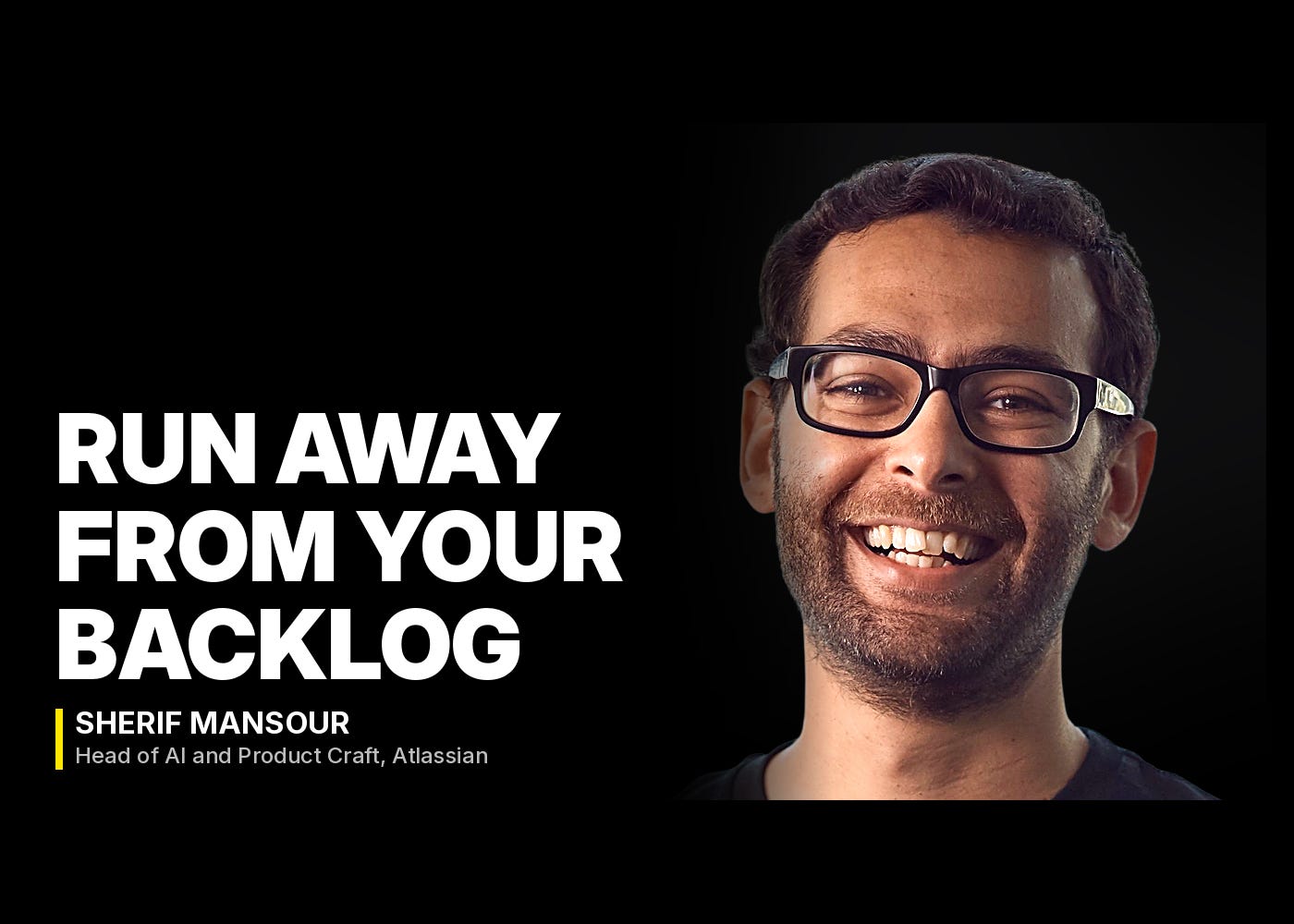
Photo via sherifmansour.medium.com
Atlassian built a few AI "builder" squads with no dedicated product manager or designer, and within about a month everyone had drifted back to their old roles. Sherif Mansour, Head of AI and Product Craft at Atlassian, told Lenny Rachitsky on Lenny's Podcast that the experiment showed speed was never the constraint.
The common view is that AI coding tools make product managers less necessary. Sherif drew the opposite conclusion: cheaper output raises the value of the people who decide what gets built.
"We realized throughput's not our problem. Direction's our problem. Throughput's getting cheaper." — Sherif Mansour
Sherif has spent 17 years at the company behind Jira and Confluence. He joined as the first product manager on Confluence, became Atlassian's first Distinguished PM, and now runs both the company's product-management practice and its AI product strategy.
The full interview is covered here so you can skip it. 81 minutes of audio, 12 minutes of reading.
Here are the 13 principles that matter.
Key Takeaways
Product managers own decision-making velocity, not the decisions themselves
Atlassian's PM-free AI squads showed that throughput was never the bottleneck; direction was
Juniors are about 38% more likely than seniors to adopt new tools, so Atlassian is hiring more of them
Taste matters more once everyone has the same AI models, which is why "artist" PMs are in demand
Sherif's hypothesis is that design is the most undervalued skill in AI hiring right now
For an established product, bolting AI onto existing workflows is often the fastest way to become AI native
A strong founder is usually right because they have thought longest about the problem, so Sherif starts by assuming he is the one missing context
1. PMs Own Decision Velocity
Sherif's central claim is that the product manager's job is often misread. Beyond 20 or 30 people, the trust and shared understanding of a small team breaks down, and someone has to keep everyone working from the same facts.
Sherif says a product manager's main job is filling gaps in context, for people and for agents
"They don't own decision making. PMs own decision-making velocity. The largest, most important part of their job is they're literally filling context — filling context with humans and, these days, with agents too." — Sherif Mansour
He named three kinds of gap: context about customers, about the product and its market, and about the business. In practice that means no customer interviews without engineers in the room, and designers who build alongside engineers instead of handing over finished specs.
Sherif tells product managers to stay out of the ticket backlog
"I always say to PMs: your job is to stay away from the Jira backlog. Run away from your backlog." — Sherif Mansour
The better question, in his view, is why a PM thinks one ticket matters more than another. The answer usually exposes a piece of context the rest of the team does not have.
