

WSJ Events · Nov 23, 2026 · 24m · 16m saved
With Jonathan Adashek, SVP and Chief Global Affairs Officer at IBM
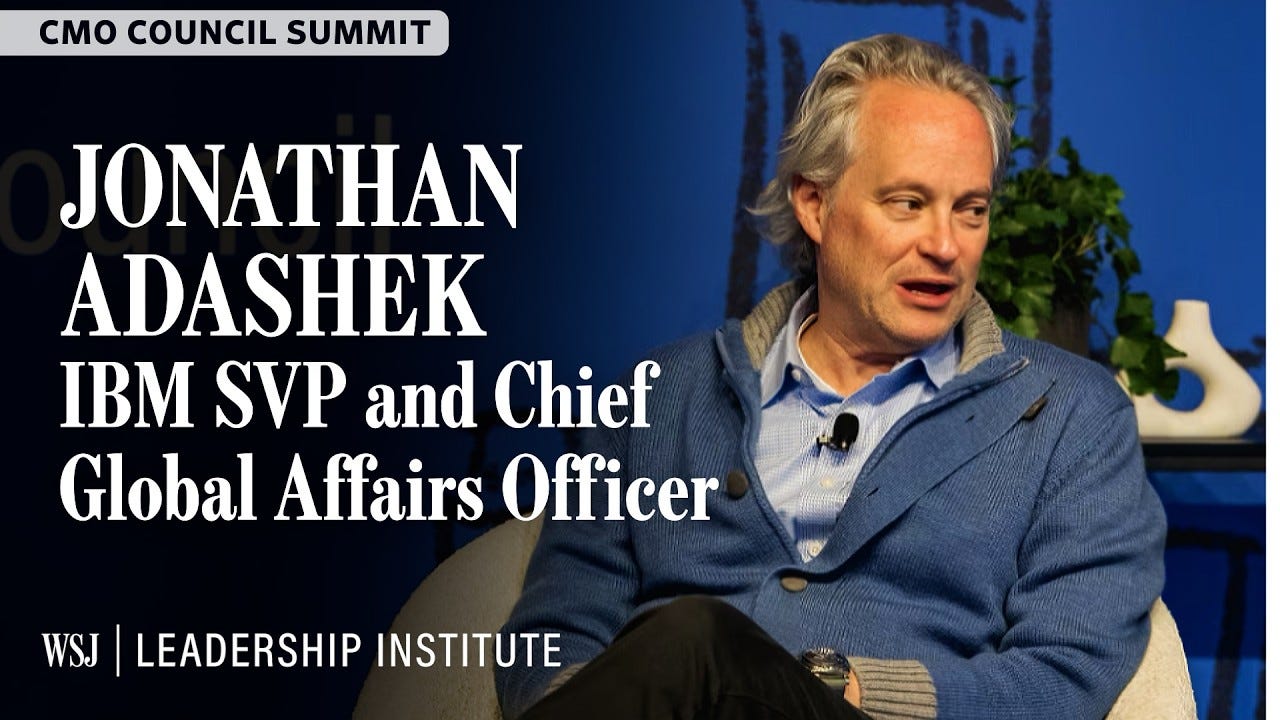
IBM's human-resources service center once had 800 people supporting roughly 300,000 employees worldwide. It now has 60. Jonathan Adashek, SVP and chief global affairs officer at IBM, told Nat Ives of the WSJ Leadership Institute at the WSJ CMO Council Summit that an AI agent now answers most employee questions.
Many companies describe AI as a tool for small productivity gains. Jonathan described rebuilding whole workflows around it, in marketing as well as HR.
"Banner ads took six weeks, seven different teams, nine different handoffs, and six different briefs through the process from an idea to a banner I had running today. It's 60 seconds and that includes legal approval." — Jonathan Adashek
Jonathan leads a marketing organization of about 3,000 people at IBM, after years at Microsoft, and the changes he described are ones his own teams carried out.
The full interview is covered here so you can skip it. 24 minutes of audio, 8 minutes of reading.
Here are the 12 takeaways that matter.
Key Takeaways
IBM's HR service center went from 800 people to 60, with the other 740 moved into other roles
Producing a banner ad went from 6 weeks to 60 seconds, legal approval included
Jonathan found over 300 marketing tools in use across about 3,000 people
Legal's "no" should prompt a question about the size of the risk, not end the conversation
IBM's logo stays out of the UFC octagon, because it would be shown covered in blood
About 270 of 320–330 marketing workflows were judged fit for AI, and governing the agents is now the hard part
1. A Week of Outages
Nat opened on a run of recent failures: grounded flights, Outlook, Charles Schwab, the NSA's Slack and Chase, all within days of each other. Jonathan would not call it coincidence, but his explanation was routine.
Jonathan Adashek bet that everyone in the room had a technology problem in the past month
"Everybody would raise their hand and there's something went wrong along the way." — Jonathan Adashek
Software and hardware updates arrive on staggered schedules, which he said leaves compliance gaps that produce glitches. He recalled weekly update cycles from his years at Microsoft. A string of high-profile failures also puts everyone on alert to notice the next one.
