

The Exchange · Sep 29, 2026
With Charlie Bobrinskoy, Vice Chairman and Head of Investment Group at Ariel Investments
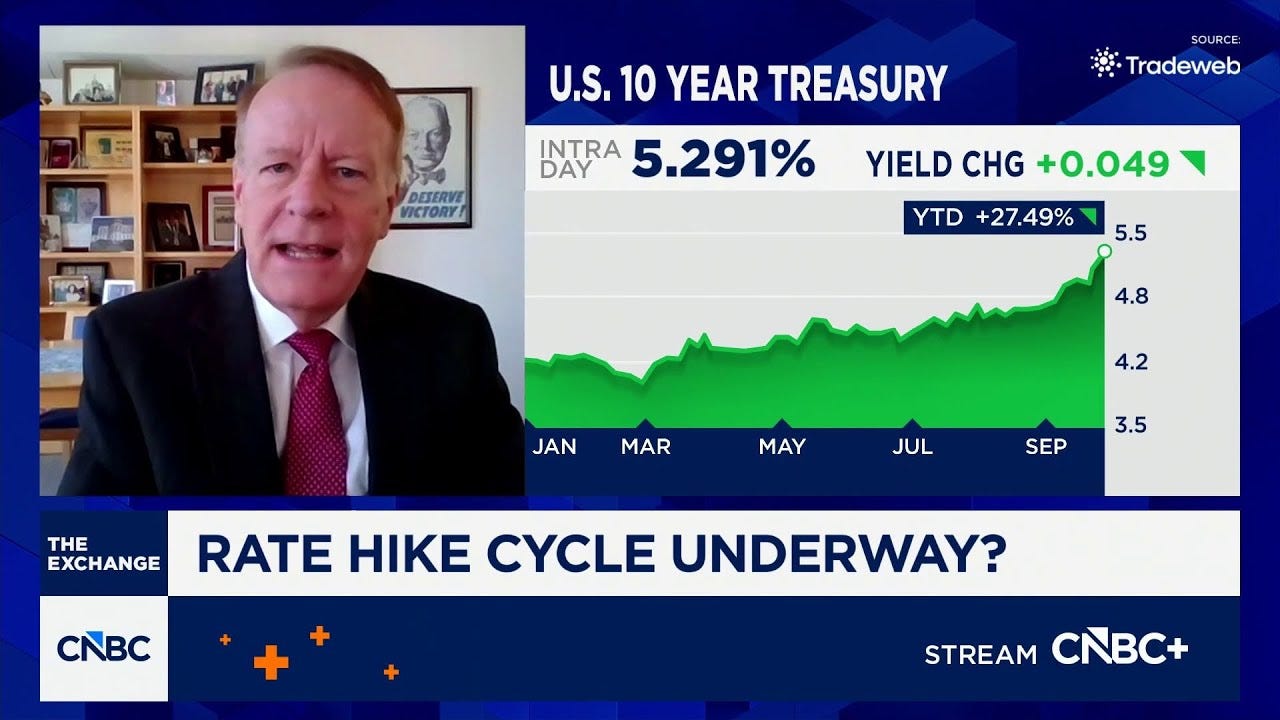
A 1% drop in the rate used to discount future earnings is worth a 16% gain in stock value, Charlie Bobrinskoy says — and for 40 years, rates only fell.
Investors in their 40s and 50s have only ever managed money in a falling-rate world. Bobrinskoy says that world is over, and it changes what wins from here.
"But now we've got a reversal going on. And it's a whole new world when rates are going up." — Charlie Bobrinskoy
Bobrinskoy spent 21 years as an investment banker at Salomon Brothers and its successor Citigroup, rising to managing director and head of its North American investment-banking branch offices, before joining Ariel Investments in 2004, where he now runs its concentrated, all-cap value portfolio.
The full segment is covered here so you can skip it.
Here are the 3 calls that matter.
Key Takeaways
A 1% drop in the rate used to discount earnings is worth a 16% gain in stock value, and that math ran in investors' favor for 40 straight years
Rates fell in every 10-year stretch from 1981 to 2020, bottoming at what he calls an "unsupportable" 0.65%
Leveraged buyouts, long-duration growth stocks and real estate were the biggest beneficiaries of falling rates — and are now the most exposed as it reverses
It's the direction of rates that moves markets, not the level, he said: a 10-year yield that holds at 5.27% does no damage; one that keeps climbing does
Structural inflation, not the AI trade, is why he expects rates to keep climbing
1. Why Rates Are Headed Higher
Asked how high rates are going to go, the question he says everyone not focused on AI is asking, Bobrinskoy said most working investors have no lived experience of a rising-rate market to draw on.
Investors under 50 have never managed money through rising rates
"We had 40 straight years from 1981 until 2020 of declining interest rates." — Charlie Bobrinskoy
That 40-year decline shaped how an entire generation invested, rewarding strategies that only work when borrowing costs keep falling.
Falling rates favored leverage, long-duration tech and buyouts
"It favors leveraged companies. It favors, frankly, long duration tech companies. It favors LBOs." — Charlie Bobrinskoy
He traces the reversal to inflation itself, not to any single Federal Reserve decision.
"My general view on this is that there are a lot of things in place structurally for inflation that are pushing rates higher and we can talk about the specifics of that, but interest rates are fundamentally driven by inflation, inflationary expectations, and those are headed higher." — Charlie Bobrinskoy
