

Silicon Valley Girl: AI, Tech and Career Growth · Oct 16, 2026 · 55m · 47m saved
With James Manyika, SVP of Research, Technology & Society at Google
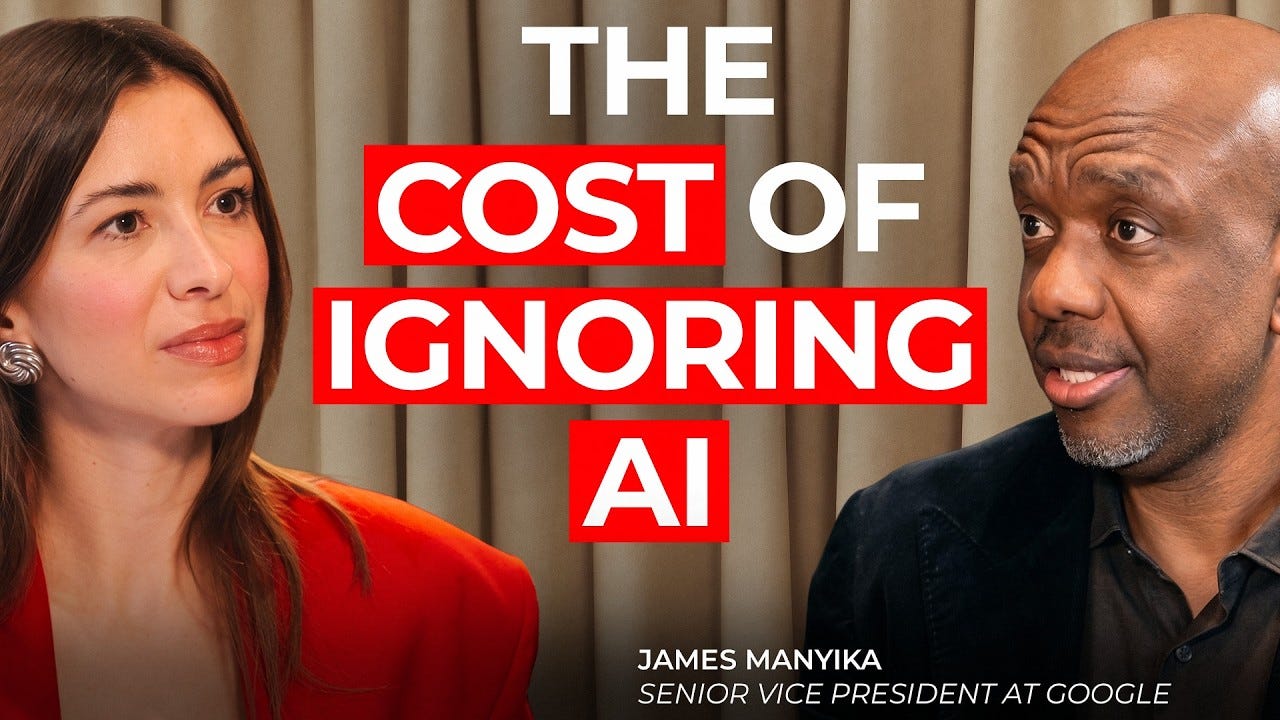
James Manyika, Google's SVP of Research, Technology & Society, told Marina Mogilko on Silicon Valley Girl that AI accounts for at most about 200,000 lost US jobs so far, against more than a million jobs it has helped create.
A few years ago some AI commentators said half of all white-collar jobs would be gone within two years. James bet against them, and the deadline passed without the losses.
"The most jobs we can attribute to having been lost from AI... was 200,000, and the jobs have grown as a result of the AI effects were actually more than a million."
James leads Google's research, technology and society work, which gives him Google's own data on how roughly two billion monthly users actually use Gemini, the Gemini API and AI Mode. He also sat on a United Nations advisory body on AI.
The full interview is covered here so you can skip it. 55 minutes of audio, 8 minutes of reading.
Here are the 5 insights that matter.
This Scuttlebutt Summary is available in full to premium subscribers. If you're not one already, please consider subscribing to keep reading.
Key Takeaways
Forecasts that AI would erase half of white-collar jobs in two years did not come true
James bet against them, and the forecasters moved the deadline
AI is used in only about a fifth of the tasks in a median job, and mostly to assist rather than finish them
Exposure to AI can raise demand for a job, as it did for radiologists
The bigger risk is wages, not jobs: AI can take the valuable part of the work and leave the rest
Wage growth has trailed output growth for 40 years
Lab verification, not idea generation, is now the bottleneck in AI-driven science
James's main safety worry is AI capability moving faster than the work to make it safe
1. The Bet Against Job Loss
James described AI's effect on work as three forces running at once. Some jobs decline because their tasks become easy to automate. Demand for other jobs rises, as it did for electricians, radiologists and, after ATMs, bank tellers. New occupations also appear: he cited MIT economist David Autor's research showing that about 68% of today's US jobs did not exist in the 1950s.
James took the other side of a bet that AI would wipe out half of white-collar jobs within two years
"There were some AI folks who were arguing that in two years time we're going to have wipe out 50% of white collar jobs and that's the bet I was willing to take." — James Manyika
When the two years ran out, James recalled, the forecasters' answer was "we'll reset the timeline." Google's own count puts AI-attributed losses at about 200,000 US jobs, and software-development employment is still growing.
