

Halftime Report · Nov 17, 2026
With Andy Jassy, President and CEO of Amazon
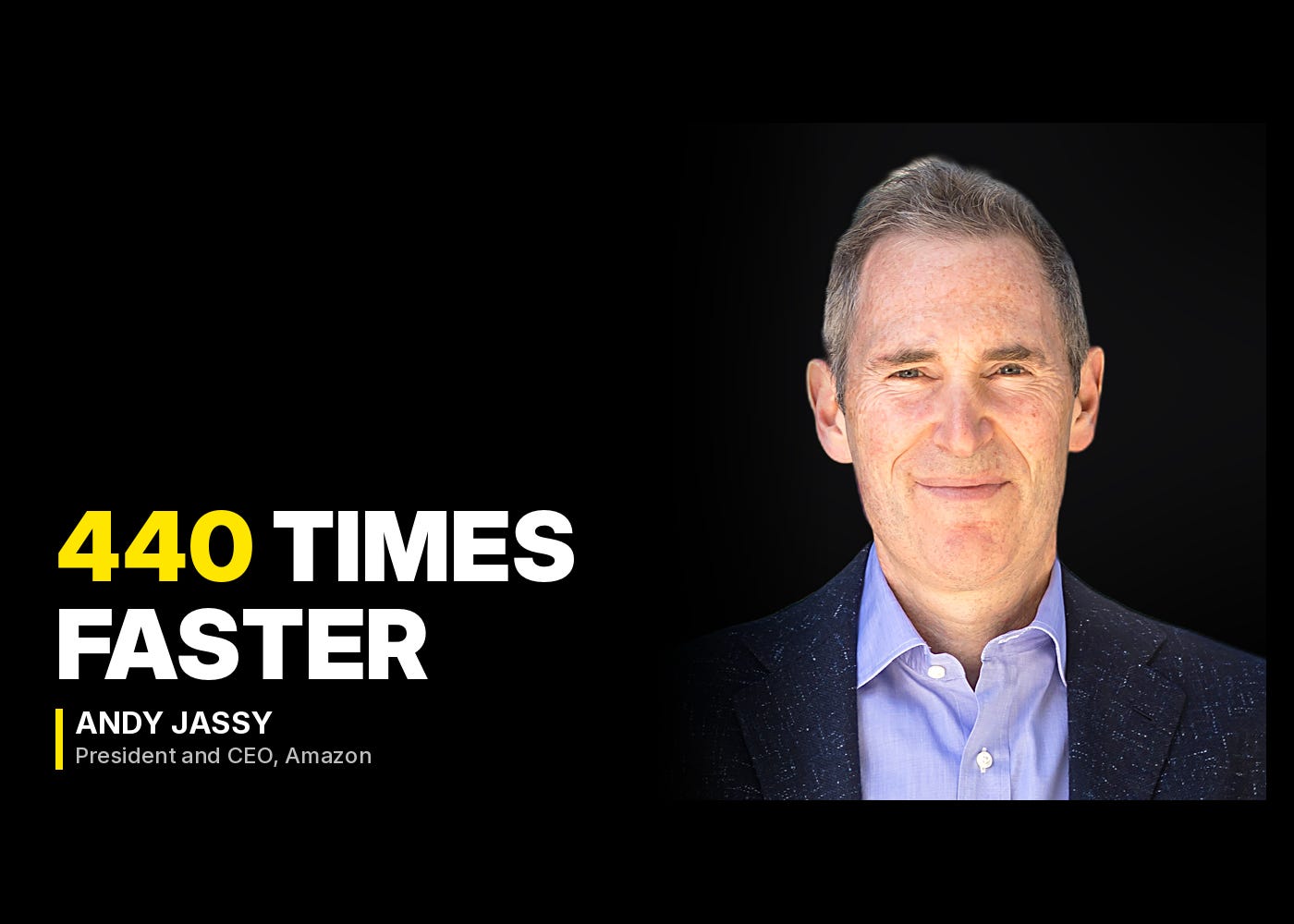
Photo: Lisi Mezistrano Wolf, CC BY-SA 4.0 via Wikipedia
Andy Jassy, president and CEO of Amazon, told Scott Wapner on CNBC's Halftime Report that AWS's generative AI revenue passed $25 billion in the first three years of this wave, a pace he put at 440 times faster than AWS's own early growth.
With Nvidia's founder gone and Amazon selling AI chips of its own, Scott pressed Andy on whether a weakened rival helps Amazon. Andy rejected the idea and called Amazon more partner than competitor.
"You never wish ill on a competitor, particularly one that you're a partner of. And I think of ourselves more as a partner to Nvidia than as a competitor, even though there's some overlap." — Andy Jassy
Andy runs a company that expects to spend around $220 billion on capital this year and more next year, and that could own 23.8% of Anthropic around its IPO.
The full interview is covered here so you can skip it.
Here are the 7 takeaways that matter.
Key Takeaways
AWS's AI revenue passed $25 billion in 3 years, a pace Andy put at 440 times AWS's early growth
Amazon's chips business has passed a $25 billion run rate, yet Andy sees no day without Nvidia as a partner
Large blocks of AWS compute are already reserved for 2027, 2028 and some of 2029
Falling behind China on AI infrastructure would be "a catastrophic mistake"
Amazon plans to hold its Anthropic stock for a long time, not sell into the IPO
More AI use drives more ordinary cloud use, which Andy called AWS's edge in the financing debate
1. Respect for Nvidia
Andy opened by declining to weigh in on the details of Jensen Huang's departure from Nvidia, beyond saying the parties are talking it through. He spoke warmly of both Huang and the company.
Andy Jassy expects Nvidia to stay a major Amazon partner
"I have deep respect for Jensen and I have deep respect for Nvidia. And they've been very significant partners for Amazon for a long time, and they will be for as long as I can foresee." — Andy Jassy
Amazon buys Nvidia chips and also competes with them through its own designs. Andy argued the AI infrastructure market is large enough for both to succeed.
