

All-In · Nov 10, 2026 · 56m · 46m saved
With Rick Smith, CEO of Axon
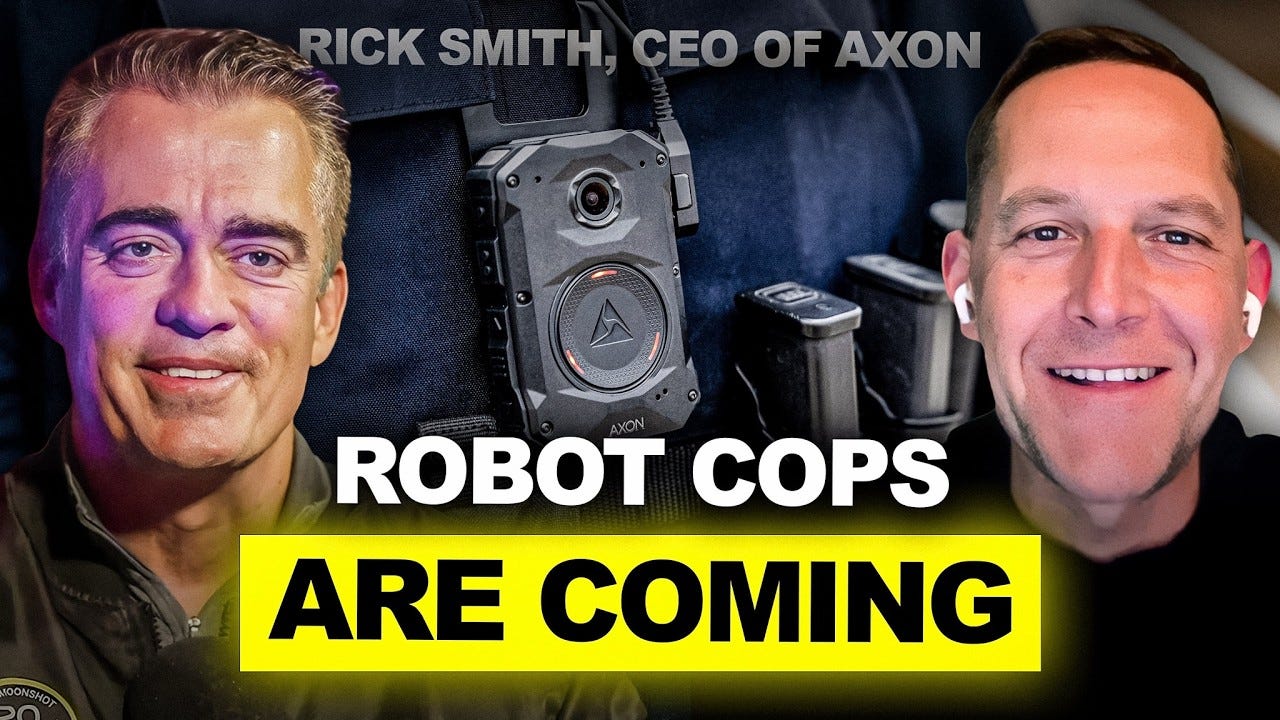
In 2004 Taser was briefly the best-performing stock in the world over three years. A year later it traded at $7, down from $33, after an SEC investigation and a short-selling campaign. Rick Smith, CEO of Axon, told David Friedberg on All-In that the company came close to failing twice, and how it survived both times.
Most companies settle the lawsuits that follow a crisis like that. Axon made a policy of refusing to settle any case it believed it was right on, and twice paid its own insurer to take a case to trial.
"If you sue us, you better bring your A-game. If we did something wrong, we're going to be rational and we will settle it. We're reasonable people. But you sue us on something where we think we're in the right, we will dig in like religious fanatics to defend our belief system." — Rick Smith
Rick built the first new Taser prototypes in a Tucson garage in 1993, ran the company for seven years on friends-and-family money, and now leads about 6,000 people. He says Axon has no active litigation for the first time in decades.
The full interview is covered here so you can skip it. 56 minutes of audio, 10 minutes of reading.
Here are the 8 moments that matter.
Key Takeaways
Rick's father put his last $500,000 into the company rather than let Silicon Valley Bank take everything
Axon went public in 2001 at about a $12M valuation because it was a real, profitable product company after the dot-com crash
An SEC investigation and a short attack took the stock from $33 to $7 in 2005
The investigation closed with no findings
Axon paid its own insurer to go to trial rather than settle cases it thought it would win
The Ferguson shooting made both sides want body cameras, for opposite reasons
Axon now says it manages more video each day than YouTube
The surveillance debate should be about data governance, not whether cameras exist
Decisions to use force will stay with humans, even on a Taser-armed drone
1. A Taser in 30 Days
Rick traces Axon to 1993. As a graduate student in Europe he was struck that several people he knew had been shot and killed, and he concluded that police needed a less lethal tool than a gun.
Rick Smith says a nonlethal weapon would change what people choose to do
"The simple insight was if we had Captain Kirk's phaser, people would choose not to kill other people because they'd have a more civilized way to stop somebody who's threatening them." — Rick Smith
He found the Taser's original 1970s inventor, a retired NASA scientist, through his patent filings. The two built the first new prototypes in the inventor's Tucson garage.
"We built our first prototype in 30 days from go — now I've got 6,000 people." — Rick Smith
Rick has also been tased himself. He described losing control of his body to "these waves of energy" until "the current was off."
