

Odds on Open · Oct 8, 2026 · 1h 22m · 60m saved
With Geoffrey Williams, Portfolio Manager at 1543 Capital, formerly a Managing Director at Goldman Sachs
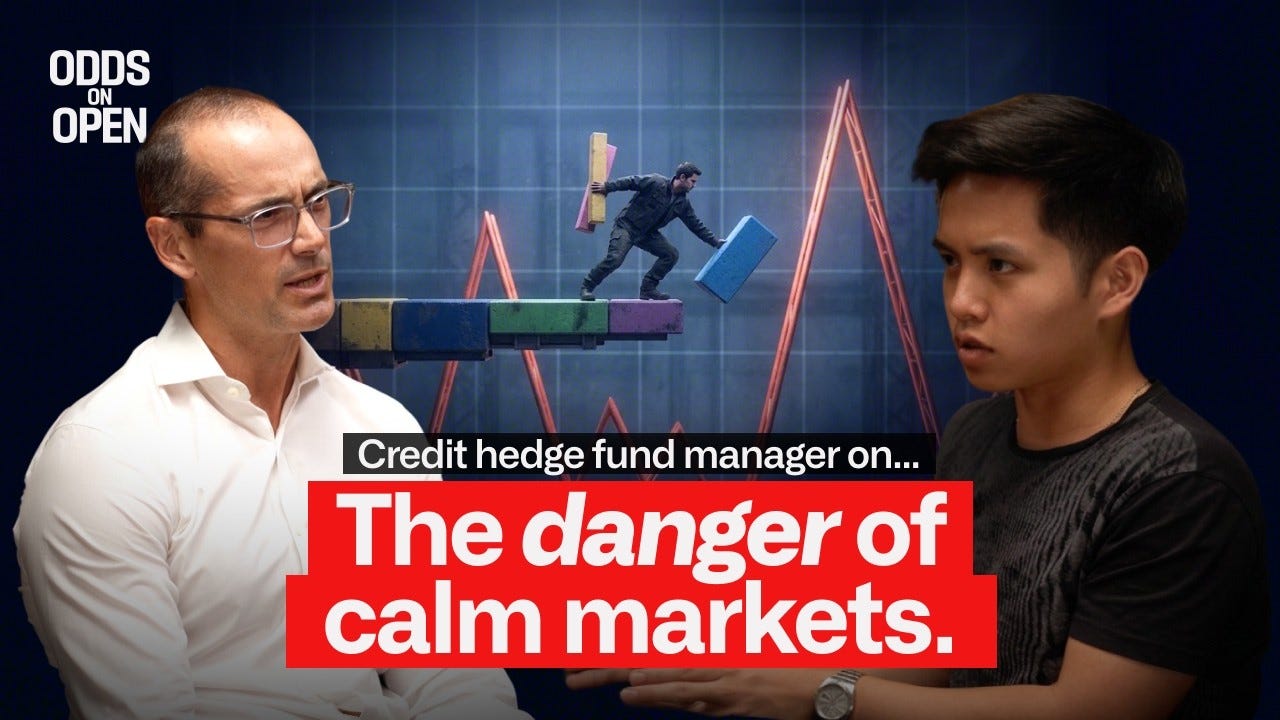
Before 2008, banks sold tens of billions of dollars of protection on the safest slices of ABS CDOs, bonds built from other mortgage bonds, for a premium of 10 basis points a year, Geoffrey Williams said.
Those slices sat above another AAA layer and were meant to be so remote from loss that 10 basis points looked like a good return. By 2007 the same risk was trading at points upfront, and he was trading ABS CDOs at Goldman as it happened.
"It's like, I don't know if this will ever move because it feels like there's insatiable demand for this product." — Geoffrey Williams
Geoffrey Williams, a portfolio manager at 1543 Capital, on Odds on Open, spent 2003 to 2016 at Goldman Sachs, where he became a managing director and co-ran the CMBS, CDO and commercial real estate loan trading business. His firm now buys commercial mortgage bonds near the end of their lives and other dislocated structured credit.
The full interview is covered here so you can skip it. 1 hour 22 minutes of audio, 22 minutes of reading.
Here are the 16 lessons that matter.
Key Takeaways
At Goldman in 2008, the worry was leverage and trust, not trading losses
A senior trader told the desk to check where the cash in their personal accounts was sitting
Banks sold protection on super senior ABS CDO risk for 10 basis points a year, because it looked like a great return on historical losses
Commercial real estate fundamentals were mostly sound going into the crisis; the problem was too much debt
Office tenants gave back space after Covid, and many markets are left with 20–30% vacancies
Post-crisis capital rules pushed securitized credit risk off dealer balance sheets and onto hedge funds
A desktop underwrite is enough for most loans, but he drives to see any property where the exposure is meaningful
Positions that can lose everything are sized at 50 to 100 basis points of the portfolio; the safest go to about 5%
He wants to be 80–90% sure of a trade, which he said is why his firm is not a venture fund
Populist politics and deficits are a risk he cannot time but is hedging anyway
The worst mistake in structured credit is forgetting that credit markets move in step functions
1. Goldman's Worst Days in 2008
The host opened by asking Williams to walk through his worst day at Goldman in 2008. He said that was 18 years ago and he remembers it in pieces. He was in the mortgage department throughout 2008, a few years out of college.
Bear Stearns and Lehman Brothers both ran into trouble in products Goldman's mortgage desk traded, so the desk had specific knowledge of what was going on. Goldman's own stock was crashing at the same time.
The fear at Goldman was about leverage across Wall Street, not the desk's own losses, he said
"I think every company and every investment bank was just too levered. And then there was uncertainty and then that lack of trust spread." — Geoffrey Williams
He remembered Berkshire Hathaway's investment in Goldman, preferred equity plus warrants, as a stabilizing force, with the Fed coming in later. Until then, the question on the floor was whether Goldman could be next.
Contagion reached the cash itself
Vehicles with a mismatch between their assets and liabilities became a problem, and money market funds turned into a risk. A senior person on the desk told everyone to check their personal trading accounts.
"And I still remember a senior person walking around and just say check all of the cash that you have in your PA and where it's sitting and otherwise." — Geoffrey Williams
He said it was a rewarding time in which he learned a great deal, with some very scary moments, and a very challenging time for many people.
