

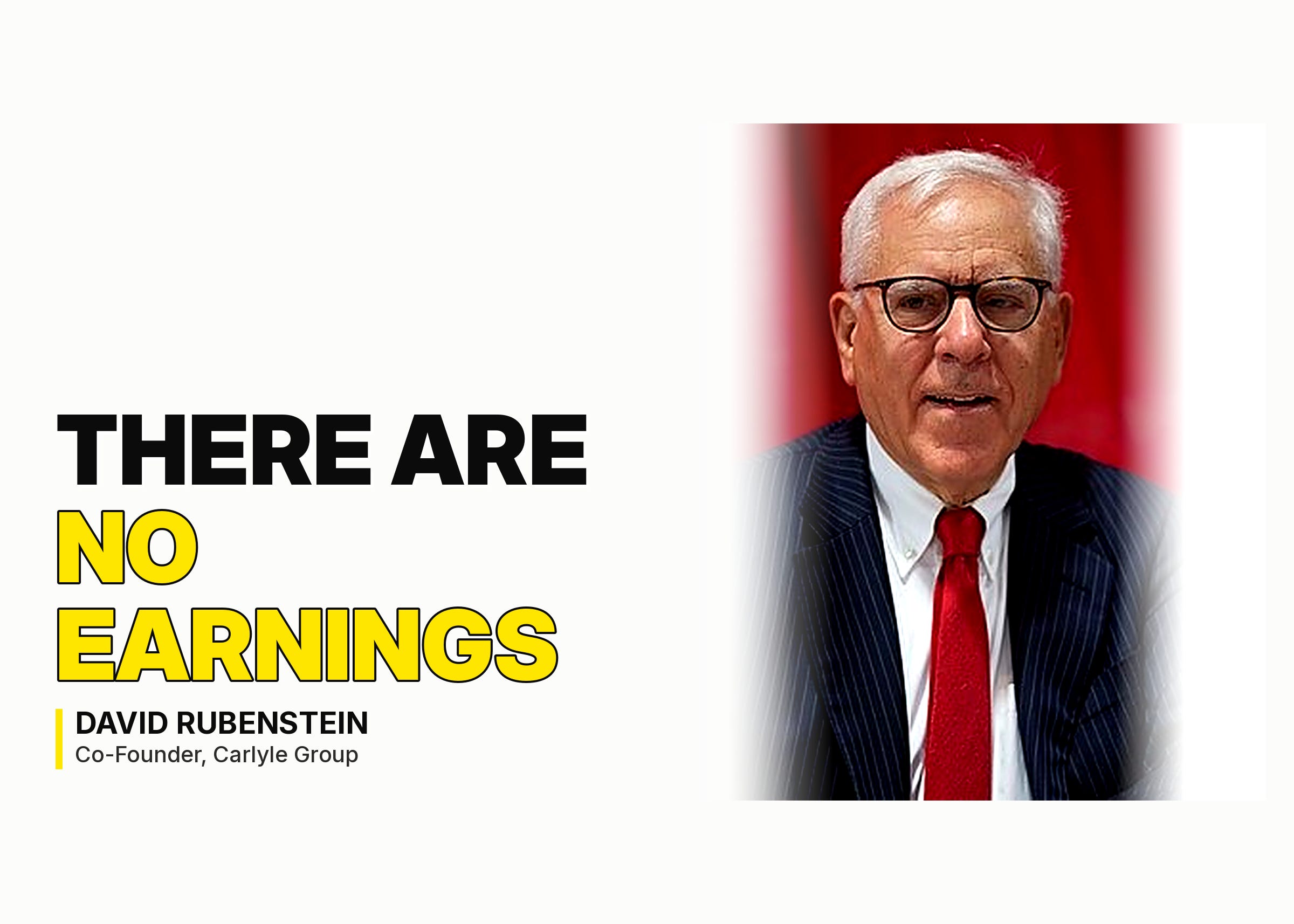
David Rubenstein, co-founder of The Carlyle Group, said Major League Baseball teams effectively have no earnings — owners make their money only when they sell.
That was one of 23 episodes in this issue. The others ranged from Jeremy Allaire, Circle's chief executive, on minting and redeeming $150 billion a quarter through its new blockchain Arc, to Eric Glyman defending a $60 billion valuation for Ramp days after its fundraise, and John Hoffman on Ondo's tokenized stocks reaching $1 billion in value in eight months — a third the time stablecoins took.
"Yes, in baseball, you don't focus on earnings very much... But baseball doesn't do that, because there are no earnings. Virtually, no team really has earnings because they're building towards the future." — David Rubenstein, Co-Founder at Carlyle, on Freakonomics Radio (Read summary)
We scanned 794 shows and 11 hours of audio, wrote 20 summaries, and pulled 51 quotes into this 14-minute read.
Here is what mattered.
Macro
No one doubts AI demand — the doubt is about financing the buildout
"No one's questioning demand, whether it was ASML this week, or TSMC, or Michael Dell... It's not a demand question. That will be a very bad day if you truly get that headline." — David Faber, CNBC anchor, on Squawk on the Street
CoreWeave pays a quarter of every dollar it earns toward debt, other chipmakers don't
"25% of every dollar they take in goes to pay debt. That's not the case with the other semis." — Steve Grasso, CNBC Fast Money panelist, on CNBC's Fast Money (Read summary)
Hyperscalers borrow at 5-6%, so CoreWeave's debt trouble isn't a verdict on the whole AI trade
"The hyperscalers are borrowing money at 5.2 to 6.2%... so CoreWeave is not a great thing, but it's also not a canary, necessarily." — Michael Sansoterra, Silvant Capital, on The Exchange
52 cents of every new dollar of income now goes to higher debt payments
"A typical worker's monthly debt payments rose $57... researchers estimate $0.52 of every dollar of income gained goes to higher debt payments." — Sharon Epperson, CNBC, on CNBC's Fast Money (Read summary)
International
Korea is "dirt cheap" outside its chip stocks, Verdad's Rasmussen says
"About half of the Korean stocks trade below book value... the cheapest quintile in Korea trade at about eight times earnings. The cheapest quintile in the U.S. is 16." — Dan Rasmussen, Founder and Portfolio Manager at Verdad, on The Exchange
Korea's 2024 reform program is starting to unlock its value stocks, like Japan's did
"In 2024, Korea announced their Value Up program, modeled after Japan, and that's starting to have an impact on these Korean deep-value stocks." — Dan Rasmussen, Founder and Portfolio Manager at Verdad, on The Exchange
Financials
Schwab's new clients skew Gen Z and millennial, its CEO says
"70% of new to firm clients are Gen Z or millennials. We are winning the young investor... We're the most followed financial services company on YouTube." — Rick Wurster, President and CEO at Charles Schwab, on Bloomberg Talks (Read summary)
Schwab's margin miss came from loan growth outpacing deposits, not weaker business
"We saw leverage grow about 90% year-over-year, but the majority of that was driven by tax-aware long-short strategies." — Rick Wurster, President and CEO at Charles Schwab, on CNBC Television (Read summary)
Zelle doesn't serve about 6,000 US financial institutions, Moov's CEO says
"Over 2,000 financial institutions are on it. That's another 6,000 that aren't a part of the Zelle network. And then neobanks, brokerages, reloadable prepaid cards can't even buy Zelle." — Wade Arnold, CEO and Co-Founder at Moov, on Fintech One-On-One (Read summary)
Moov catches P2P scams at the network level, not bank by bank
"We take fraud at the network level because if there is a scam, the money's coming from a lot of institutions concentrating back to a single user. We can detect that and shut it down without any human intervention." — Wade Arnold, CEO and Co-Founder at Moov, on Fintech One-On-One (Read summary)
Citizens expects net interest income to grow above 12%, ahead of Street estimates
"Our projected net interest income growth is over 12%. The Street has us over 9% next year." — Bruce Van Saun, Chairman and CEO at Citizens Financial Group, on Squawk on the Street
Crypto and Digital Assets
Circle mints and redeems $150 billion a quarter through its cross-chain transfer protocol
"The most widely used interoperability protocol in the world right now on all blockchain networks is Circle's crosschain transfer protocol, CCTP. We mint and redeem $150 billion a quarter of this." — Jeremy Allaire, CEO at Circle, on a16z crypto (Read summary)
No blockchain has won developer mindshare yet, Circle's CEO says — it's still mobile's Palm Pilot era
"The mobile era started like 15 or 20 years before that, and there was an unbelievable number of attempts at building the mobile operating systems and mobile platforms... we had the Palm Pilot and the Blackberry and the Windows phone and the Samsung phones and Symbian and Nokia... and it was all terrible, it actually didn't work for mainstream users." — Jeremy Allaire, CEO at Circle, on a16z crypto (Read summary)
Blockchains can check AI's tendency to concentrate power, a16z crypto's founder says
"Blockchains in some ways can be an antidote to... the centralizing tendency of AI. I think AI is amazing... but there is this potential effect where companies with the most capital and other resources can have an advantage." — Chris Dixon, Founder and Managing Partner at a16z crypto, on a16z crypto
Ondo's tokenized stocks hit $1 billion in 8 months — stablecoins took 3 years
"Stable coins ... three years to reach a billion in TVL, tokenized treasuries did that in about 18 months. On stocks ... we reached that milestone in eight months." — John Hoffman, Managing Director at Ondo Finance, on Milk Road (Read summary)
BlackRock picked the holdings for three of Ondo's new "Intelligent Portfolios"
"Three of the portfolios are powered by BlackRock in that BlackRock provided the investment strategies. So they did the asset allocation, the security selection, they did the weighting for three of the intelligent portfolios." — John Hoffman, Managing Director at Ondo Finance, on Milk Road (Read summary)
Alternatives and PE
A first-time GP landed a 97-unit deal by admitting he had zero multifamily experience
"I talked to Todd and his group and said, I've never done this. I haven't been a part of this. I can tell you what I see... but I'm new. And they are like, you know, that's all we care about." — Matt Iverson, Founder at Veritas Equity, on Lifetime CashFlow Through Real Estate (Read summary)
The debt structure, not the property, is what sold Iverson on his first deal
"I think it's 5.5%, ten year fixed agency, senior, five year interest only... when the interest only fell off, we were still able to pay the full profit out of cash flow." — Matt Iverson, Founder at Veritas Equity, on Lifetime CashFlow Through Real Estate (Read summary)
Consumer
Berluti customers wait over a year for shoes, and don't mind, LVMH's Arnault says
"To get your made-to-measure pair of shoes at Berluti, you wait more than a year. And customers don't care." — Antoine Arnault, Image and Environment Director at LVMH, on CNBC International Live (Read summary)
Family ownership means LVMH never stages a stunt to save the quarter
"We fight for the next decade or the next generation, and it's a real chance that we have... We don't have to fight for the next week or the next month or the next quarter." — Antoine Arnault, Image and Environment Director at LVMH, on CNBC International Live (Read summary)
Salads at Sweetgreen price under $15, not $20, its co-founder says
"Salads are priced on average right below $15... And the wraps start at $11." — Jonathan Neman, Co-founder at Sweetgreen, on The Best One Yet (Read summary)
Sweetgreen raised prices 13 points less than the restaurant industry over 5-6 years
"Over the past five or six years, we've taken 13 points less price than the industry has, and seven points less than grocery." — Jonathan Neman, Co-founder at Sweetgreen, on The Best One Yet (Read summary)
Chanel's creative and commercial teams are all aligned on one strategy, BoF's founder says
"They're all singing from the same proverbial hymn sheet about what Chanel is trying to do now... When it works, like it's working at Chanel, it does feel like magic." — Imran Amed, Founder and CEO at The Business of Fashion, on The Business of Fashion Podcast (Read summary)
Kismet's pitch is gut health for dogs, the same wellness trend reshaping human food, Legend says
"We focus a lot on gut health... our kibble is actually better than fresh food for them, and we've developed our recipes so well that they're better than fresh for the dogs, and we've tested them and proven that." — John Legend, musician and co-founder at Kismet, on Squawk Pod
Technology & AI
A solo feature took Grepr's CEO 10 days with AI, versus an estimated 6 months before
"That took maybe about 10 days. In previous days, that would have taken maybe about six months for a single person. It is insane... sort of a factor of 10, factor of 20 improvement." — Jad Naous, CEO at Grepr, on a16z (Read summary)
AI makes good engineers better, not bad engineers good, Grepr's CEO says
"If you're a good engineer, you're just a better good engineer. It's not like... some bad engineers all of a sudden became good engineers." — Jad Naous, CEO at Grepr, on a16z (Read summary)
AGI is inevitable, says Ant Group's Richard Bian — the real risk is gross margin, not capex
"The capital expenditure of AI is really high, but I wouldn't worry too much about the expenditure itself. What really concerns me is the gross margin." — Richard Bian, Head of Product Operations at Ant Group, on ChinaTalk (Read summary)
AGI should not be scarce, available only to a "selected few," Ant's Bian says
"AGI should not be a scarce resource made for the selected few. It should be available to the average population so that everyone can benefit." — Richard Bian, Head of Product Operations at Ant Group, on ChinaTalk (Read summary)
Token price is "meaningless" if the end result costs 10x less, Trioma's CEO says
"You're looking at how many iterations it took me to get to a result that I'm satisfied with... you realize that the price of token is meaningless if the end result is like 10 times cheaper." — Iskander Malikov, Co-founder and CEO at Trioma, on Eye On A.I. (Read summary)
Why hire or buy software when AI can build it in 10 minutes, Trioma's CEO asks
"My co-founder the other day vibe coded his own messenger app, and it took him like 10 minutes... it had like proper audio, video, webcam support, chats... something that would have taken months, if not years, of development, Trioma did it in like 10 minutes." — Iskander Malikov, Co-founder and CEO at Trioma, on Eye On A.I. (Read summary)
Google counts at most 200,000 US jobs lost to AI, versus over a million gained
"The most jobs we can attribute to having been lost from AI... was 200,000, and the jobs have grown as a result of the AI effects were actually more than a million." — James Manyika, SVP of Research, Technology & Society at Google, on Silicon Valley Girl (Read summary)
AI touches a median job's tasks only 21% of the time, and mostly just assists, Google's Manyika says
"The 21% you're referring to was the median percentage of a median job where the tasks were being used, where AI is being used in those tasks, and even then it wasn't even to complete the task." — James Manyika, SVP of Research, Technology & Society at Google, on Silicon Valley Girl (Read summary)
Interactive Brokers fears autonomous AI trades that users later disown, its founder says
"Yes, of course we have fears, because it's very possible that there'll be trades taking place that people either did not intend to do, or they will — if they are losing trades, they will claim that they didn't do it on purpose. So that is the big fear." — Thomas Peterffy, Founder and Chairman at Interactive Brokers, on Squawk on the Street (Read summary)
iPhone Duo demand is mostly novelty-seeking existing iPhone buyers, says its co-creator
"What you really look at with this form factor is that this is for one set of customers — an iPad that they can take with them anywhere... but really where all the demand is coming from is the iPhone buyer who just wants novelty." — Tony Fadell, former Apple executive and iPhone co-creator, on Squawk on the Street (Read summary)
Apple has the devices, chips and software — but no agentic AI framework, Fadell says
"Apple absolutely has to [build an agentic framework] — they have all the devices, they have all the silicon, they have all the software, but they don't have the agentic framework." — Tony Fadell, former Apple executive and iPhone co-creator, on Squawk on the Street (Read summary)
Fully autonomous AI agents violate Steve Jobs' "bicycle for the mind" principle, Isaacson says
"When I start using agents that try to do things without me, to be out of my control, Steve Jobs would be appalled by that... these people aren't stepping back and saying, why are we making this? The answer should be to help humanity." — Walter Isaacson, biographer and author, on TBPN
Proofpoint's $6.3B Varonis deal bets that AI adoption needs data security first, its CEO says
"Data has become the next frontier of protection for cybersecurity, and Proofpoint and Varonis together become the largest cybersecurity player solving data security." — Sumit Dhawan, CEO at Proofpoint, on Squawk on the Street
VC & Startups
Ramp passed $2B in annualized revenue, growing over 100% a year, its co-CEO says
"For the first time over the summer, we passed more than $2,000,000,000 a year in annualized revenue. It's growing north of 100% per year, and... we're growing more than 25% faster than we were this time last year." — Eric Glyman, Co-Founder and Co-CEO at Ramp, on TBPN (Read summary)
AI usage-based pricing gave software a marginal cost for the first time, Glyman says
"It used to be if you were banging on the keyboard, using Salesforce a lot more... you didn't get a much larger bill. The minute that it became such that if you used more tokens, your bill went up... In a way, software became money." — Eric Glyman, Co-Founder and Co-CEO at Ramp, on TBPN (Read summary)
Dragoneer's case for Ramp's $60B valuation: the market could grow "several ramps" a year without Ramp taking share
"It comes down to a handful of things. Thing one is bonkers huge market — not just big, but we might be in the first at bat of the first inning kinda big... the growth of this end market is several ramps in size annually." — Christian Jensen, Partner and Co-Head of Private Investments at Dragoneer Investment Group, on TBPN
Materials & Energy
Senior miners raised 2026 exploration budgets 30-35%, Major Drilling's Hanley says
"On average, budgets were up somewhere by 30 to 35%. Using Barrick as an example, their exploration budget was up 35% for 2026 year-over-year." — Ryan Hanley, Director of Capital Markets at Major Drilling, on Mining Stock Daily (Read summary)
The exploration bottleneck is drillers, not rigs, Hanley says
"Labor right now is the biggest challenge. Our utilization rate right now is 58% on a max of 75%... basically what that means is we've still got capacity, there's still rigs that are available — where the bottleneck is is finding drillers." — Ryan Hanley, Director of Capital Markets at Major Drilling, on Mining Stock Daily (Read summary)
Even after 2026's jump, exploration spending is only back to the start of the last cycle, Hanley says
"If you adjust for inflation, we're probably looking at global exploration budgets comparable to where they were at the beginning of the last cycle... I think that we're definitely in the early innings." — Ryan Hanley, Director of Capital Markets at Major Drilling, on Mining Stock Daily (Read summary)
Policy
A loan requires a debt, and earned wage access carries no obligation to repay, Stream's counsel says
"A loan requires a debt, and a debt is an obligation to repay... There is no obligation to repay with earned wage access, so therefore there can be no debt, so therefore there is no loan." — Kevin Lefton, Global General Counsel at Stream, on Votes & Verdicts (Read summary)
A state-by-state patchwork of earned-wage-access rules isn't in users' best interest, Lefton says
"We have no problem complying and putting in place a patchwork of state... it's just... a long, expensive... complex process that... I don't think it's in the user's best interest, and a federal bill would solve a lot of those problems." — Kevin Lefton, Global General Counsel at Stream, on Votes & Verdicts (Read summary)
The FTC will enforce "vigorously" against OpenAI and Anthropic if wrongdoing is found, Clayton says
"The short answer to your question, Becky, is yes, absolutely. We've heard from the American people — they want us to use our law enforcement tools, our regulatory tools to ensure their safety." — Jay Clayton, Chair of the White House Super Intelligence Task Force, on Squawk Pod
Unlimited campaign money made bipartisanship "archaic," Rubenstein says
"Bipartisanship is kind of an archaic concept these days, and the reason is money. We have no limits anymore on how much money you can give to a politician... they have a great incentive to raise the most money as possible." — David Rubenstein, Co-Founder at Carlyle, on Freakonomics Radio (Read summary)
Nuggets of Wisdom
Action reduces fear, not the other way around, says first-time GP Matt Iverson
"I would say your number one thing is action. And I found in my journey, action subsides fear. If you keep going, fear starts reducing. But if you don't, fear takes hold." — Matt Iverson, Founder at Veritas Equity, on Lifetime CashFlow Through Real Estate (Read summary)
Don't let anyone box you into "creative" or "analytical," BoF's founder says
"Don't let people put you in a box. You don't have to be just a creative person or just an analytical person. You can be both." — Imran Amed, Founder and CEO at The Business of Fashion, on The Business of Fashion Podcast (Read summary)
Dig into your own story — a machine can copy anything else, Legend tells young artists
"My advice to everyone is: really dig into your own story and what you have to say uniquely that's different from everyone else's... if a machine can do it for you, they can do it for everybody." — John Legend, musician and co-founder at Kismet, on Squawk Pod
If this was worth your time, send it to someone who has to follow all of this too.
What did you think of today’s edition? Hit ‘reply’ to this email, send us a message, leave a comment, or join the chat!
Get the latest market chatter as it happens: