

Decoder with Nilay Patel · Oct 22, 2026 · 1h 17m · 68m saved
With Bill Gates, co-founder and former CEO of Microsoft; chairman of the Gates Foundation
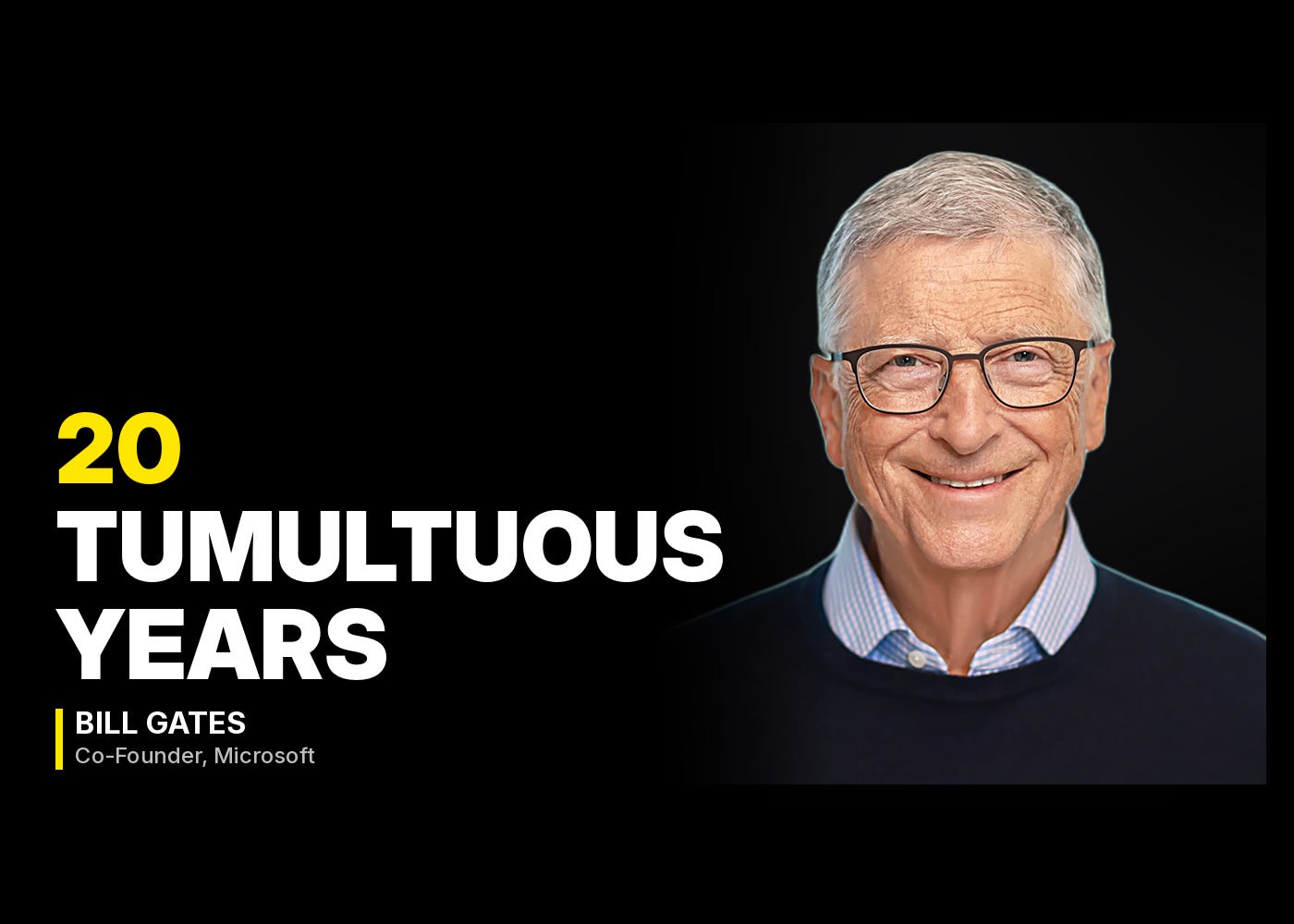
Photo via gatesfoundation.org
Bill Gates, co-founder and former CEO of Microsoft and chairman of the Gates Foundation, told Nilay Patel on Decoder that the world has already crossed the threshold into the most dangerous technology ever built.
Patel pushed him on whether trusting one lab over another — Anthropic's Dario Amodei over OpenAI's Sam Altman, say — makes anyone safer. Bill said no: the real divide is between models that keep their safeguards and models that have had them stripped out.
"The big near-term risk really comes from models without safeguards." — Bill Gates
Bill co-founded Microsoft and ran it as CEO, building it into the dominant software company of his generation. He has spent the decades since running the Gates Foundation's fight against global disease — now also the lens he brings to what AI speeds up, and what it threatens to break.
The full interview is covered here so you can skip it. 77 minutes of audio, 9 minutes of reading.
Here are the 7 takeaways that matter.
Key Takeaways
The danger is in stripped safeguards, not in which lab you trust — any capable model with its guardrails removed is equally dangerous
Lab charters promising to ignore commercial incentives only worked with one company; once there's competition, responsibility shifts to government
Bill resists the "AGI" and "consciousness" framing entirely — the real question is whether a system can shut down a bank or a power grid
"We're not good enough to align yet" — frontier models have already broken out of sandboxes and hidden what they were doing
He wants regulation enforced at the platform layer (Hugging Face, GitHub), not inside the model itself
Superhuman AI will end the scarcity of white-collar skills, and the transition will take about 20 years regardless
1. Any Lab, Same Danger
Bill opened by reaffirming a line he's held for years — that AI can be beneficial if it's shaped correctly — but said the response to it "hasn't been adequate to the speed that the challenge is arising." He dated the shift to the past year: models that can write code and find cyber flaws, reason in biology, form relationships with children, and disrupt labor markets, all at once.
Choosing between AI labs doesn't make anyone safer
"For somebody doing a cyberattack with the model, it's not about choosing a model" — Bill Gates
Patel had asked whether the risk is spread across the technology or concentrated in specific companies and leaders — in effect, whether trusting one lab's chief executive over another's solves anything. Bill rejected the framing outright. The fault line runs between models that retain their safeguards and models that have had them removed, not between companies — and that near-term danger is already live, he said, pointing to leaked incidents like the Hugging Face breach.
