

Monetary Matters · Nov 8, 2026 · 1h 5m · 54m saved
With Laks Ganapathi, Founder of Unicus Research and Minerva Investment Management
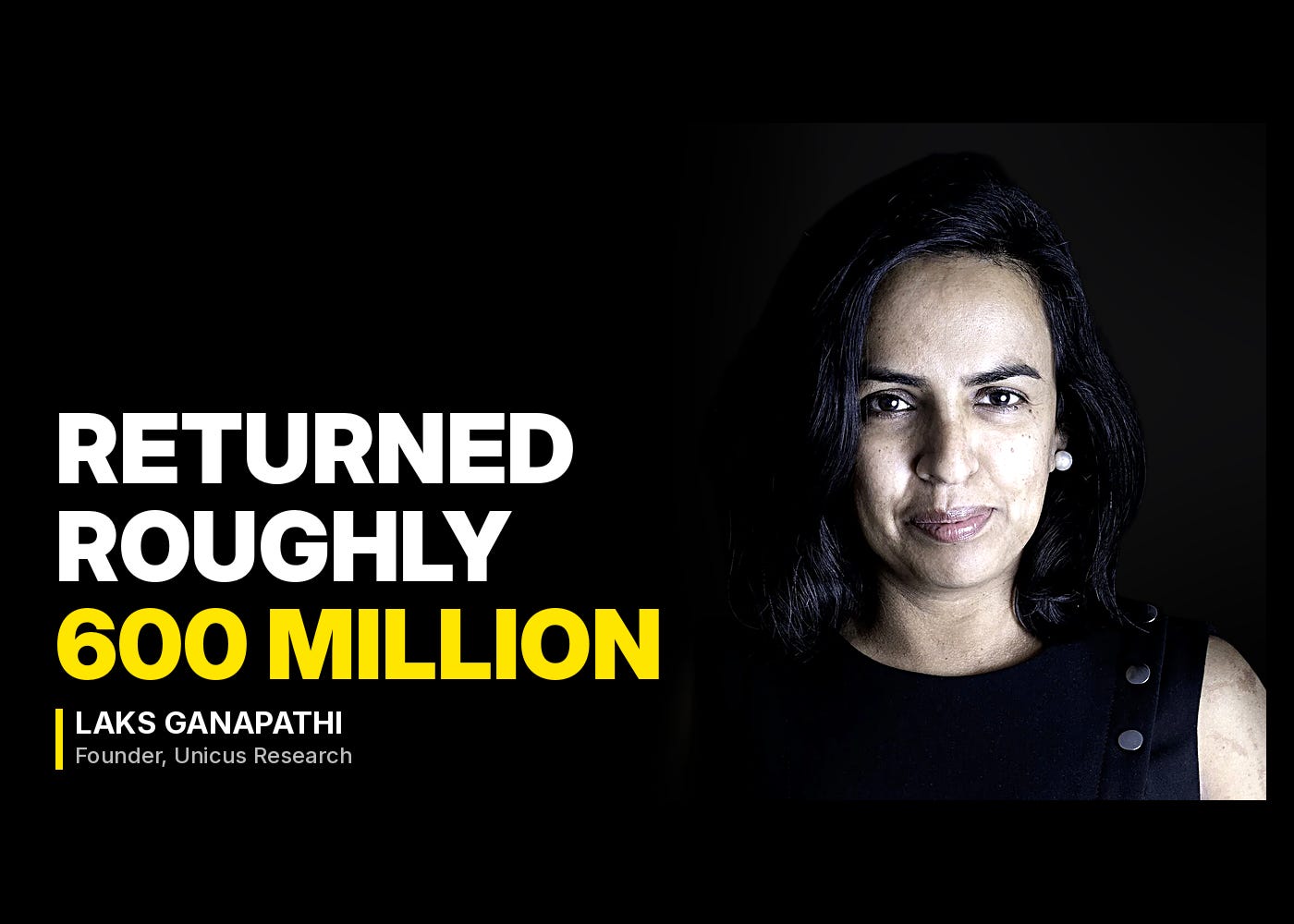
Photo via unicusresearch.com
On March 7, BlackRock's HPS Corporate Lending Fund limited withdrawals for the first time in its four-year history. Investors asked for $1.2 billion back and received roughly $600 million. Laks Ganapathi, founder of Unicus Research and the short-biased fund Minerva Investment Management, told Jack Farley on Monetary Matters that the stress runs well beyond one fund. Most analysts follow private-credit managers through their fee growth. Laks reads the loan books themselves, and she thinks the problems are systemic.
"There is a cancer, right? The cancer cells are spreading faster across... You can do the chemo and everything, but it's spreading everywhere at a faster rate. And yes, Apollo, Athene, BlackRock, Blackstone — they all have problems." — Laks Ganapathi
Laks's team has followed non-bank lenders since 2008 and is now building a database of the loans held by about 150 private credit funds. Michael Burry has joined Minerva as a senior adviser.
The full interview is covered here so you can skip it. 65 minutes of audio, 11 minutes of reading.
Here are the 12 arguments that matter.
Key Takeaways
Retail money reached private credit through wealth managers who did not read the prospectus, Laks was told
Reported default rates understate the damage, because a loan switched to paying interest in kind is not counted as a default
The same collateral was pledged to several lenders, the pattern Laks traced from 777 Partners to First Brands
34% of $1.29T in insurer cash and invested assets sits across 122 Bermuda insurers
Blue Owl's losses are not mainly in software, whatever its explanation for redemptions
Auto lenders are avoiding repossessions so the losses stay off their books
AI data-center debt is Laks's top short priority, ahead of direct lending
1. Reading the Loan Books
Private credit and other non-bank lenders grew quietly after regulators tightened rules on banks in 2008. After 2020 the industry moved into consumer lending and commercial real estate, and into the mainstream.
Laks Ganapathi turned to loan books because equity research missed the credit risk
Her team began working at the level of individual loans in 2021 and 2022, because the equity side of these firms "was not telling us the story." Equity analysts, she said, focus on how fast fees grow rather than on how well the loans were underwritten. Her method is to lay the loan books of different funds over each other and look for the same loan carried at different prices.
"We have 150 private credit funds, give or take, and we are still working through the... funds in... we are overlaying it to see if there are similar tranches and if the similar tranches are there." — Laks Ganapathi
