

Closing Bell · Oct 14, 2026 · 44m · 33m saved
With Jeffrey Sherman, Deputy CIO of DoubleLine · Jackson Ader, Equity Analyst at KeyBanc Capital Markets · Jeffrey Perlman, CEO of Warburg Pincus · Jared Holz, Healthcare Equity Strategist at Mizuho · Eli Horton, Senior Portfolio Manager at TCW
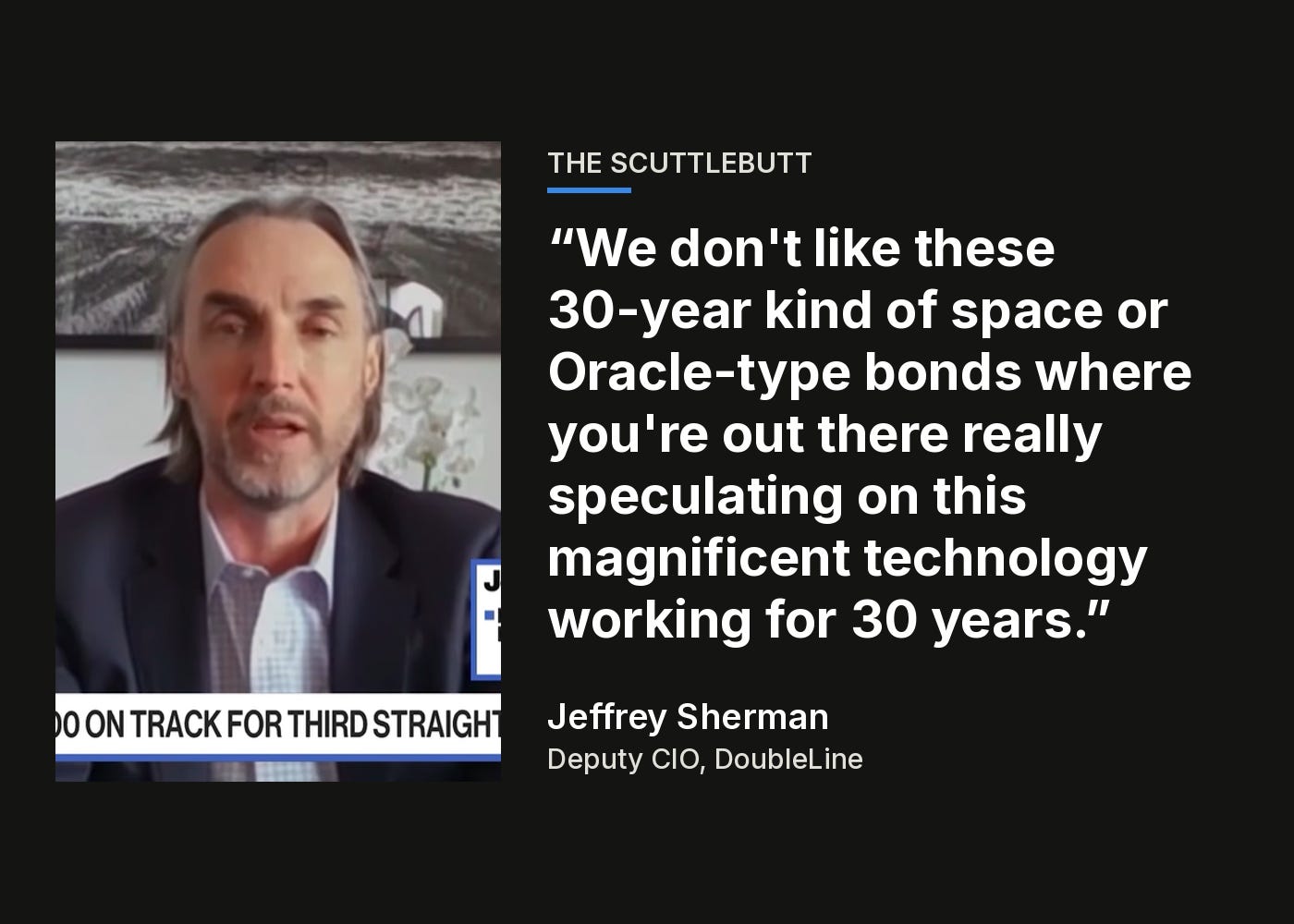
Photo via doubleline.com
The odds of a Fed rate hike fell to about a third during the day, from 60% earlier, after a hotter-than-expected September inflation report.
Jeffrey Sherman, Deputy CIO of DoubleLine, told Closing Bell that his firm still thinks the Fed ought to hike. Much of the day's selling in Oracle and CoreWeave was read as doubt about AI demand. Jeffrey Sherman pointed instead to the bond market's worries reaching the companies that borrow to build AI, and DoubleLine will not lend to them for 30 years.
"We don't like these 30-year kind of space or Oracle-type bonds where you're out there really speculating on this magnificent technology working for 30 years." — Jeffrey Sherman
Jeffrey Sherman speaks as a bond buyer: as DoubleLine's deputy chief investment officer, he set out where the firm will and will not put its money. The same hour carried KeyBanc's Jackson Ader on Oracle, Warburg Pincus CEO Jeffrey Perlman on the IPO market, Mizuho's Jared Holz on healthcare and TCW's Eli Horton on energy, plus a report from CNBC's Robert Frank on who owns stocks.
The full episode is covered here so you can skip it. 44 minutes of audio, 11 minutes of reading.
Here are the 12 calls that matter.
Key Takeaways
Bond market worries are spreading to AI borrowers such as Oracle and CoreWeave, in Jeffrey Sherman's view
DoubleLine still thinks the Fed should hike, even after the odds fell to about a third
Oracle now trades like a neo-cloud, with more sensitivity to interest rates than in years
Its cloud business is on pace to be about half of revenue by the end of fiscal 2027
The IPO market is "probably more structurally broken" than people admit, says Warburg Pincus's CEO
Healthcare's rally on a bad day for tech was a real rotation, not only a defensive move
TCW sees energy security and electrification, not AI alone, behind demand for industrial stocks
Only 19% of Americans own stocks directly, down from 21% in 2022
1. Oracle Moves With Rates Now
Jackson Ader, equity analyst at KeyBanc Capital Markets who covers Oracle, was asked whether the market is overreacting to worries about AI debt tied to the company. His answer was that Oracle "doesn't really trade like a software company anymore." Over the last 90 days its correlation with IGV, a popular software ETF, has "totally cratered." Its sensitivity to interest rates has climbed to levels not seen in years.
Jackson Ader says Oracle now behaves like a neo-cloud, not a software company
"Oracle trades like more of a neo-cloud, and it trades with higher duration and higher sensitivity to rates than it has in a number of years." — Jackson Ader
Neo-clouds are data-center operators that rent out AI computing power. Jackson gave two reasons for the change. Oracle Cloud Infrastructure, or OCI, is on pace to be roughly half of Oracle's revenue by the end of fiscal 2027, up from a small fraction a year or two ago. OCI's heavy negative free cash flow also forces Oracle to fund itself with leases and new debt, which makes the stock more sensitive to rates.
