

The David Rubenstein Show · Oct 29, 2026 · 24m · 19m saved
With Nir Bar Dea, CEO of Bridgewater Associates
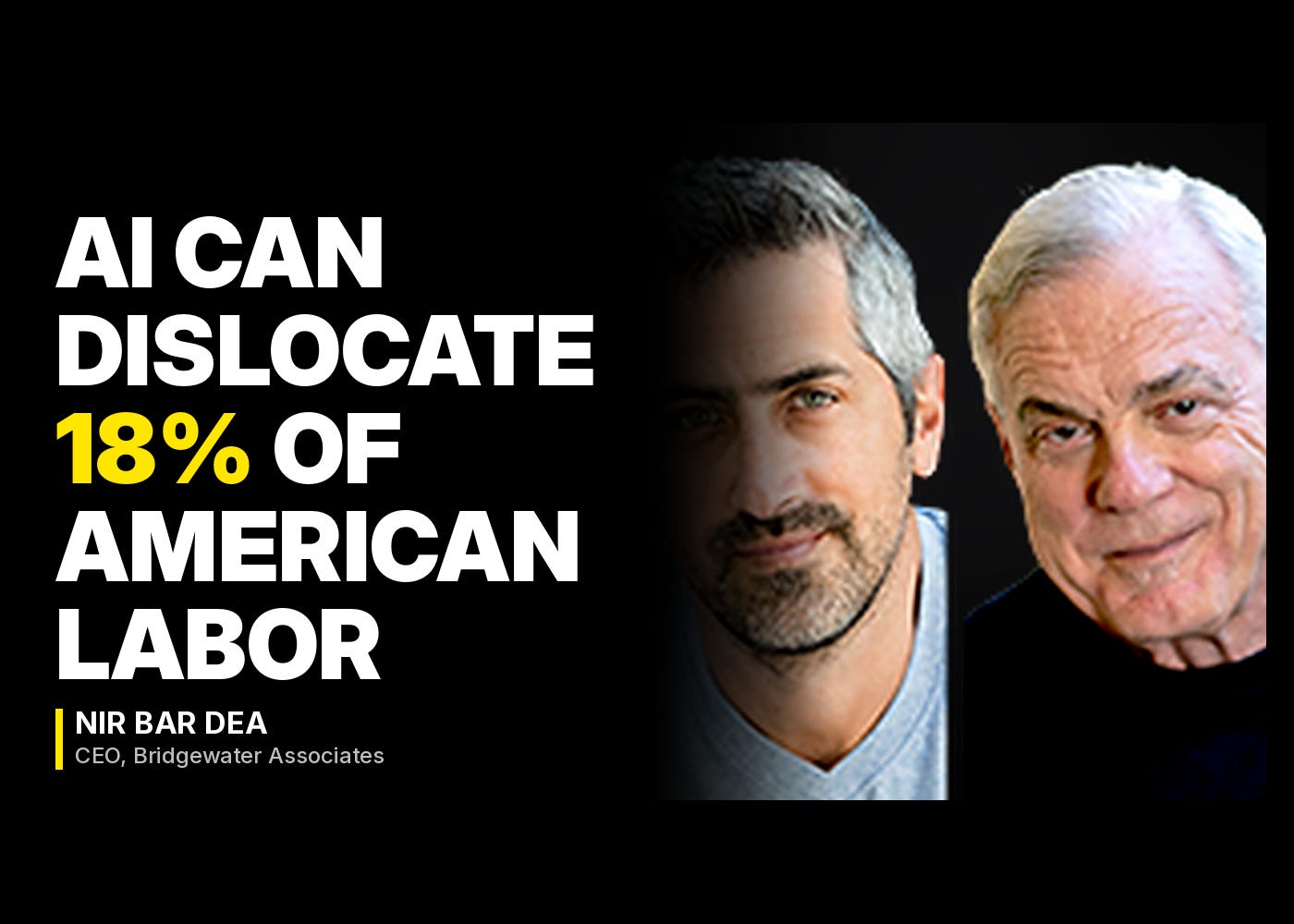
Photo via bridgewater.com
Nir Bar Dea, CEO of Bridgewater Associates, told The David Rubenstein Show that one of his firm's funds lets artificial intelligence generate the investment ideas and carry them through to execution, with no human allowed to override it. Most hedge funds still keep a person in that loop. Nir doesn't — and he's also the one arguing publicly for the AI safety regulation that could slow the very technology his fund depends on.
"You gotta regulate AI for safety, because any blip will completely halt the development of AI. [It] could happen tomorrow, could happen right after this interview." — Nir Bar Dea
Nir oversees roughly 1,200 employees and two flagship funds, Pure Alpha and Aya, that have returned billions of dollars to investors in recent years; he reached Bridgewater at 31, after six years in the Israeli military and a late-finished bachelor's degree, as the firm's oldest-ever intern.
The full interview is covered here so you can skip it. 24 minutes of audio, 5 minutes of reading.
Here are the 4 takeaways that matter.
This Scuttlebutt Summary is available in full to premium subscribers. If you're not one already, please consider subscribing to keep reading.
Key Takeaways
The world has shifted from a globalization paradigm to a nationalism one, and it won't revert
Japan, Canada and South Korea are keeping capital at home instead of sending it to the US
Bridgewater built an AI "factory" that generates and executes trades with no human override
The fund, Aya, traces to a 2012 question from co-CIO Greg Jensen, an early OpenAI and Anthropic investor
Nir wants AI regulated for safety even though his own fund runs on it
His own estimate: AI could dislocate 18% of American labor
Nir went from an "unexceptional" teenager to Bridgewater's oldest-ever intern
Six years in the IDF, a bachelor's finished at 31, then CEO of a firm with ~1,200 employees
1. A Shift to Nationalism
Recorded September 25 and released October 29, the interview opened on the roughly $2 trillion annual US deficit and $40 trillion of total debt, which Nir called part of "a complexion of conditions" leaving policymakers almost no slack to absorb a shock.
The dollar's weakness isn't about US fiscal choices alone — it's a structural regime change
"The reason the dollar was so strong was because for 100 years, the world has globalized with the U.S. at the center... as of three years ago, the macroeconomic paradigm has shifted completely from globalization to nationalism." — Nir Bar Dea
He dated the shift to roughly three years ago: Trump and tariffs pushed efficiency and self-reliance, and Japan, Canada and South Korea responded by keeping more capital at home rather than sending it to the US. Nir called this a durable change investors need to price in rather than assume will revert.
