

CNBC Television Sep 25, 2026
With Rebecca Babin, Senior Energy Trader and Managing Director at CIBC Private Wealth
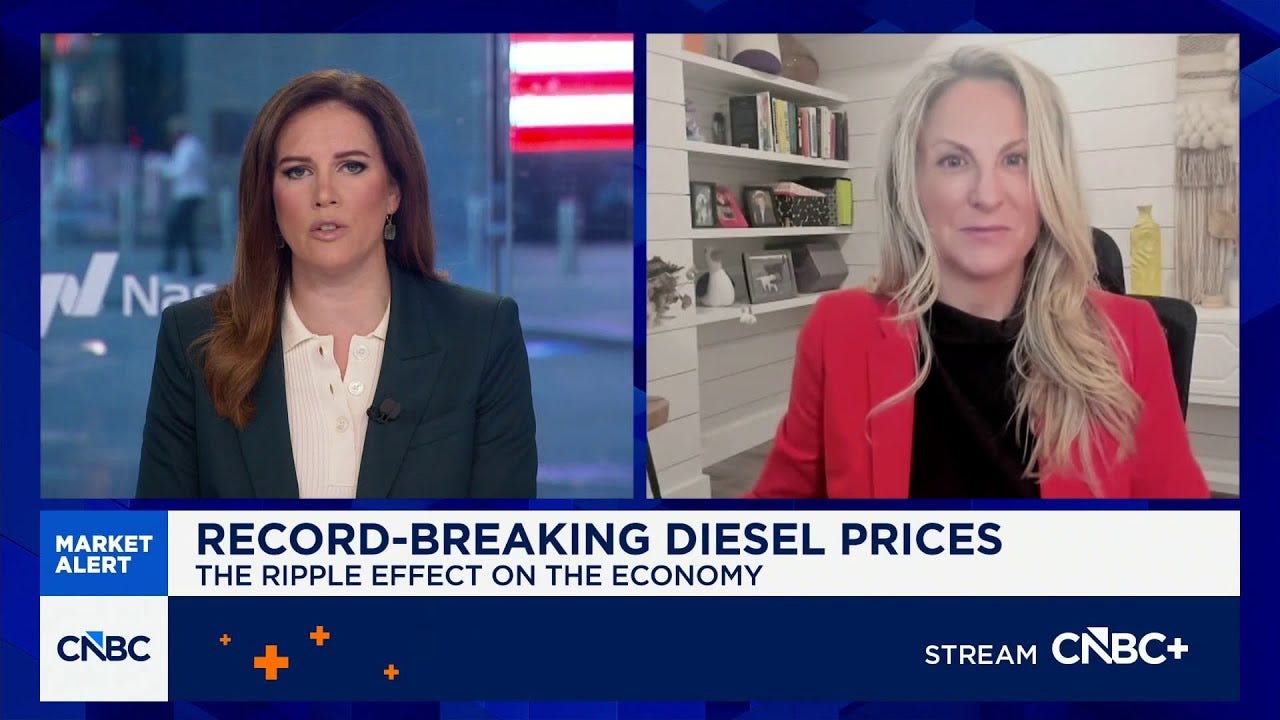
US refineries are running at 96% of capacity, and Rebecca Babin said a diesel export ban could force them down to the mid-80s, cutting gasoline and jet fuel output along with diesel.
Washington has floated an export ban as a way to bring diesel prices down from record highs. Babin said the ban would remove supply from a market already short of it, and that prices will not fall far enough on their own before farmers need the fuel.
"I just don't think that we're going to see natural price declines to a point where this pressure dissipates on its own."
Rebecca Babin, a senior energy trader and managing director at CIBC Private Wealth in New York, spoke on CNBC's Squawk Box the week US diesel prices hit a record.
The full segment is covered here so you can skip it.
Here are the 4 takeaways that matter.
Key Takeaways
Diesel and crude would have to fall "pretty significantly" before ban talk goes away
Harvest season, when farm demand for diesel peaks, leaves no time for that
A partial ban, quota or voluntary cap is what appears to be forming, not a full ban
An export ban could raise US gasoline prices a month to three months out
Full diesel tanks would force refiners to cut runs from 96% utilization to the mid-80s
The US exports 1.2 to 1.8 million barrels of diesel a day, mostly to Europe and Latin America
Idled California refineries are no quick fix: they are old and inefficient
1. Prices Won't Fall Far Enough
CNBC opened on diesel prices hitting record highs this week and the cost that puts on businesses. The host noted prices were "off the boil" slightly and asked how far oil and diesel would need to fall before talk of government intervention went away.
Diesel and crude need to come back a long way
Babin said diesel and crude would need to come back "pretty significantly," with Brent crude, the international oil benchmark, "in the low 90s," before the pressure eases.
Harvest season leaves no time
"The problem is we are entering harvest season where diesel demand for the farmers is the most extreme." — Rebecca Babin
She said there is very little that can be done to bring prices down in that time, which she said is why the idea of a diesel export ban gained so much political momentum this week.
A partial ban looks more likely than a full one
Industry experts pushed back hard on the unintended consequences of a full ban, she said. What appears to be forming behind the scenes is narrower.
"And what's interesting is what seems to be brewing behind the scenes is more of a partial ban or a quota, or a voluntary cap that has taken a little bit of the panic out of the market of what an export ban would actually mean for markets, but it leaves a lot of unanswered questions." — Rebecca Babin
Each day brings harvest season closer, and she said the market is "very much on edge" about it.
