

Semafor · Nov 16, 2026 · 16m · 10m saved
With Jane Fraser, Chair and CEO of Citigroup
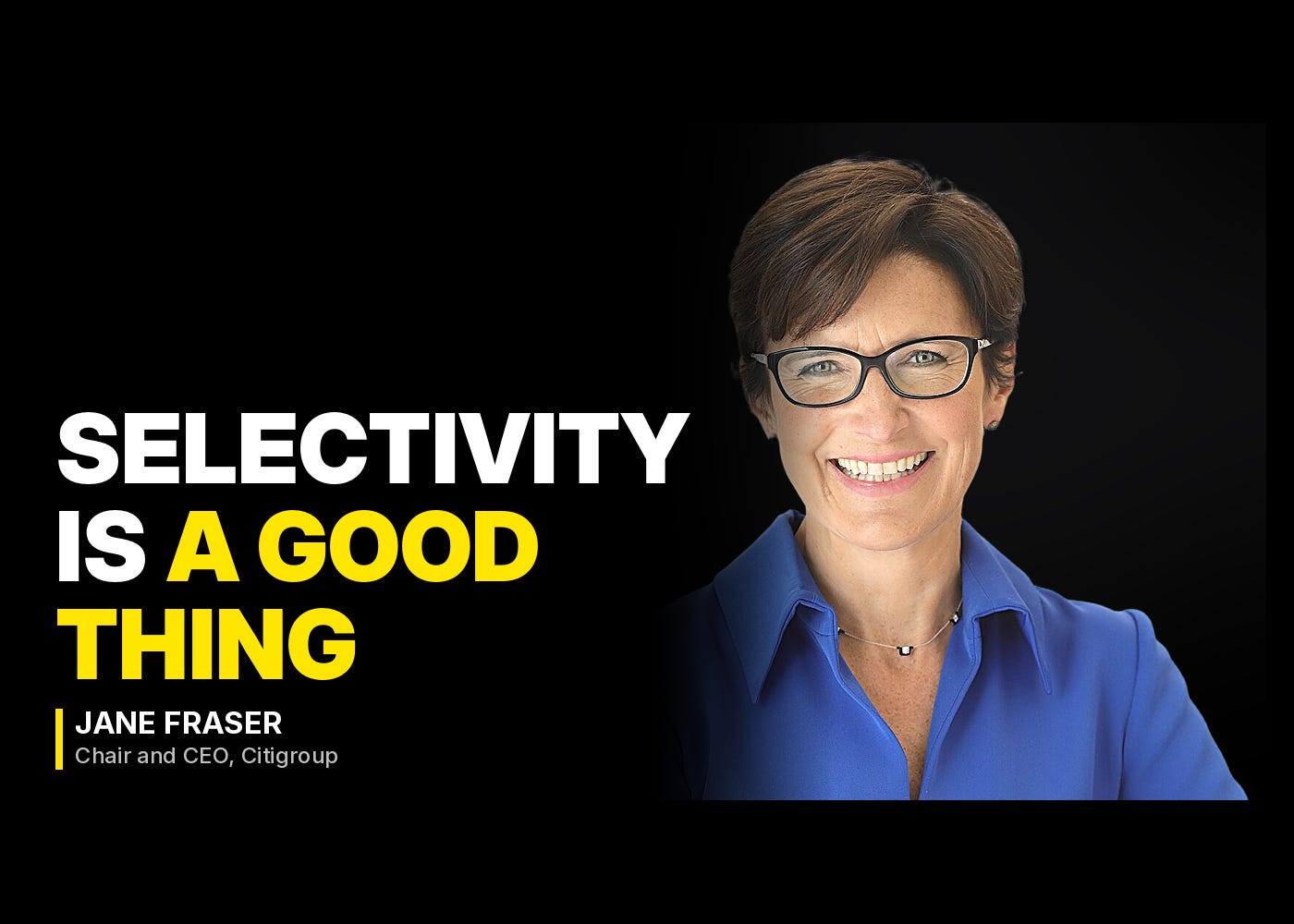
Photo: LowneyJen, CC BY-SA 4.0 via Wikimedia Commons
Banks and investors have become more selective about lending to AI companies, and capital for the build-out is scarcer than it was, Jane Fraser, chair and CEO of Citigroup, told Liz Hoffman on Semafor's "Silicon Valley & The World."
Tighter credit is usually read as a warning sign. Jane read it as discipline, and said demand for computing power is still running ahead of supply.
"I'm not worried about it. I think selectivity is a good thing, and we'll see some discipline in how capital is allocated." — Jane Fraser
Jane runs a bank that has operated in China for 124 years and now keeps 80% of its institutional lending with investment-grade borrowers, so she sees both sides of the AI race and the credit that pays for it.
The full interview is covered here so you can skip it. 16 minutes of audio, 6 minutes of reading.
Here are the 8 insights that matter.
Key Takeaways
Selective AI lending is healthy, not a sign of trouble, Jane said
Capital for AI has become scarcer than before
A refinancing wall from the COVID years is coming in a market with higher rates and less liquidity
Smaller AI cloud providers without strong cash flow face consolidation
The Nasdaq correction is a reset of a market priced to perfection, not a break in fundamentals
Large banks have spent 6 months using frontier AI models to find holes in their own defenses
Over 50% of the world's robotics firms are in China, while US AI spending leans to consumer services
80% of Citi's institutional lending is now investment grade
1. The Genie Is Out
Jane opened by saying the case for AI is settled. Demand for compute, the processing power that AI models run on, is still insatiable.
Jane Fraser says AI is transformative and will not be reversed
"The genie is out of the bottle. This technology is transformative and that genie is not coming back in the bottle." — Jane Fraser
What has changed is the money behind it, which is where the rest of the conversation went.
