

Bloomberg Podcasts · Nov 18, 2026 · 30m · 23m saved
With Jane Fraser, CEO of Citigroup
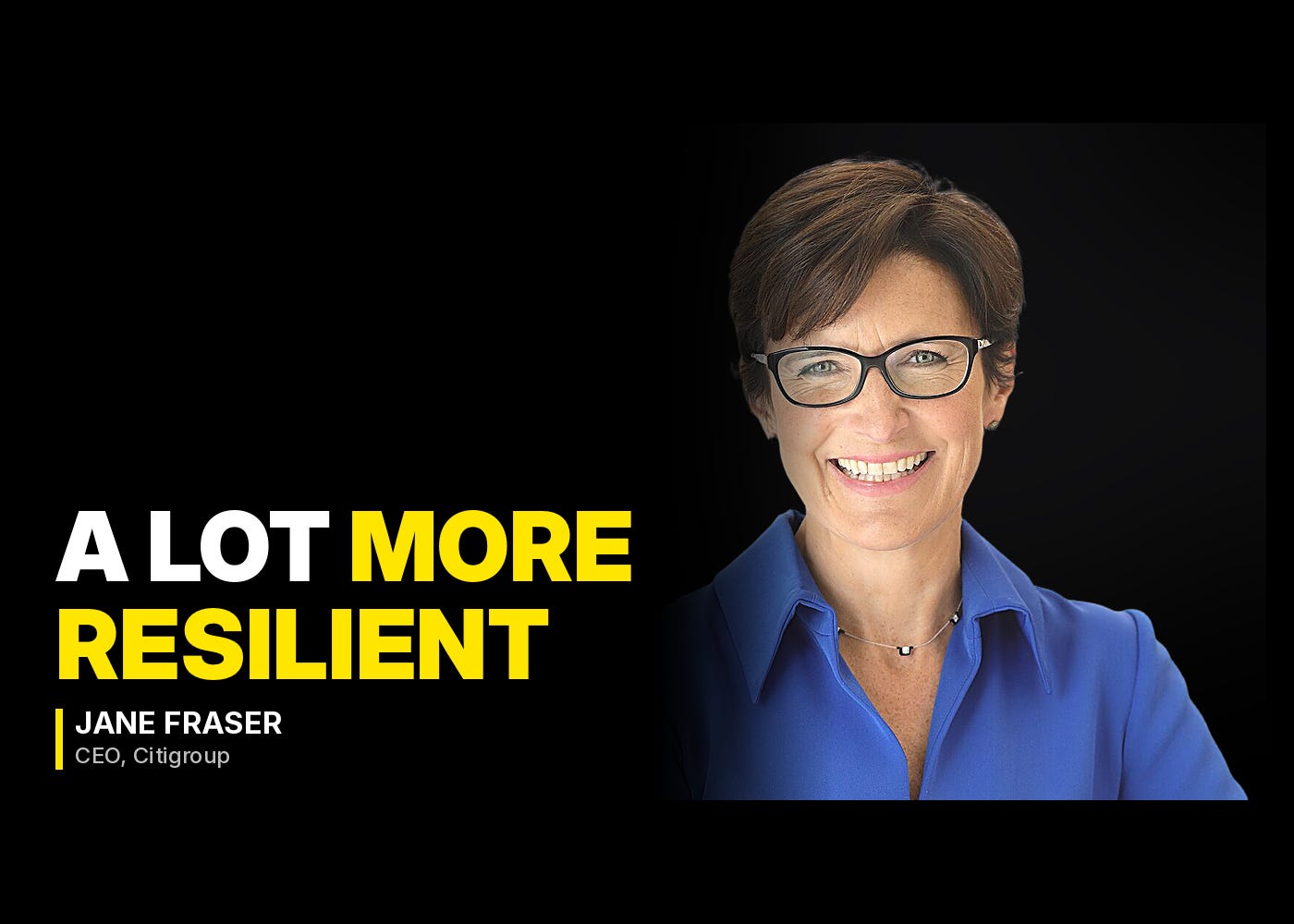
Photo: LowneyJen, CC BY-SA 4.0 via Wikimedia Commons
This Scuttlebutt Summary is available in full to premium subscribers. If you're not one already, please consider subscribing to keep reading.
Citi added AI financing risk as a new disclosure item in its third-quarter earnings, the first time the bank has flagged it by name. Where European regulators have started describing the AI buildout as a systemic, subprime-style risk, Jane Fraser argues the opposite: that the US's edge is precisely its combination of innovation at scale with the world's deepest capital markets.
"Think about it: the US has 4% of the world's population and over 50% of the market capitalization of the world." — Jane Fraser
Jane has run Citigroup since 2021 and was part of the US business delegation on the recent China trip, giving her a direct view into both the financing side of the AI buildout and the diplomatic one.
The full interview is covered here so you can skip it. 30 minutes of audio, 7 minutes of reading.
Here are the 4 arguments that matter.
Key Takeaways
Jane calls Nvidia's leadership change no threat to AI demand, saying "the genie is out of the bottle on AI"
Compute demand is now visibly global — she cites Turkey building its first data center to stay competitive
The US's edge in AI financing is capital markets, not just innovation: 4% of the world's population, over 50% of global market cap
She says many of Europe's top AI entrepreneurs have already relocated to the US West Coast
Jane attributes the recent run of tech outages to the sheer volume of patches moving through the stack at once, "five- to tenfold" historical norms
She calls the downtime an expected cost of upgrading, not a sign anything is broken
She would not let a personal AI agent touch a customer's Citi account: "there's no way... the control framework's not there yet"
Citi still has to "move fast but maintain trust" as agentic banking develops
The AI industry risks losing its social license over jobs and energy costs, after nearly every AI-linked data-center ballot referendum failed this cycle
1. The IPO as a Barometer
Jane calls the newly-priced Anthropic IPO — the largest in the current cycle — a barometer for both capital-markets health and the AI ecosystem itself, pointing to strong institutional, retail and international demand all at once.
"This is, as you say, the biggest IPO that we've seen... it's got a lot of institutional demand behind it as well as retail demand... international demand as well as North America demand." — Jane Fraser
She expects the year-end calendar to limit further IPOs in 2026, but reads it as a good sign for 2027, especially coming on the heels of stronger-than-expected Nvidia earnings and guidance.
Jane isn't worried that Nvidia's leadership change could destabilize AI demand, since she sees that demand as now structurally global
"The genie is out of the bottle on AI, and no one's putting that genie back in the bottle." — Jane Fraser
She points to Turkey building its first data center specifically to stay competitive as evidence the buildout is no longer concentrated in a handful of countries.
