

Strategic Alternatives · Oct 20, 2026 · 15m · 11m saved
With Aidan Gomez, Co-founder and CEO, Cohere
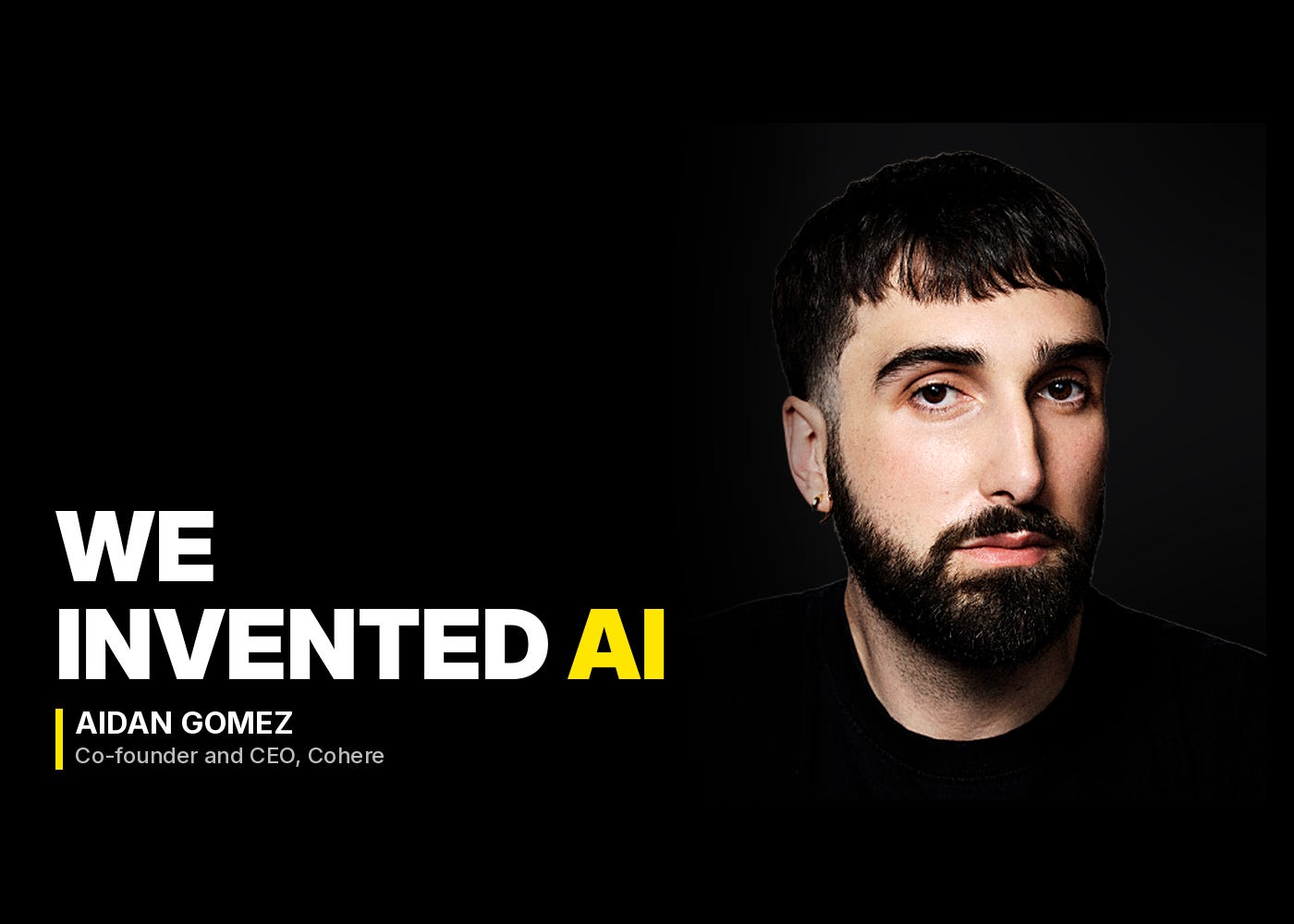
Photo via cohere.com
Canada's Geoffrey Hinton and Yoshua Bengio share a Nobel Prize for inventing the deep learning techniques that power today's AI models. Most people hear "AI" and think of labs in San Francisco or Beijing. Aidan Gomez, co-founder and CEO of Cohere, told the Milken Institute's Canada Dialogue, recorded for RBC's Strategic Alternatives, that the underlying technology is Canadian.
"Yeah, I mean, we invented it. We invented AI." — Aidan Gomez
Aidan co-founded Cohere, the large language model company Canada's government has since named a "strategic asset" — one of only four countries, alongside the US, China and France, with a homegrown frontier model.
The full segment is covered here so you can skip it. 15 minutes of audio, 4 minutes of reading.
Here are the 3 takeaways that matter.
Key Takeaways
Aidan wants an independent, cross-border body to test frontier models, rather than rules that let dominant players use regulation as a moat
Canada is one of only four countries with a homegrown frontier model, and Cohere has been named a government "strategic asset"
Aidan says Canada "invented" deep learning, pointing to the Nobel Prize won by Geoffrey Hinton and Yoshua Bengio
The world is "sleepwalking" toward a US/China AI duopoly, in Aidan's view
Cohere and Mistral are "our two shots" at building a democratic alternative to US and Chinese AI
1. Regulation Without a Moat
Aidan opened the panel by naming the risk he sees in how AI gets regulated, not just in how it gets built. Rules written around today's dominant labs, he argued, can lock in their advantage rather than make the technology safer.
Aidan wants independent, cross-border testing of frontier AI models
"We need... an independent third party that isn't isolated to any one country and isn't dominated by any one industry player." — Aidan Gomez
Dave McKay, RBC's president and CEO, extended the point into his own industry: the most advanced AI tools are being released selectively outside the US first, which he called a sovereign security gap as much as a commercial one.
