

Moonshots with Peter Diamandis · Nov 16, 2026 · 2h 12m · 121m saved
With Brett Adcock, Founder and CEO of Figure AI
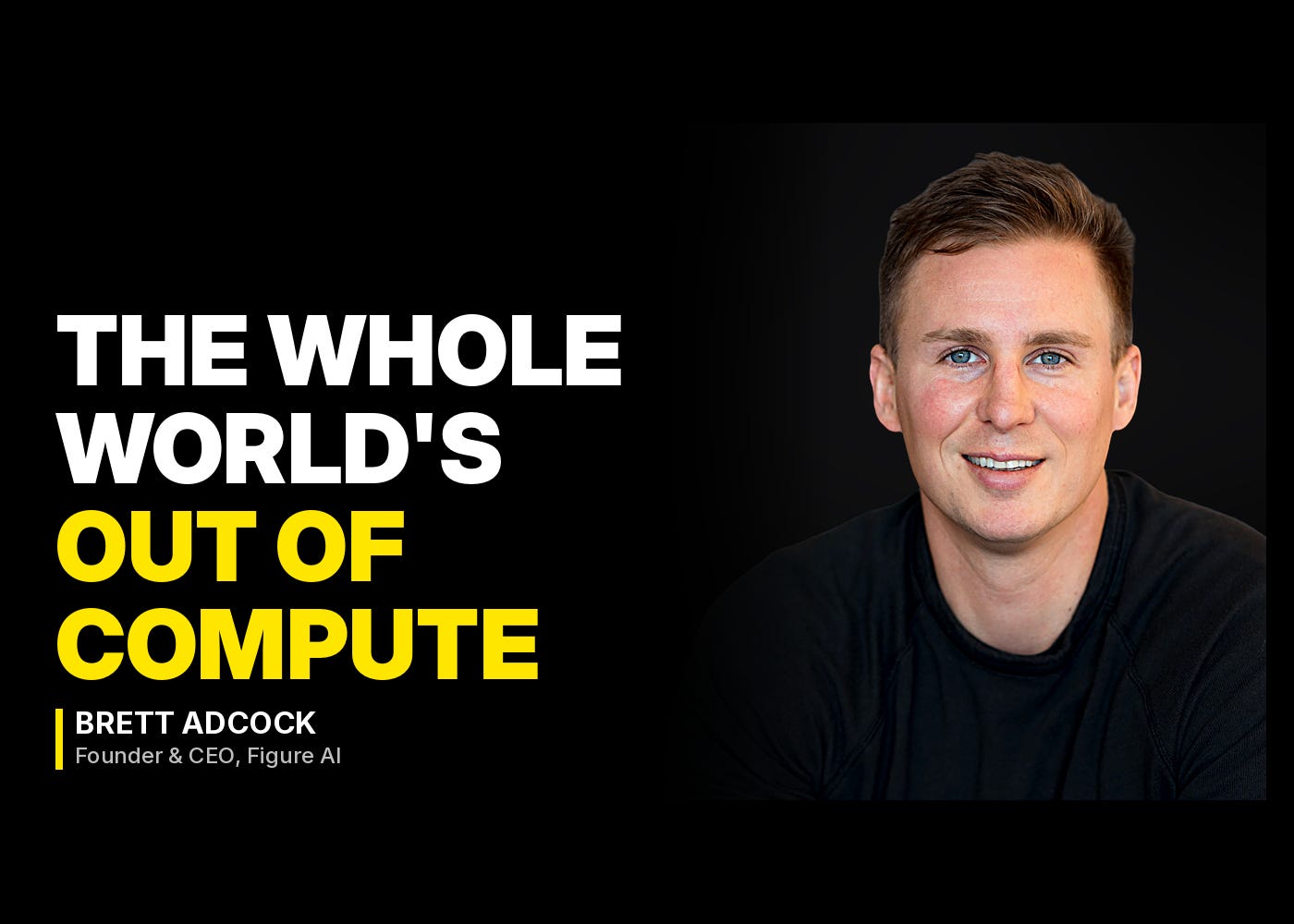
Photo via Wikipedia
Brett Adcock, founder and CEO of Figure AI, told Peter Diamandis and Dave Blundin on Moonshots that Figure could no longer buy computing power from September 2026. He had predicted the shortage for 2027.
Most of the roughly 150 humanoid companies in China show robots dancing to routines recorded in advance and replayed. Brett said Figure's robots run on a single neural network that has to work in homes it has never seen, and that training it is now limited by the supply of chips and memory.
"I made this prediction earlier in the year: in 2027 you're not going to be able to get compute anymore. And that happened in September of 2026 for us." — Brett Adcock
Brett founded Archer Aviation and the recruiting marketplace Vettery before Figure, and also runs a second AI company, Hark AI. Figure raised close to $700 million soon after its first single-network demo and recently signed a compute deal worth more than $3 billion.
The full interview is covered here so you can skip it. 2 hours 12 minutes of audio, 11 minutes of reading.
Here are the 12 takeaways that matter.
Key Takeaways
China, not Tesla, is Figure's real competitor, though Brett says its robots mostly replay prerecorded moves
Figure 4 is probably the humanoid's "iPhone one" moment, built in factories with no human labor
A home humanoid should lease for $300 to $500 a month, under $1 an hour
Figure ran out of available compute in September 2026, and memory is the next shortage
Tariffs of around 270% pushed Figure to strip Chinese parts from its supply chain
Brett bets Hark AI will be bigger than Figure within six months, and says it already earns more
Robots, not people, should do the work AI directs, in Brett's ethical case for humanoids
1. Figure Is in Chapter Three
Brett splits the humanoid race into four chapters: build capable hardware, build an AI method that controls the whole body end to end, scale the intelligence, then scale production. He said Figure is now in chapters three and four.
The turning point came about two and a half years ago, when Figure 1 used one neural network, with no hand-written rules, to pick up a coffee pod and put it in a Keurig machine. Brett had told his team that if it worked he could raise about $500 million. Figure raised closer to $700 million soon after.
Figure's current software is called Helix. Version 2.5 made beds and tidied rooms in 30 rental homes it had never seen before. Brett showed Helix 3 to Peter and Dave in a private lab, and described it as an adult-sized body with roughly the intelligence of a two-year-old, improving week by week.
Figure has far more training data than it has used so far
"I think it's maybe way more than like much more than 10 — maybe a factor of 15 or so more data sitting there [than what we showed you today]." — Brett Adcock
