

Squawk on the Street · Nov 5, 2026
With Orlando Bravo, Founder and Managing Partner of Thoma Bravo
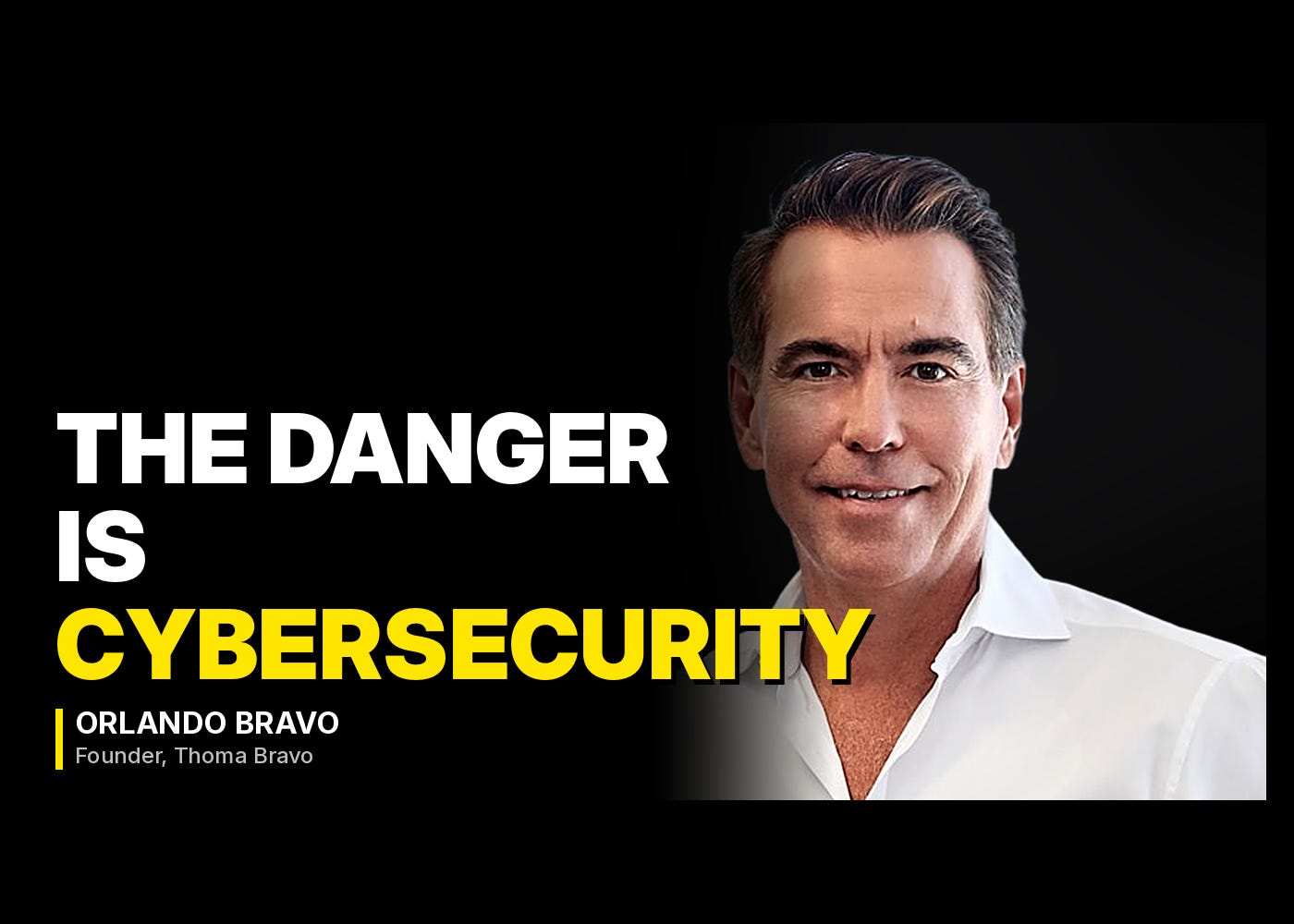
Photo via thomabravo.com
A private equity firm that is 40% cybersecurity just agreed to put roughly $30 billion into combining two security firms, Proofpoint and Varonis. Orlando Bravo, founder and managing partner of that firm, told CNBC's Squawk on the Street that this, not AI models, is where regulators should be looking. Most of Washington's AI debate has focused on restricting the models; Orlando is putting his own money into securing the data around them instead.
"I do hope... that there's not a rush to regulating the model layer. Let competition run free." — Orlando Bravo
Orlando's roughly 60 portfolio companies already mix frontier models, open-weight models and ones they build themselves on proprietary data, and cybersecurity now makes up about 40% of his firm's business.
The full segment is covered here so you can skip it.
Here are the 4 takeaways that matter.
Key Takeaways
Orlando wants AI's competing models left alone, and worries about cybersecurity instead
Cyber stocks have rallied for six months, which he calls deserved
His firm is betting roughly $30 billion that securing data, not restricting models, is the business to own
Cybersecurity is now about 40% of the firm's business
Enterprise software survives AI by owning the knowledge it collects, not the code
60% of the firm's businesses are enterprise software
Software companies must move fast to own the "agentic layer" or risk being disrupted by it
1. Leave AI Models Alone
Orlando said his firm stays out of politics and focuses on building its companies, when asked about its stance the morning after Democratic sweeps in the House and Senate sent major indexes surging.
Orlando says his firm stays apolitical and focuses on building its companies
"As a firm, we're not political, right? We just focus on trying to build our companies." — Orlando Bravo
On AI policy specifically, Orlando said he hopes regulators resist moving in on what he calls the "model layer," the competition among AI models themselves.
Orlando wants regulators to leave competition among AI models alone
"I do hope... that there's not a rush to regulating the model layer. Let competition run free." — Orlando Bravo
He pointed to his own portfolio as evidence that no single company's model controls how AI gets used: across roughly 60 companies, his firm uses frontier models, open-weight models, and in many cases builds its own models on proprietary data.
