

The Wolf Of All Streets · Oct 12, 2026
With Andy Constan, CEO/CIO, Damped Spring Advisors
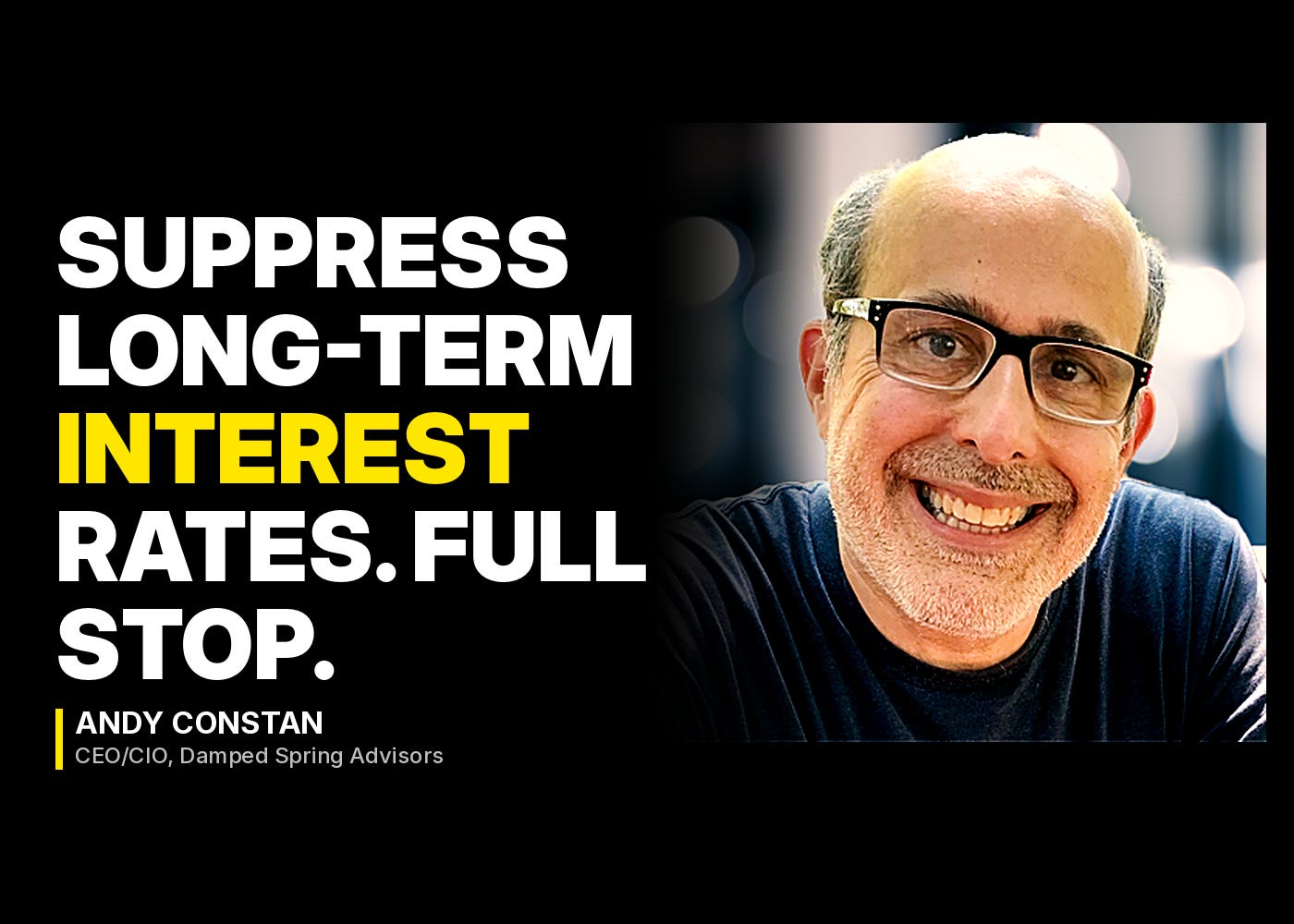
Photo via spotgamma.com
Andy Constan, CEO and CIO of Damped Spring Advisors, told hosts Scott Melker and Dave Weisberger on The Wolf Of All Streets that Treasury increased its bond buybacks by $128 billion on August 19 — funded entirely with bills rather than new coupon issuance.
Most of the show's hosts frame the bond selloff as Treasury Secretary Scott Bessent manipulating the long end of the curve. Andy agrees that's happening, but says the bigger driver has been years of AI-capex-fueled growth the bond market is only now catching up to.
"On August 19th they decided to increase the Treasury buyback by 128 billion, financing it with no change in any of the coupon issuance... his goal was to suppress long-term interest rates. Full stop." — Andy Constan
Andy has run global macro books through multiple cycles, and for the first time in years, he says he actually likes owning bonds.
The full episode is covered here so you can skip it.
Here are the 8 calls that matter.
Key Takeaways
The S&P 500 has been within 2% of all-time highs 70% of this year — the most extreme stretch since 1929
Hiking rates "does absolutely nothing" to lower diesel prices, Dave Weisberger argues, even as oil-driven inflation pressures the Fed
Energy costs are shaping up as the midterms' top issue, with prediction markets pricing a 61% chance of a Democratic sweep of Congress
A commodity strategist on the show has little confidence most crypto tokens hold lasting value; Dave counters that Bitcoin's option on gold's monetary premium is being ignored
The real fiscal problem is the $2 trillion primary deficit, not a 100-basis-point rate move, Andy argues
He says Treasury's August 19 buyback increase, funded entirely with bills, was designed to suppress long-term rates — the real "manipulation" story
The S&P's $82 trillion market cap is now two times the national debt — the most stretched ratio in 25 years
Andy now finds bonds attractive for the first time in years, with 10-year yields near 5.25-5.75% offering real ballast after a decade near 0.65%
1. Stocks' Most Extreme Year
The show opens with a commodity strategist and regular co-host, identified on air only as Mike, relaying the team's morning-meeting view: no further Fed hikes expected this year by the firm's economist, though the firm's rates strategist still thinks the Fed tightens, with markets pricing one more hike this year and two next.
Stocks have spent 70% of the year within 2% of record highs
"We are within 2% and have been within 2% of the all-time highs for 70% [of the time] this year. That's the most [extreme] since 1929." — Mike
Mike adds that bars for beating earnings expectations are unusually high, and that the latest Fed minutes were the most hawkish in a data series going back to 1993. He frames metals and crypto as "stock puppets" of the broader market, citing copper's 50-week correlation to the S&P at an all-time-high 0.65.
A 5-year yield above 5% at year-end would be a headwind for everything non-income-producing
"If it ends the year above 5%, it's the highest since 1999. It's a major headwind for... non-income-producing assets." — Mike
