

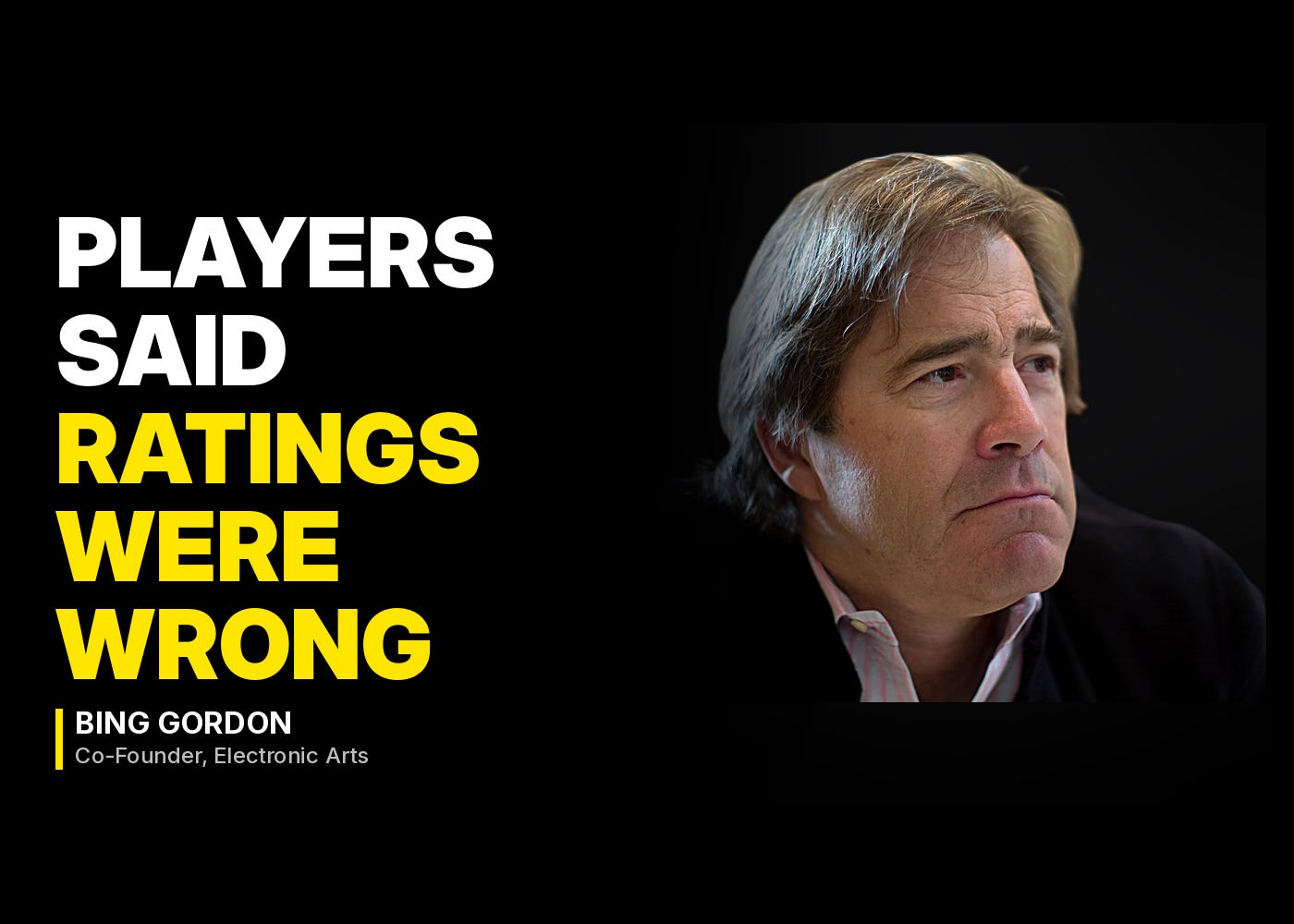
Photo: Joi Ito, CC BY 2.0 via Wikipedia
Games reach 400 million people a month, Bing Gordon, co-founder of Electronic Arts, once told Steve Jobs. Jobs replied that nothing below a billion mattered, a story Bing told on CNBC's Squawk Box, carried on Squawk Pod, the day his new book came out.
Around 2000 the conventional wisdom held that girls would not play games or like numbers. Bing's daughter Chloe, then a child, convinced him The Sims would be a hit, and her reaction to it became EA's founding tagline.
"The deeper you get, you start learning the same meta lessons... it takes work to get that last 5%, that kind of perseverance."
Bing co-founded EA, was in the room when John Madden first rejected the football game that carries his name, and has spent nearly two decades on Amazon's board.
The full segment is covered here so you can skip it.
Here are the 5 moments that matter.
Squawk Pod · Oct 27, 2026
With Bing Gordon, Co-Founder of Electronic Arts
Key Takeaways
Game mechanics work only when they match what a person already wants, the idea Bing calls deep engagement
A child's tears at a beta of The Sims convinced Bing the game would be a hit, against the view that girls would not play games
John Madden called the first version of the game "not football," and only committed once players complained about their ratings
AI will have exploitable edge cases nobody tested for, Bing said, so it needs good data and a fast way to roll back
Technology cycles are now faster and bigger because scale is no longer the hard problem it was
1. A Book on Deep Engagement
Bing's book, Everybody Wins: What Games Teach Us About Making Products That People Love, was co-written with his daughter Chloe and released the day of the interview. Its central idea is what he calls deep engagement.
Bing Gordon says game design rewards the persistence needed to finish the last few percent of the work
"The deeper you get, you start learning the same meta lessons... it takes work to get that last 5%, that kind of perseverance." — Bing Gordon
In Bing's account, game mechanics only motivate people when the motivation matches something they already want to do. His examples were the gym, reading and a morning-show habit.
