

20VC · Nov 8, 2026 · 50m · 41m saved
With Arthur Mensch, Co-Founder and CEO of Mistral
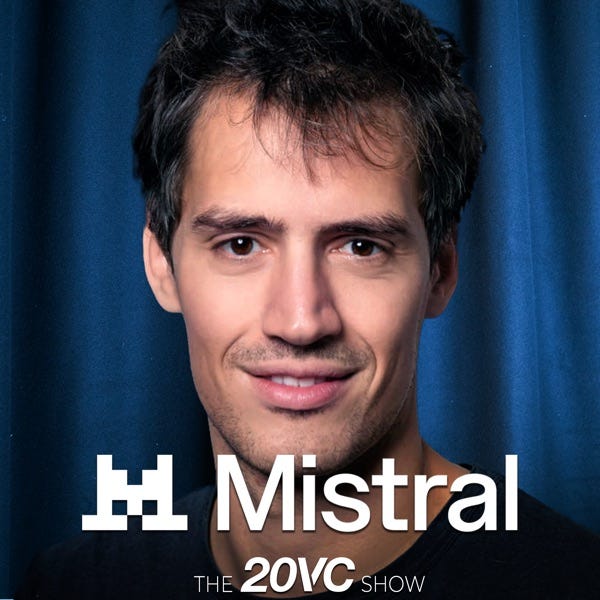
Energy is only about 10% of the total cost of owning AI compute, which is why Mistral's chief executive does not see it as what limits the build-out. Arthur Mensch, co-founder and CEO of Mistral, told Harry Stebbings on 20VC that the real constraints are the price of chips and the price of capital. Much of the industry treats power as the binding limit; Arthur says France and the Nordics have spare energy that AI has not yet absorbed.
"I think the first thing to realize is that energy is around 10% of the bill in the total cost of ownership of compute ... What matters is the cost of the chips, and what matters is the cost of capital." — Arthur Mensch
Arthur runs the European lab that trains its own models, serves them on infrastructure it owns and sells them to manufacturers, banks, defense ministries and governments that want to keep their AI at home.
The full interview is covered here so you can skip it. 50 minutes of audio, 9 minutes of reading.
Here are the 12 insights that matter.
Key Takeaways
Energy is about 10% of the cost of AI compute, so chips and capital matter more
Arthur expects energy to become a real bottleneck only around 2029–2030
Arthur says sovereign AI is an economic case, not a political slogan: compute spending on a foreign model leaves the buyer's economy
Chinese open-weight models are unverifiable rather than unsafe, because no outsider can check what went into them
About 80% of Mistral's inference traffic runs on its own models
Mistral builds compute capacity before demand arrives, and has largely avoided heavy debt
Mistral will not design its own chip, after already moving from training models to running them on its own infrastructure
Arthur says GDP growth needs more production, not more intelligence, which is why Mistral sells to factories, banks and defense
Arthur says Mistral can list in Europe, citing investor appetite for European companies
1. Sovereign AI Is Economics
Arthur says "sovereign AI" is a business necessity rather than a reaction to any one government. A company or state that runs its core processes on AI it does not control sends its compute spending to wherever the model is hosted, which is a trade-balance problem whatever the politics.
Arthur Mensch says owning the model, the deployment and the cost is what sovereignty requires
"You need to own the technology. You need to be able to customize the systems to run them very close to your data. You need to be able to control the cost." — Arthur Mensch
He conceded the issue feels more emotional than when Mistral set out the thesis in 2023, citing the Trump administration's ban on a model called Fable and friction over Greenland. A sovereign provider, in his account, needs three things:
a model factory that keeps training and improving its own models; he pointed to Mistral Large Four leading open-weight models in agentic coding and cyber defense
a platform that runs on the customer's own infrastructure, so data and intellectual property never flow back to the provider
its own energy-intensive infrastructure for generating tokens, since enterprises cannot easily buy GPUs themselves
About 60% of Mistral's revenue comes from Europe, with the rest from the US and Asia-Pacific.
