

Wealth Building Blueprint · Oct 12, 2026
With Peter Schiff, Founder & Chief Strategist, Euro Pacific Asset Management
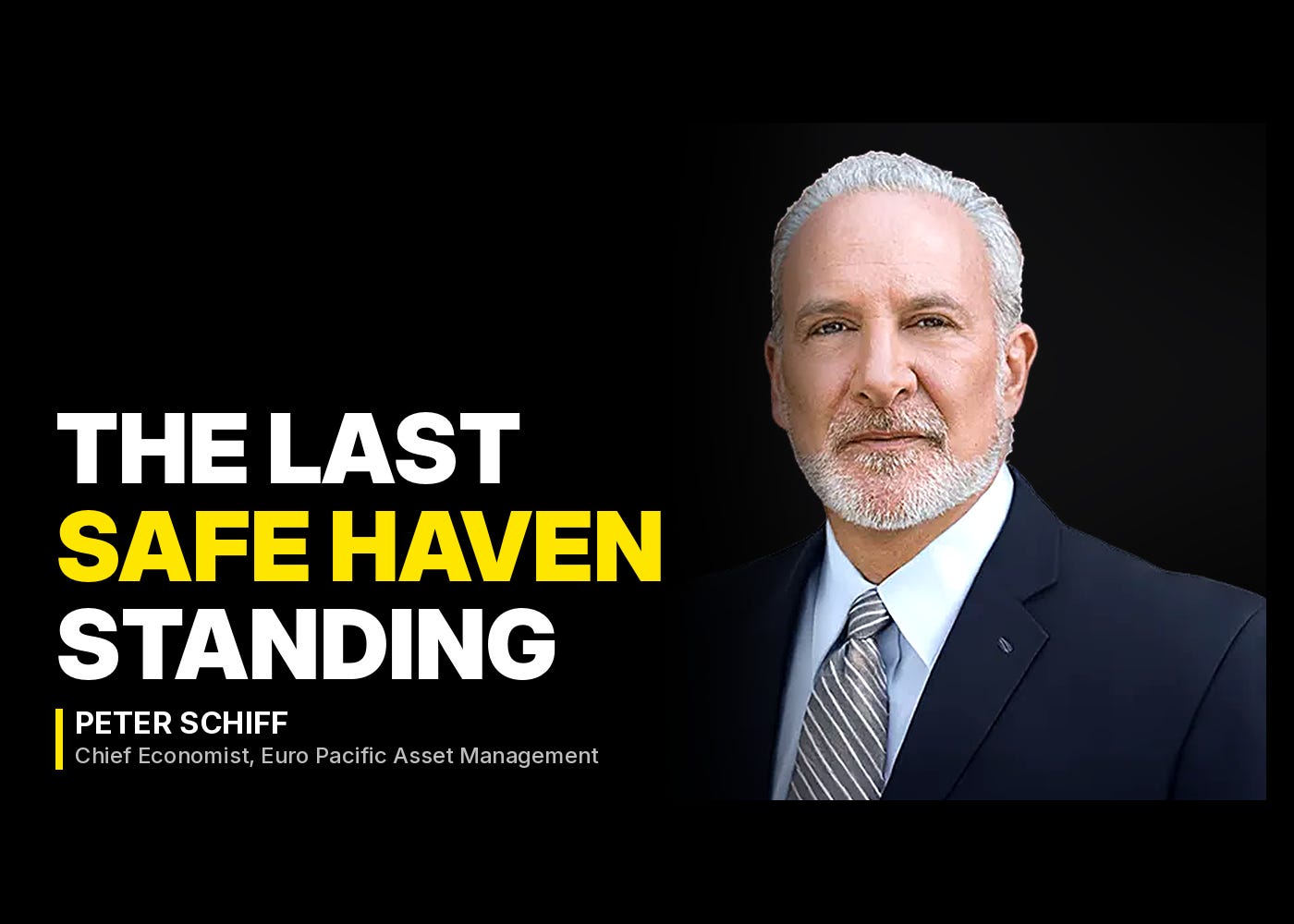
Photo via europac.com
Peter Schiff, founder and chief strategist of Euro Pacific Asset Management, told host Vladyslav Grabarskyy on the Wealth Building Blueprint podcast that the University of Michigan's current-conditions index — a series running back to 1951 — just sank to its lowest level on record.
Most analysts point to resilient AI capital spending as proof the economy can absorb rates above 5%. Peter argues that resilience is cosmetic: by his count, roughly 60% of S&P 500 stocks are already down more than 20% from their highs, propped up by a handful of mega-cap names.
"Right now, investors are looking at rising bond yields as a problem for gold, as a headwind. They're actually a benefit, a tailwind." — Peter Schiff
Peter also runs SchiffGold and the EuroPac Gold Fund, and has been warning about a US sovereign debt crisis since long before 5% rates were anyone's base case.
The full interview is covered here so you can skip it.
Here are the 7 predictions that matter.
Key Takeaways
A "full-blown debt crisis" could hit within the next year, Schiff warns, as high debt collides with high rates for the first time
He calls it "an impossible combination" that ends only in mass defaults or runaway inflation
Roughly 60% of S&P 500 stocks are already in bear markets, hidden beneath a handful of AI mega-caps holding up the index
Rising bond yields are a tailwind for gold, not a headwind, because a sovereign debt crisis would push money out of Treasuries and into gold
He expects a new all-time high for gold within about a year
Silver's old $50 high is now its floor, and he thinks it goes well above its recent peak near $125
He expects the 30-year mortgage to hit 9% by early next year, math he says requires home prices to fall roughly 50% just to keep payments flat
He predicts a bailout of Fannie Mae and Freddie Mac, reversing talk earlier this year of taking them public
He's betting Bitcoin makes a new yearly low before it reclaims $100,000, flagging a Democratic sweep of Congress as the catalyst
1. The Impossible Combination
Host Vladyslav Grabarskyy opens by asking whether 5%+ rates are tolerable given a resilient "real economy." Schiff rejects the framing outright.
Consumer sentiment just hit its lowest level on record
"We just got the University of Michigan consumer sentiment numbers and their current condition index sank to the lowest on record." — Peter Schiff
He says that data series runs back to 1951 and spans every recession, war and crisis since, and that no amount of AI-driven resilience in pockets of the market changes the picture underneath. He also predicts Republicans will lose the midterms because the party in power gets blamed for a weak economy. Historically, he adds, 5% rates aren't unusual by 1970s-90s standards; what's changed is the debt load sitting underneath them.
High debt and high rates have never coexisted before
"We're going to have now is even more debt and we're going to [have] high interest rates. That's an impossible combination." — Peter Schiff
He maps US debt history into stages — low debt/low rates, low debt/high rates, and high debt/low rates in the post-COVID era — and says the new stage, high debt meeting rising rates, ends only two ways: mass defaults and bankruptcies, or runaway inflation. He says the crisis could surface "within the next several years, maybe even within the next year."
