

The Market Huddle · Sep 26, 2026 · 1h 5m · 46m saved
With Ahmed Husain, Author of The Curious Mind and former Global Head of Family Office Strategy at Neuberger Berman
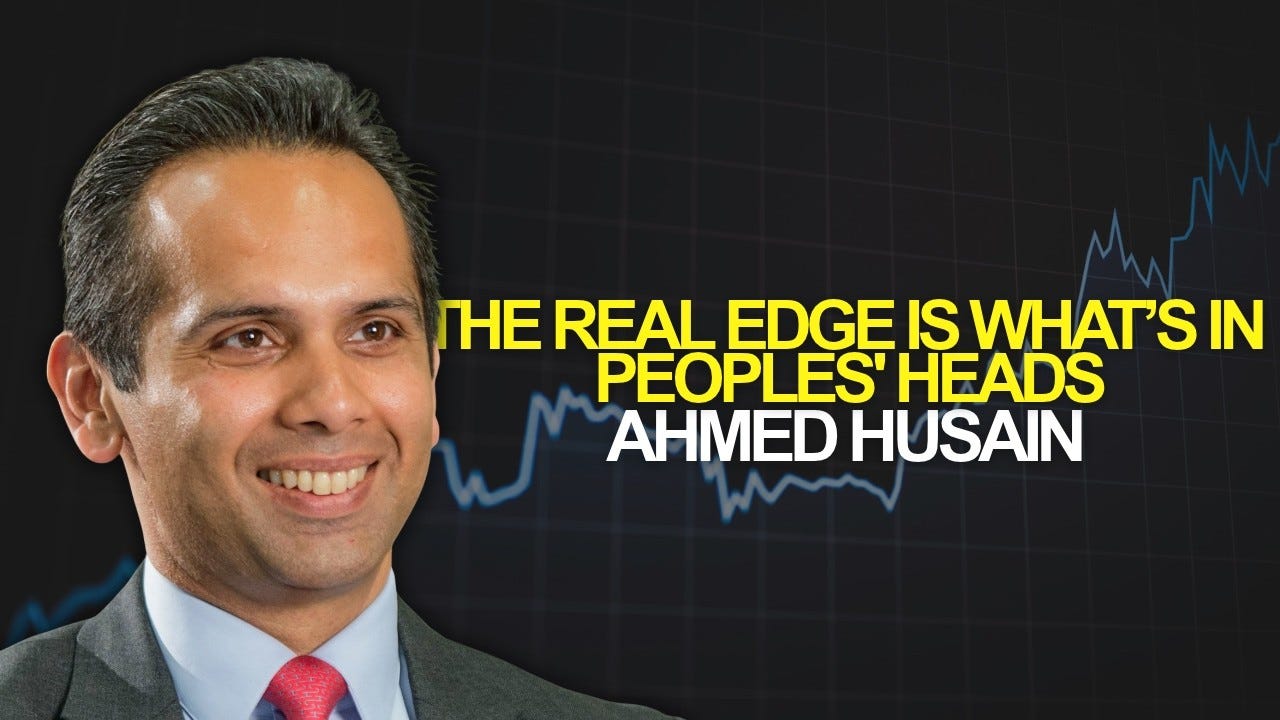
Ahmed Husain said 30–40% of his portfolio is tied to AI, with 30% in gold miners and 20% in commodities, coal and metals.
Many investors who think AI is a bubble stay out of it altogether. Husain said he half-joked about a bubble, and that a trillion dollars of spending on one thing is worth trying to make money from, provided no single trade can sink the portfolio.
"You could just call it a bubble, put it in a box, and go do your other thing, but there's a trillion dollars moving around — don't you want to figure out if you could make some money from it?"
Ahmed Husain, author of The Curious Mind, on The Market Huddle. He joined Lehman Brothers' collateralized debt obligation desk in 1999, moved to Goldman Sachs in 2006 and made managing director there, managed money for Altice founder Patrick Drahi, and ran family office strategy globally at Neuberger Berman until he left in July.
The full interview is covered here so you can skip it. 65 minutes of audio, 19 minutes of reading.
Here are the 17 lessons that matter.
Key Takeaways
His portfolio is 30–40% AI-related, with 30% in gold miners and 20% in commodities
A trillion dollars of US capital spending is going into one thing, and he said ignoring it is a mistake
Calling AI a bubble is part of how it keeps rising, in his view: the doubts are the "wall of worry" markets climb
Most investors are on a three-to-six-month performance treadmill, which he said forces them to chase momentum
He passed on Nvidia six years ago because AI did not fit what he believed, not because he did the work
Rich families aim for inflation plus 3% to 6%, and do not trade around the Fed
One European steel family kept its entire family office in cash
Firms need far fewer junior analysts now that AI can do the work of a 22 to 25-year-old
Improving 1% a day makes a person 37 times better in a year, and he said people compound faster than portfolios
1. Lehman's CDO Desk in 1999
The host said the interview was recorded at the end of August for release in September. Husain said he was born in Pakistan, moved to the US and studied computer science at Northwestern, with a minor in economics he came to prefer.
"All the big banks used to come to Northwestern to interview. I ended up getting a job at Lehman Brothers." — Ahmed Husain
He started on the credit derivatives desk
In Lehman's sales and trading program he chose the desk that built collateralized debt obligations, or CDOs, in 1999. He said he worked on the credit kind, built from corporate loans, not the mortgage kind.
"We were doing synthetic CDOs — I never went near the mortgage kind, so you can't blame me for blowing up the world, I only did the credit kind." — Ahmed Husain
Goldman turned him down twice, then called him
"I had wanted to move to Goldman before and I tried to interview with them in 2001 — they denied me after the first interview. Tried to go there in 2003 — denied me after the first interview." — Ahmed Husain
Goldman approached him in 2006. He said its process required interviews with 25 people over two to three months, and it hired him in April 2006.
