

The Journal. · Sep 27, 2026 · recorded earlier · 23m · 16m saved
With Emily Eisner, Executive Director and Chief Economist of the Fiscal Policy Institute
New York City's rent freeze takes effect in October: for about a year, many landlords will not be allowed to raise rents on one- and two-year lease renewals.
Landlord groups say the freeze will leave rent-stabilized buildings without the money to keep them up. Emily Eisner, who wrote an op-ed titled "The Economic Case for a Rent Freeze," says the numbers do not support that, and that the freeze is a modest step rather than a radical one.
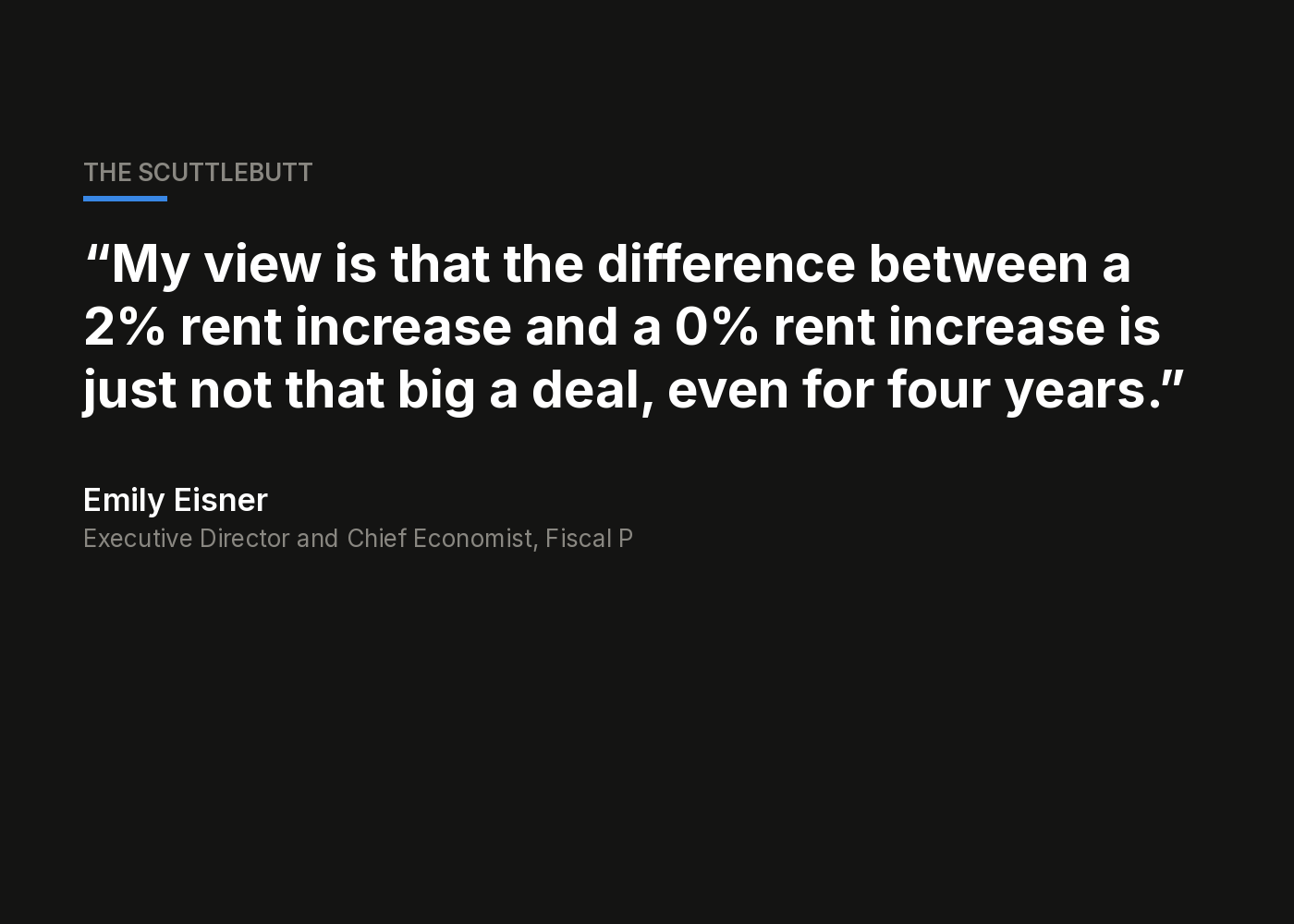
"My view is that the difference between a 2% rent increase and a 0% rent increase is just not that big a deal, even for four years."
Emily Eisner, Executive Director and Chief Economist of the Fiscal Policy Institute, an independent think tank focused on economic policy in New York, debated Kenny Burgos of the New York Apartment Association at a live taping of The Journal. This summary covers her side of the debate.
The full episode is covered here so you can skip it. 23 minutes of audio, 7 minutes of reading.
Here are the 6 arguments that matter.
Key Takeaways
Rent in New York has risen by more than 50% in 30 years, after adjusting for inflation, and many renters are now rent burdened
The 2019 tenant law reduced landlords' incentive to push tenants out, and Eisner agrees it is the strongest tenant protection the state has passed
The difference between a 2% and a 0% increase is small, even over a four-year freeze, in Eisner's view
She cited a Moody's report that at most 6% of landlords face serious default risk
A freeze is not enough on its own; Eisner said the city needs much more to solve affordability
With a vacancy rate near 1.5%, she expects tenants to leave rather than pay higher free-market rents
1. Rents Up 50% After Inflation
The host set out the background. Rent control has existed in New York in some form for nearly a century. In the 1970s it evolved into rent stabilization, under which rents can rise only by an amount set by the city's Rent Guidelines Board. About 1 million apartments are rent-stabilized today, roughly half the city's rental supply.
Asked how bad the housing situation is, Eisner said "quite bad," and first put the city's median rent in context: about $1,000 a month 30 years ago, and now more than 50% higher after adjusting for inflation.
The burden falls on renters' incomes
"So there's been a huge shift in the distribution of rents in the city, even after accounting for regular inflation." — Emily Eisner
"And it's really squeezing people's incomes and budgets such that now, over 50% of renters are paying over 30% of their incomes in their housing costs" — Emily Eisner
She added that about 30% of renters pay more than half their income in housing costs.
"So rent is very expensive for a lot of people. A lot of people in New York are rent burdened." — Emily Eisner
Later in the conversation she agreed that incomes are not keeping pace with rents.
