

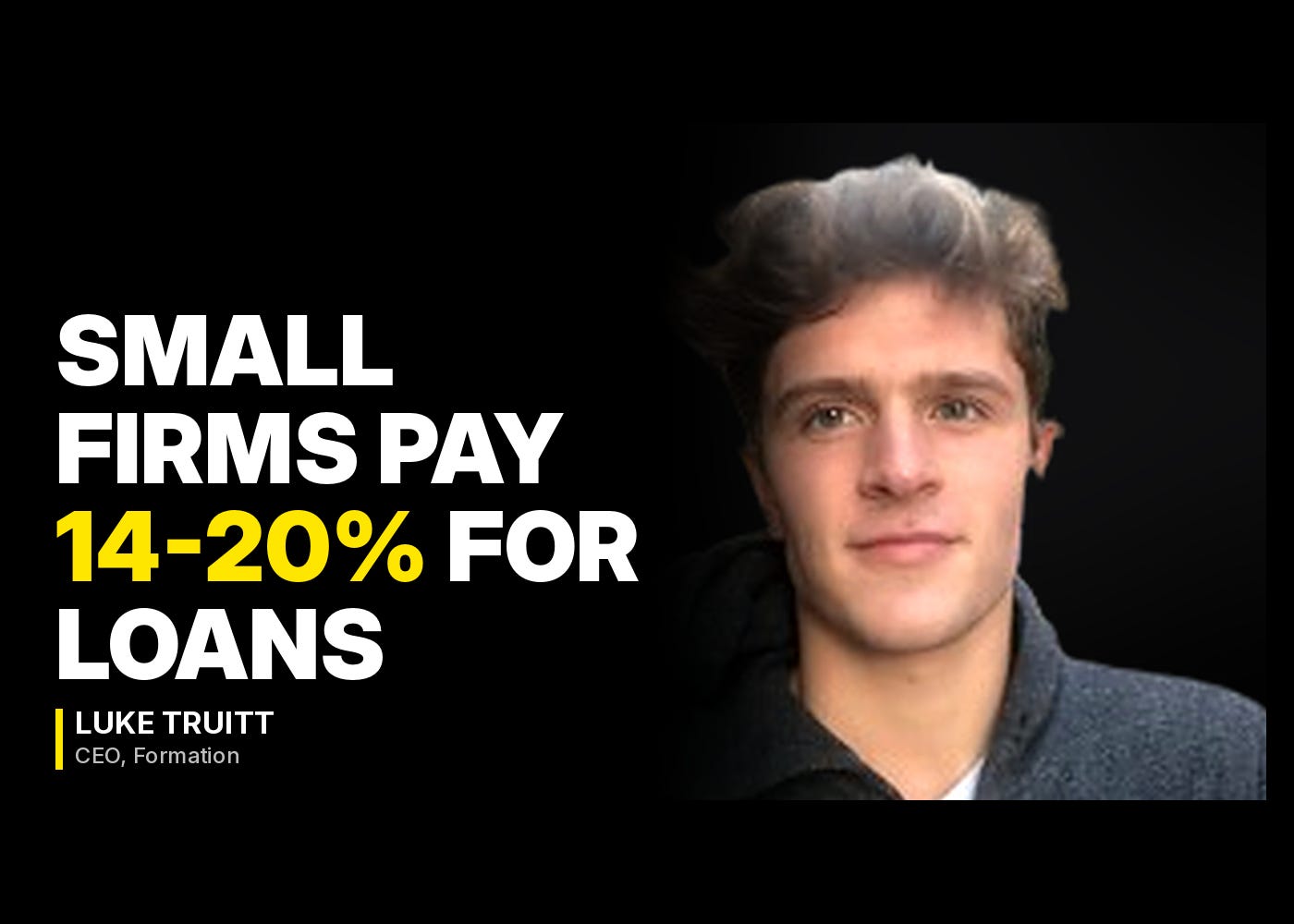
Photo via linkedin.com
Smaller data-center operators raising $10 million to $50 million pay 14% to 20% for capital that hyperscalers borrow at about 100 basis points over SOFR, Luke Truitt, CEO of Formation, told 0xResearch in the interview.
Most crypto lending protocols sell one product and compete on rates. Luke merged a lender with a trading exchange instead, on the view that credit cannot grow without a market to sell the collateral into.
"It's boring work. It's hard work, but it's something that if done correctly can turn DeFi, something that's a $10 billion market, into a trillion-dollar market." — Luke Truitt
Luke co-founded Loopscale, a fixed-rate lending platform on the Solana blockchain, with Mary Gooneratne. In October it merged with Orca, one of Solana's largest decentralized exchanges, and the combined company is Formation.
The full interview is covered here so you can skip it. 59 minutes of audio, 9 minutes of reading.
Here are the 9 arguments that matter.
0xResearch · Oct 28, 2026 · 59m · 50m saved
With Luke Truitt, CEO of Formation
Key Takeaways
Credit products stall without a secondary market, so Formation put a lender and an exchange in one company
Apollo's private credit fund on Loopscale capped out at $10–12M of deposits
Smaller GPU cloud operators pay 14–20% to borrow, against about 100bps over SOFR for a hyperscaler
Regulation can bring in new money, because the same rules crypto users find annoying make outsiders feel safe
Orca's token is the only owner of the business, which kept the merger free of a token-versus-equity fight
Formation will not run programmatic buybacks yet, and is reinvesting revenue the way an early-stage startup would
Trading revenue will pay for credit growth, because lending fees are hard to charge on a commoditized market
Yield paid to depositors is the one number to judge Formation on a year from now
1. Why a DEX and Lender Merged
The episode opened on why a decentralized exchange, where users swap tokens, would merge with a lender. Luke's answer is that Formation is meant to be a full financial-services company rather than a single DeFi product. Once someone buys an asset, they need somewhere to trade it, invest it passively, borrow against it or park it.
Formation plans to sell several products to the same issuers and users
Having all of those under one roof lets Formation sell more than one product to the same issuers and end users.
