

Kitco News · Nov 2, 2026 · 35m · 26m saved
With Bob Quartermain, Co-Chair of Dakota Gold
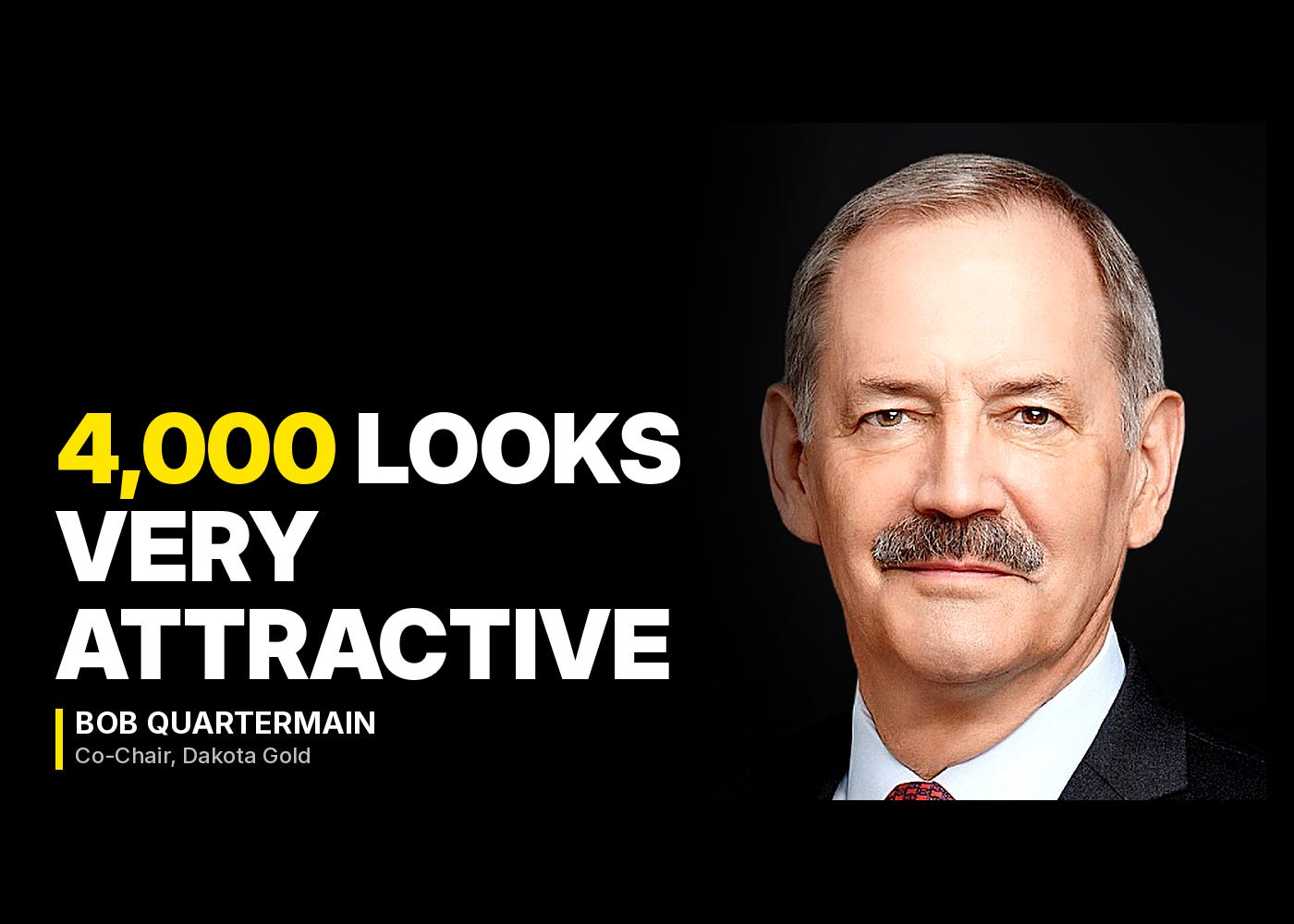
Photo via dakotagoldcorp.com
Gold fell more than $100 an ounce, back below $4,000, on the day Bob Quartermain, co-chair and largest shareholder of Dakota Gold, sat down with Kitco News at the New Orleans Investment Conference on October 30. Many investors read the drop as a warning. Bob, who has kept most of his own net worth in gold, read it as noise from a market that is still small.
"I started in the business back in 1976... gold was $140 an ounce back then. So 4,000 looks very attractive." — Bob Quartermain
Bob took the Brucejack mine from discovery to production in seven years, and he once worked at the Hemlo mine as an underground mine geologist. He is now taking Dakota Gold's Richmond Hill project in South Dakota toward production in 2029.
The full interview is covered here so you can skip it. 35 minutes of audio, 9 minutes of reading.
Here are the 11 calls that matter.
Key Takeaways
Gold miners stay profitable after the pullback because decades of low prices taught them cost control
Central banks are still buying physical gold, and gold is still moving into China
China's advantage in critical minerals is refining and separation, not digging
Gold is left off NATO's critical list because it is abundant, not because it is unimportant
Dakota Gold targets production at Richmond Hill in 2029, seven years after optioning it
Bob would rather build a mine than sell it early, because building is where the share price re-rates
1. A $100 Drop Changes Nothing
Decades of low prices taught the industry cost control, which is why Bob told Jeremy Szafron, a Kitco News anchor, that a fall of more than $100 in a day does not worry him. When gold sat near $300 an ounce, "we weren't making much money," and that discipline means miners still make money after the pullback, with costs typically between $1,600 and $2,000 an ounce.
Bob Quartermain says miners now return money to shareholders because they learned discipline
"Because of the fact that we've been so good in the industry about the discipline we've had... the miners have been returning value back to shareholders." — Bob Quartermain
Demand has not changed either. Dakota Gold's own studies assume a gold price well under the market, about $2,300 an ounce in last year's initial assessment and likely near $3,000 for the coming feasibility study, so the project works even if prices swing.
"The physical is still being bought. We're still seeing central banks buying. We still see that gold movement into China." — Bob Quartermain
