

Silicon Valley Girl · Nov 17, 2026 · 43m · 33m saved
With Adam Mosseri, Head of Instagram at Meta
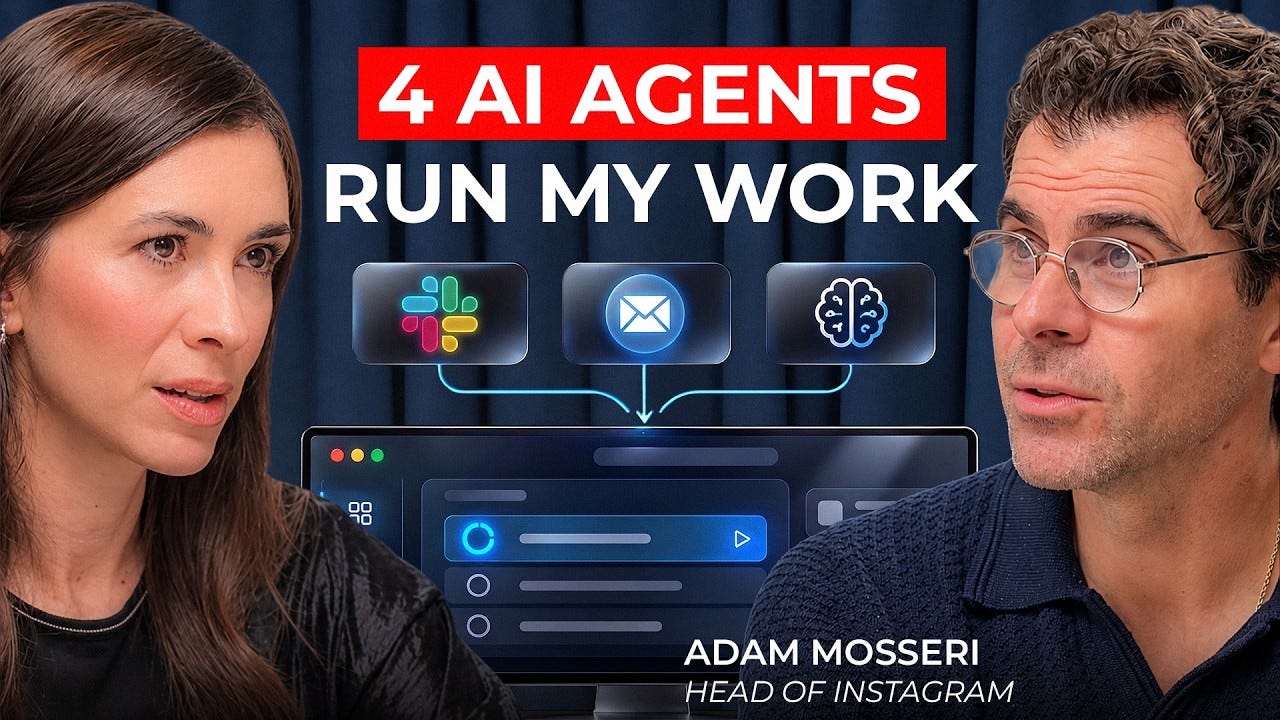
Adam Mosseri, head of Instagram at Meta, told Marina Mogilko on Silicon Valley Girl that he has built his own suite of AI tools for his job, and that every one of them shares a single memory layer he calls Custodian.
Most executives describe AI as something their company is rolling out. Adam described the tools he built for himself, why the first versions were useless, and why he distrusts the usage numbers big companies now use to measure AI adoption.
"These models are smart, but they're kind of the average of the internet out of the box. But if you can build loops to help train them, they get much more interesting." — Adam Mosseri
Adam runs an app whose team asks thousands of people a day how satisfied they are with it, so his doubts about what engagement metrics can measure come from the person who sets them.
The full interview is covered here so you can skip it. 43 minutes of audio, 10 minutes of reading.
Here are the 11 lessons that matter.
Key Takeaways
Adam's AI meeting briefings were useless until the tool graded itself against what he cared about
One shared memory layer sits under every AI tool he uses, so none has to relearn who he is
He hires for trajectory over current ability, and builds for growing markets over bigger shrinking ones
Heavy token use is a coin flip between real productivity and wasted money
Adam has seen no link between how easy a signal is to measure and how valuable it is
Reach is a means, not an end: a small audience like Acquired's can be worth more to advertisers
What Instagram can build is capped by talent density, not headcount
1. Briefings Must Self-Grade
Adam's first AI meeting-briefing tool did not work. It produced more to read and nothing he could use.
Adam Mosseri's first AI briefing tool added reading without adding value
"It was garbage. It was like more stuff to read, and it helped me zero." — Adam Mosseri
The fix was a feedback loop. After each meeting, the agent now collects the product manager's recap email, the AI meeting notes, Adam's own notes and the related Slack threads, then grades its briefing against what he actually cared about. He said it took a month or two of that loop before the briefings became useful, which is the point of the quote that opens this summary.
