

CNBC International · Sep 26, 2026
With Michael Mertin, CEO of AT&S
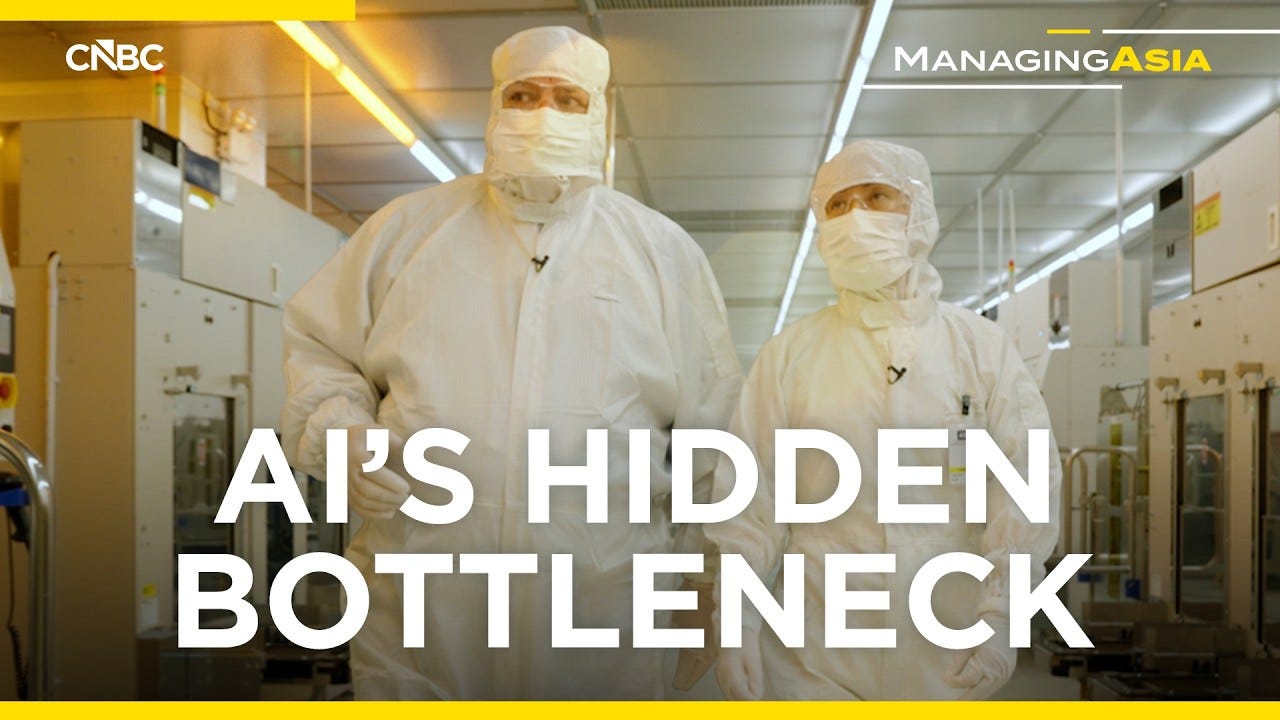
AT&S could sell 20 to 25% more of its chip substrates right away if it had the factories to make them, its chief executive, Michael Mertin, said.
A couple of years ago the substrate market was under pressure from overcapacity, the host noted. Mertin said the substrate, the layer that connects a processor to its memory and to the circuit board, is now the limiting factor on how fast AI chips can pass data to each other.
"Communication between the components becomes key, and this is the substrate — the substrate and the entire technology around that."
Michael Mertin, CEO of AT&S, on CNBC International's Managing Asia, is a physicist by training who runs an Austrian company whose Malaysian plant was built for AMD and which, the host said, booked nearly €1.8 billion of revenue in the year to March 2026. He showed the host around the clean room at the company's Kulim complex in Malaysia.
The full interview is covered here so you can skip it.
Here are the 13 insights that matter.
Key Takeaways
The substrate, not the chip, now limits AI performance, Mertin said
Chips calculate so fast that the substrate's communication speed is the limit
AT&S could ship 20 to 25% more today if it had the capacity
Customers pay the premium, and complain, because they co-develop the product with AT&S
Metal-cost increases have to be passed along the value chain, or the industry breaks down
A second big site in Malaysia is meant to serve about five of the world's big customers, not only AMD
No US plant is planned: wet chemical processes and large workforces are easier to run in Malaysia and China
AI in the plant means more output with the same number of people, not fewer people
His biggest lesson: most employees are more capable than management expects
1. A Blood-and-Nerve System
In the clean room, Mertin held up a current-generation substrate for AI systems and explained what it does.
Tens of thousands of contact points connect chips and memory
"So what you see on the surface are ten thousands of metal bumps." — Michael Mertin
He said the connection points in the middle serve a processor and those around the edge serve memory and input-output devices. The back of the substrate is bonded to a larger printed circuit board, and the processors sit on the front.
It carries power and data
"It's a kind of blood-and-nerve system." — Michael Mertin
Just as blood brings oxygen and sugar to cells, he said, the substrate brings electrical energy to the chips. The components are packed densely because they have to communicate at very high speeds.
"And this is what the substrate also is doing: it connects hundreds of thousands of information points to each other." — Michael Mertin
