

Fintech One-On-One · Nov 12, 2026 · 31m · 24m saved
With Damien Dugauquier, Co-Founder and CEO of IPID
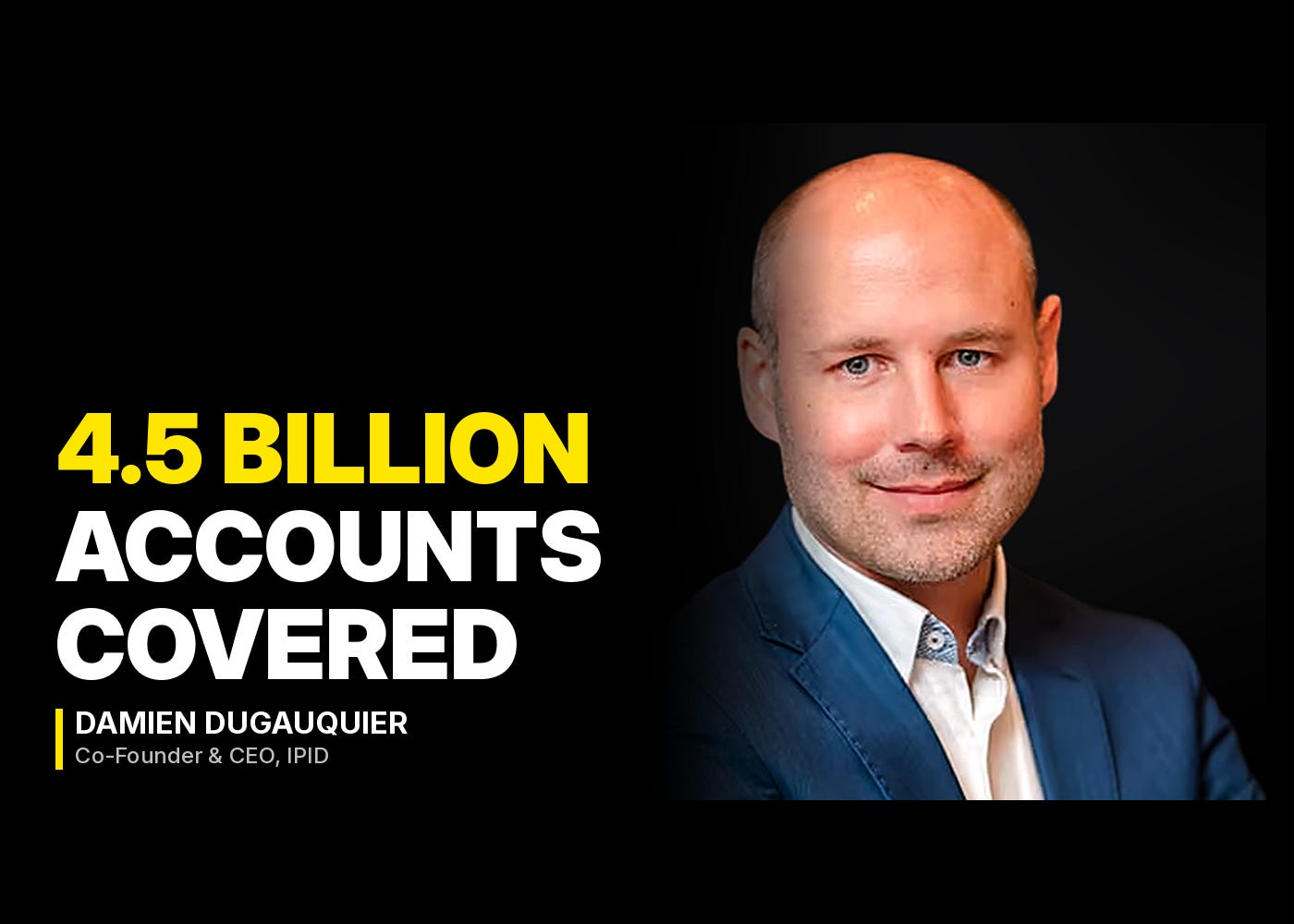
Photo via ipid.tech
Damien Dugauquier, co-founder and CEO of IPID, told Peter Renton on Fintech One-On-One that most delay in a cross-border payment happens at the very end of its journey. It is not the banks passing it along that slow it down. Most people assume too many intermediaries cause the delay. Damien's own decade inside SWIFT's data desk showed him the opposite.
"Most of the delay is not so much between the intermediaries. Most of the delay is at the end, and it is because of data issues." — Damien Dugauquier
A conversation with the global head of payments at a large Australian bank is what pushed Damien to found IPID: the bank's highest-return projects were never the ones that made a payment faster or cheaper, only the ones that made it more certain.
The full interview is covered here so you can skip it. 31 minutes of audio, 7 minutes of reading.
Here are the 5 lessons that matter.
Key Takeaways
Most cross-border payment delay happens at the end of the journey, from bad recipient account data, not between intermediaries
IPID was built as a separate company from SWIFT on purpose, so it could verify any payment rail rather than favor correspondent banking
One proof-of-concept flagged accounts a simple name check had already passed as previously tied to fraud
IPID's data network spans 4,500 institutions and about 4.5 billion accounts — its reach, not its customer count
The UK's Confirmation of Payee cut misdirected-payment fraud by 50% between 2020 and 2025, while cross-border fraud more than doubled over the same stretch
Each failed cross-border payment costs a large US bank more than $100 to fix, which is the business case even with no regulatory mandate
IPID's verification is passive and adds no friction, and the company is now building the same model for stablecoin wallets
1. Where Payments Break
Damien, originally from Brussels and now splitting time between Singapore and New York, spent more than a decade on SWIFT's data side, watching cross-border payments from the inside.
SWIFT's own data showed Damien that delay sits at the end of a payment, not in the middle
"Most of the delay is not so much between the intermediaries. Most of the delay is at the end, and it is because of data issues." — Damien Dugauquier
A bank's highest-return projects were never the ones that sped payments up
"The projects with the highest return on investment were not projects where we increased the speed or decreased the cost. It was always projects where we made customer experience better... more certain." — Damien Dugauquier
That conversation, with the global head of payments at a large Australian bank, is what pushed Damien to found IPID as infrastructure that pre-verifies a payment before the money moves.
