

Cheeky Pint · Nov 3, 2026 · 59m · 49m saved
With Scott Nolan, Co-Founder and CEO of General Matter
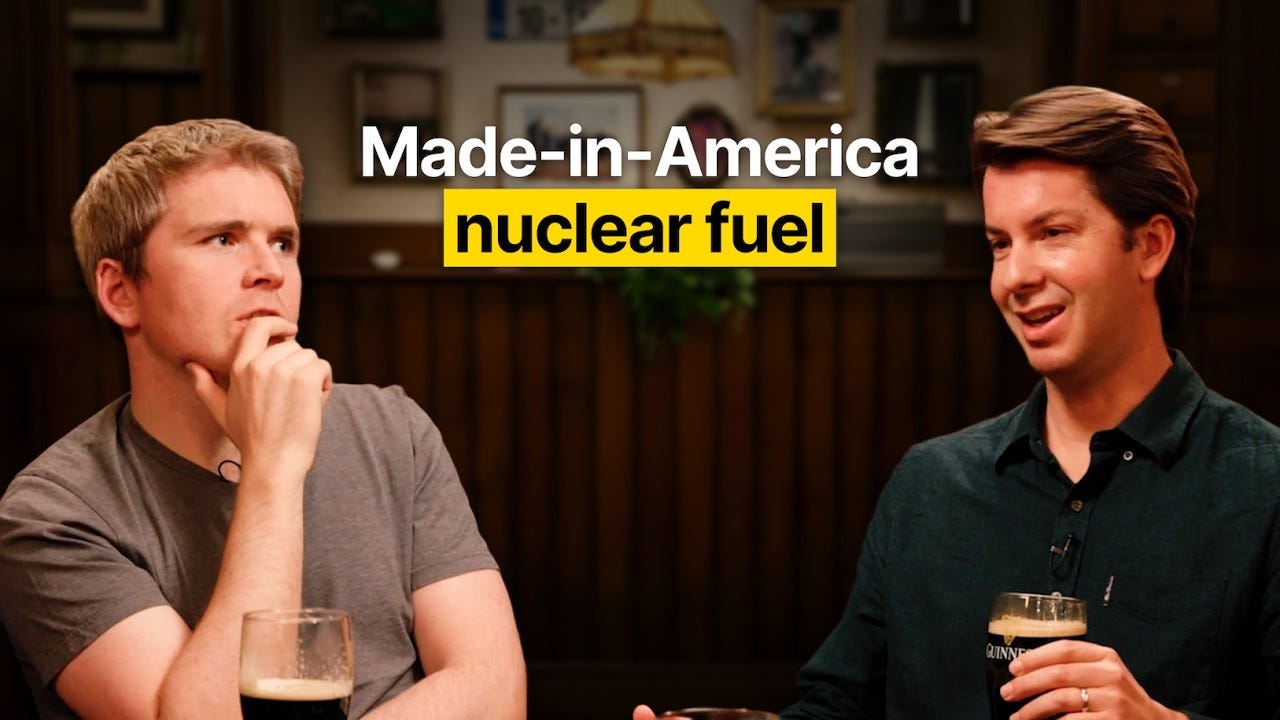
Nearly every US reactor, from the 94 plants that make 20% of the country's power to the newest startups, buys its enriched uranium from Russia or Europe. No American company produces it commercially. Scott Nolan, co-founder and CEO of General Matter, told Stripe co-founder John Collison on Cheeky Pint that he learned this as an investor, not as an engineer.
At Founders Fund, Scott assumed licensing was the hardest problem for the advanced reactor startups he backed. Their founders told him it was something else.
"I asked them, 'What's the hardest thing you have to do?' I was like, 'Licensing, obviously.' They said, 'No, it wasn't licensing. It's actually getting the fuel.'" — Scott Nolan
Scott joined SpaceX as an intern in 2003 and worked on the early Dragon capsule before he became a partner at Founders Fund. General Matter, which he co-founded in late 2023, now has about 200 people, a $900 million federal award and a license application in front of the Nuclear Regulatory Commission.
The full interview is covered here so you can skip it. 59 minutes of audio, 10 minutes of reading.
Here are the 10 takeaways that matter.
Key Takeaways
Fuel, not licensing, holds back US advanced reactors, and no US company enriches uranium commercially
A ban on Russian uranium imports takes effect on January 1, 2028
Small reactors need fuel enriched to just under 20%, which makes a factory-built core possible
Interest costs, not safety scares, made nuclear plants unaffordable, in Scott's account
"20% of Vogtle's cost overruns were interest rate overruns"
Nuclear's long-term rival for data centers is solar in orbit, Scott says, not solar plus batteries
General Matter chose Paducah, Kentucky, after looking at more than 1,000 plots in over 10 states
Speed is how small teams beat incumbents, which is why Scott backed SpaceX when it was at most 1/1,000th the size of its rivals
1. Fuel Is the Real Bottleneck
The US still mines small amounts of uranium, but most supply comes from Kazakhstan and Canada. It is converted to gas, has historically been enriched abroad, and comes back as finished fuel. Congress cut off one of those enrichment sources in 2024.
A ban on Russian uranium starts in 2028, and General Matter wants to fill the gap
"In mid-2024, Congress passed a ban on imports of Russian uranium. That ban goes into effect January 1st, 2028... Our first mission as a provider is produce HALEU before the end of the decade for all these reactors." — Scott Nolan
HALEU is high-assay low-enriched uranium, enriched to just under 20% uranium-235. Scott put the gap the ban leaves at about a quarter of US enrichment demand. He said the company began with that bottleneck, not with a plan to found something.
Scott started General Matter because fuel was the constraint his portfolio kept hitting
"It wasn't a desire to start a company... It was: What thing is actually holding back the nuclear industry? What is the bottleneck?... It's fuel." — Scott Nolan
