

Y Combinator Startup Podcast · Nov 18, 2026 · 54m · 47m saved
With Eric Glyman, Co-founder and Co-CEO of Ramp
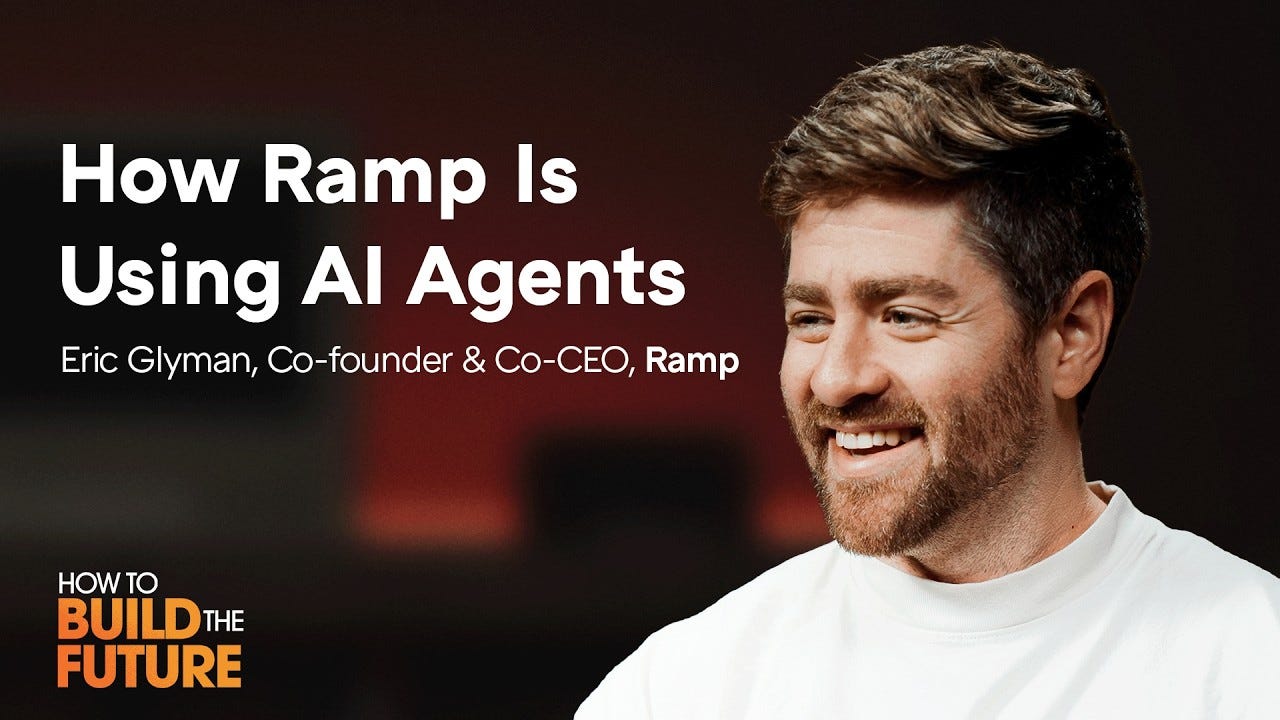
Eric Glyman's first company scanned users' email receipts and automatically requested refunds when prices dropped. Capital One bought it after it hit nearly a million daily users in a year — and two and a half years inside Capital One taught him what not to build next.
"The whole question was how do you get people to this aha moment where finally you see it and you understand it and you never want to go back." — Eric Glyman
Eric and co-founder Karim Atiyeh started Ramp on the opposite thesis: a financial company that competes by saving customers money rather than extracting fees from them.
The full interview is covered here so you can skip it. 54 min of audio, 6 min of reading.
Here are the 6 takeaways that matter.
Key Takeaways
Eric's first company, Paribus, taught him that card issuers profit from reward points customers never redeem
Capital One bought Paribus after it reached nearly a million daily users in a year
Ramp just hit a $60 billion valuation, which Eric calls "the end of the beginning"
The median Ramp customer saves 7.5% of expenses annually
The top 1% of Ramp's employees use 80% of its AI-token spend and became "100x engineers"
Ramp froze hiring for a full quarter so AI adoption would become "your core competency," not "5% of your time"
Ramp's coding agent, Inspect, now generates more than 85% of all pull requests
Non-engineer-authored pull requests went from "functionally zero" two years ago to 7,000 in one recent quarter
Eric says "Jevons paradox broke" for AI over the last two months — cheaper intelligence stopped driving proportionally more usage
He reads this as evidence for a future of many hyper-specialized firms, not one AI lab capturing all the value
Eric says any company that believes in 100x engineers "must start thinking about AI harnesses" — Ramp's own is called Glass
1. From Paribus to Ramp
Eric built Paribus (Y Combinator, 2015) as what he calls an early "prehistoric AI agent" — it scanned users' email receipts and automatically requested refunds when a price dropped. Capital One acquired it once it hit nearly a million daily users within a year.
Two and a half years inside Capital One convinced Eric that card issuers' core incentive is getting customers to spend reward points without redeeming them
Unredeemed points are pure margin for the issuer, Eric says — an "anti-lesson" that became Ramp's founding thesis with co-founder Karim Atiyeh: a financial company could compete by genuinely saving customers money rather than extracting fees. Ramp "declined the purchase" directly, rather than only detecting waste after the fact the way Paribus could, through email requests to customer service.
