

PBD Podcast · Oct 29, 2026 · 1h 30m · 82m saved
With Tarek Mansour, Co-founder and CEO of Kalshi
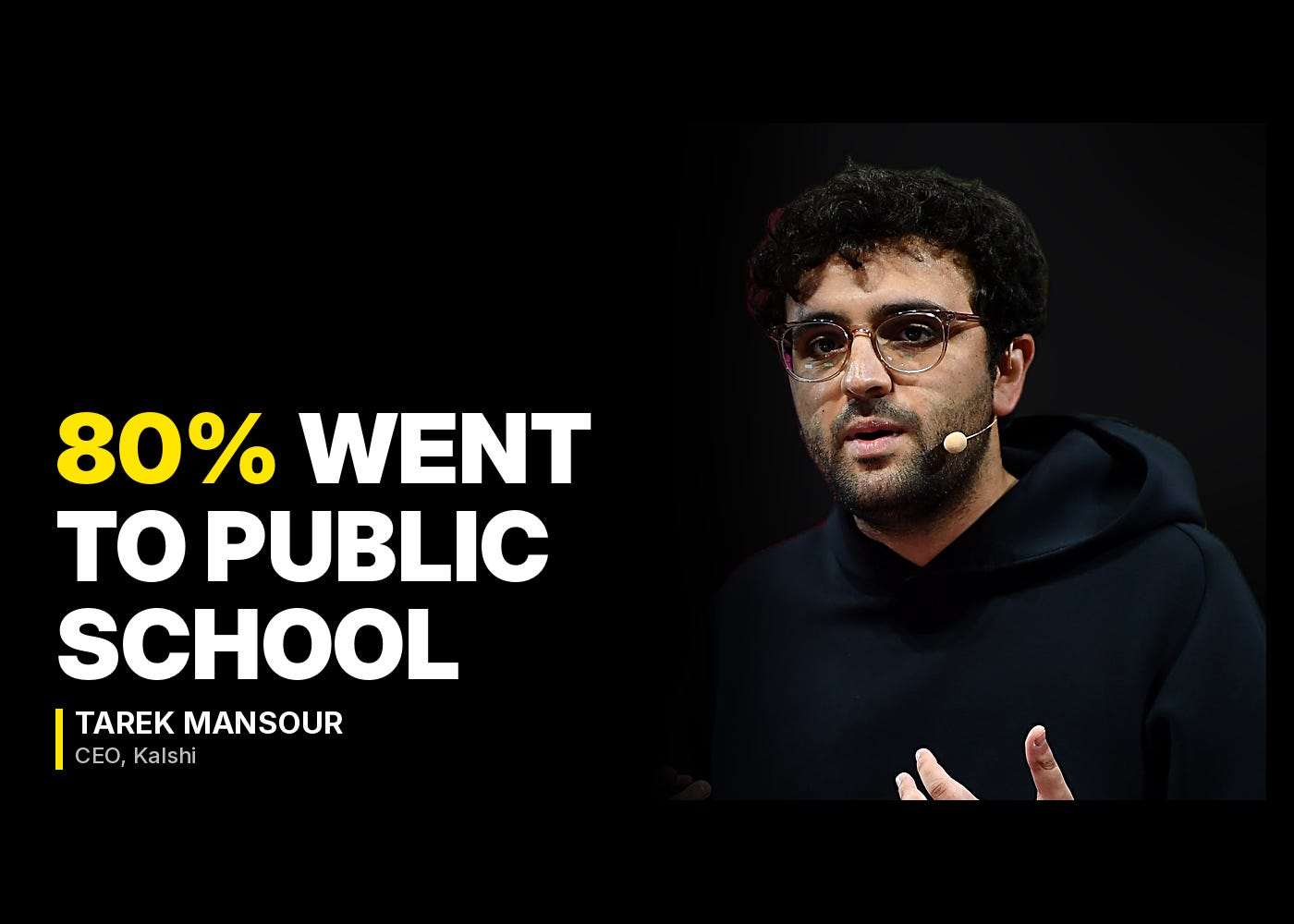
Photo: Web Summit, Diarmuid Greene, CC BY 2.0 via Wikipedia
Tarek Mansour interned on Goldman Sachs' equity derivatives desk in 2016 and watched institutional clients ask simple directional questions that Wall Street could only answer with complex products. The 2016 "short the S&P" Trump trade proved the gap: he won, the market rose, and everyone who had the right view lost money on the trade meant to express it.
"So that's what a lot of people did. Come November, he won. People were right about the prediction when the S&P went up. They all lost money." — Tarek Mansour
That gap is why Tarek built Kalshi instead of staying in banking. Nearly a decade later, Kalshi does roughly $1 trillion a year in annualized volume, and Tarek told Patrick Bet-David the business looks nothing like a sportsbook, however much the headlines compare the two.
The full interview is covered here so you can skip it. 90 minutes of audio, 8 minutes of reading.
Here are the 7 takeaways that matter.
This Scuttlebutt Summary is available in full to premium subscribers. If you're not one already, please consider subscribing to keep reading.
Key Takeaways
Kalshi takes 0.7% per trade regardless of outcome, the opposite of a sportsbook's incentive
A sportsbook's revenue is its customers' losses, so it bans winners
A February Fed paper validated Kalshi's crowd-sourced forecasts over Wall Street's own
Kalshi's forecasts on inflation, rates and GDP beat Wall Street's in that comparison
A $1.5-2 million manipulation attempt corrected itself in nine seconds
Tarek calls deliberate manipulation a prosecutable financial crime
He'd make the disputed death-clause call again — a market settles at its pre-event price if someone dies
Kalshi runs $1 trillion a year in volume on about 250 employees
Tarek credits AI with letting him flatten management layers
1. Not a Pundit, a Market
Two things convinced Tarek that markets, not more punditry, were the fix for the gap he saw at Goldman. Philip Tetlock's Superforecasters found ordinary, engaged amateurs out-predicting credentialed geopolitical experts, and the University of Iowa's 1990s election-betting market showed the format already worked.
Markets have a financial incentive to converge on truth that pundits don't
"What is a market? The market is a place that aggregates a large number of... diverse participants, people from all walks of life, to trade on their difference of opinions." — Tarek Mansour
Get a prediction right on Kalshi and you make money; get it wrong and you lose it, with no partisan lens built into the mechanism. Tarek traces the idea further back than Tetlock, to economists theorizing about information markets after World War II.
"A lot of economists love the idea of information markets, dating back to World War II... they would talk about the idea that market prices are the only form of truth." — Tarek Mansour
