

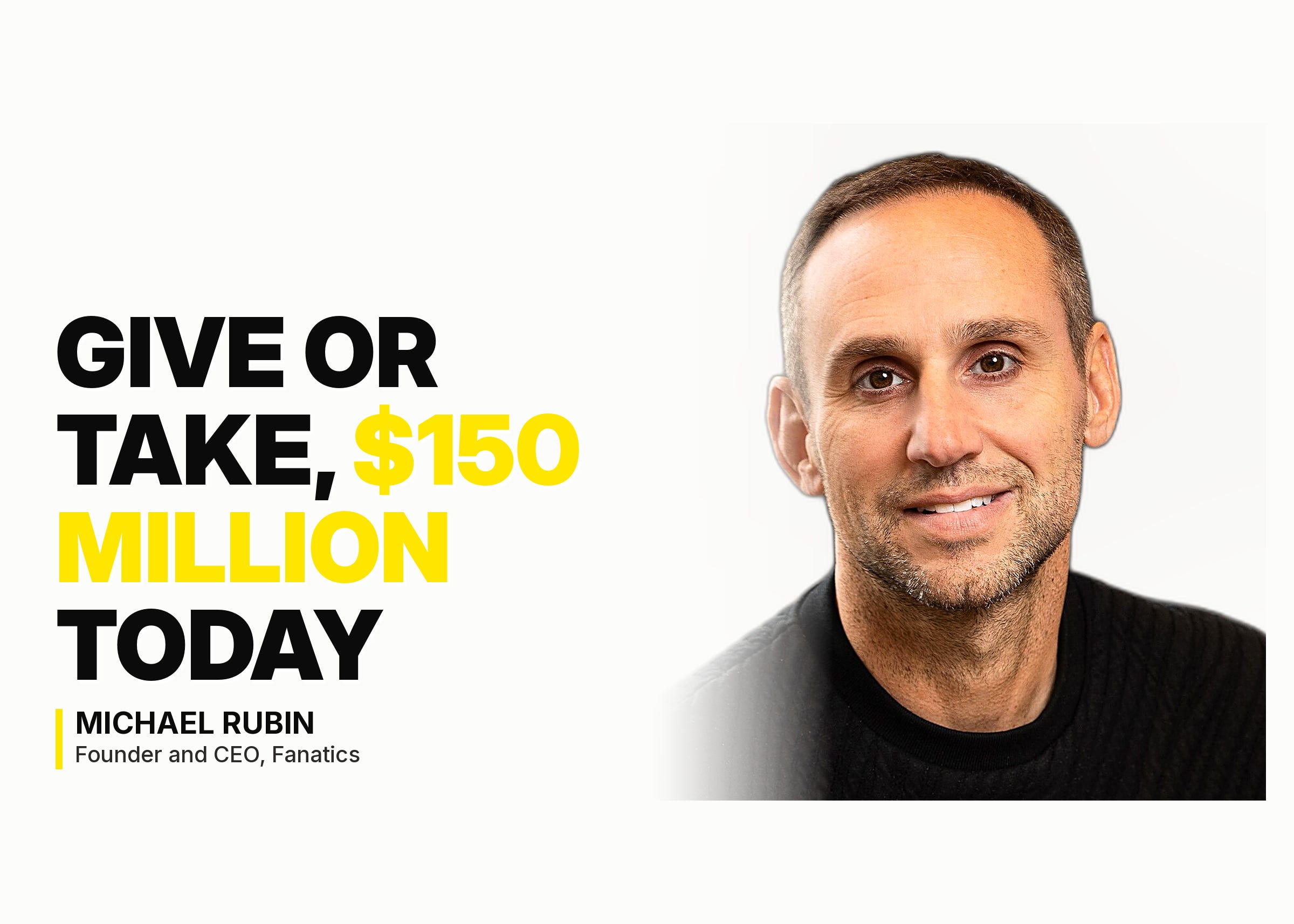
Michael Rubin, founder and CEO of Fanatics, said the sports leagues probably made about $30M a year from trading cards before Fanatics took over the business. He said they probably make about $150M today.
That was one interview. The other 8 tonight included VanEck's CEO on a model of AI computing demand through 2030, and QI Research's CEO on why the Fed's September rate hike was a mistake.
"There are 5.5 billion instant deliveries happening in the US right now. There's actually demand for 50 billion." — Keller Cliffton, Co-Founder and CEO at Zipline, on a16z (Read summary)
We scanned 821 shows and 8 hours of audio, wrote 9 summaries, and pulled 21 quotes into this 6-minute read.
Here is what mattered.
Macro
VanEck's CEO says growth, more than inflation, took the 10-year yield to 5.25%
"I think that 10-year interest rates went to five and a quarter percent because of economic growth primarily, maybe a little bit because of inflation." — Jan van Eck, CEO at VanEck, on Monetary Matters (Read summary)
DiMartino Booth calls the September hike a mistake the Fed will reverse in 2027
"I think it was a mistake for the Fed to raise rates in September, and I think that they're going to be backtracking in 2027 and lowering rates." — Danielle DiMartino Booth, Founder and CEO at QI Research, on The Disciplined Investor (Read summary)
Only about 1 in 4 unemployed Americans collect state benefits, DiMartino Booth says
"Only about one in four is collecting state unemployment benefits. So when you see continuing claims on a weekly basis, understand you're only seeing a quarter of the pie." — Danielle DiMartino Booth, Founder and CEO at QI Research, on The Disciplined Investor (Read summary)
Financials
Faber says a market-cap index fund is a trend-following strategy
"Market cap weighting indices are trend-following indexes at their very core. There is one single variable in a market cap index, which is price of stock times shares outstanding." — Meb Faber, Co-Founder and CIO at Cambria Investment Management, on Excess Returns (Read summary)
Cambria's polls found 75% of individuals misunderstand how dividends work
"We spent thousands of dollars to run a bunch of polls... 75% of individuals don't understand how dividends work. You get a dividend payment, they think the stock doesn't go down." — Meb Faber, Co-Founder and CIO at Cambria Investment Management, on Excess Returns (Read summary)
Crypto and Digital Assets
A dealer's own system blocked a Saturday repo trade, Digital Asset's co-founder says
"We did a Saturday repo and one of the dealers couldn't punch the trade because their system actually prevents them from entering trades on an off day." — Eric Saraniecki, Co-Founder and Head of Network Strategy at Digital Asset, on The Rollup (Read summary)
Saraniecki names 5 trading firms that are big in both traditional markets and crypto
"Virtu, Citadel, DRW, Jump, Jane Street — these guys are on both sides... They are the biggest names in TradFi, they're the biggest names in crypto." — Eric Saraniecki, Co-Founder and Head of Network Strategy at Digital Asset, on The Rollup (Read summary)
Verifying payments costs $4T a year that Bitcoin could avoid, Scaramucci says
"You have $4 trillion spent per year globally in verifying transactions — wire fees, credit card fees. Over the Bitcoin network, I could just link my wallet to the waiter's wallet and make that transfer directly without paying those fees." — Anthony Scaramucci, Founder and Managing Partner at SkyBridge Capital, on The Rest Is Money (Read summary)
Tether and Circle hold more Treasuries than Germany or Japan, Scaramucci says
"Tether and Circle have more US Treasuries on their balance sheet than Germany and Japan." — Anthony Scaramucci, Founder and Managing Partner at SkyBridge Capital, on The Rest Is Money (Read summary)
Alternatives and PE
Van Eck says the market fixed on Blue Owl's redemptions and pushed it below its IPO price
"Blue Owl got to the point where it was trading below its IPO price — below where it was when it had a third of the assets under management... the market focused 99% of its attention on redemption requests, as if 300-plus billion were going to zero." — Jan van Eck, CEO at VanEck, on Monetary Matters (Read summary)
Consumer
Netflix loses 2% of subscribers a month, half the streaming average, Simon says
"Monthly churn — the amount of people on any given month who are cancelling their subscription — is 2%, which is the lowest of any streamer, and it's half the industry average of 4%." — Simon, presenter of the Mr Beat-Up stock segment at Equity Mates, on Equity Mates
Renehan expects Amazon, not pure streamers like Netflix, to win on scale
"I actually disagree on scale when you look at it just as a streaming industry... it's actually the companies that are not purely streaming businesses that will win... Amazon can spread it over two businesses that are going to be trillion-dollar revenue businesses soon in AWS and e-commerce." — Alec Renehan, Co-Host at Equity Mates, on Equity Mates (Read summary)
Sports
Leagues probably make about $150M a year from cards, up from about $30M, Rubin says
"They were probably making, give or take, $30 million. They're probably making, give or take, $150 million today." — Michael Rubin, Founder and CEO at Fanatics, on David Senra (Read summary)
Fanatics won the card rights by guaranteeing leagues their best year and a cut of eBay resales
"We'll guarantee you the high watermark of the business. We'll give you a higher royalty rate... and oh, by the way, you don't make any money on the sales that happen on eBay. We're going to cut you in on that." — Michael Rubin, Founder and CEO at Fanatics, on David Senra (Read summary)
Fanatics' sportsbook no longer lets a bet lose because a player got hurt mid-game
"Anytime your player gets hurt in a game, we're going to take them out of the player pool, and bets that would have lost now don't lose. Tens of millions of bets that would have lost now don't lose." — Michael Rubin, Founder and CEO at Fanatics, on David Senra (Read summary)
Technology & AI
Shopping became a bigger use of Meta's Muse agent than its team predicted
"I did not think shopping was going to be as big of a use case as it's become. Like, I would not have predicted that." — Mona Sarantakos, VP of Product at Meta Superintelligence Labs, on Lenny's Podcast (Read summary)
Word of mouth, not advertising, got new Muse users started, Sarantakos says
"The most effective lever out there is word of mouth... no matter how much advertising we did, it didn't quite resonate until they saw somebody else that they related to using it." — Mona Sarantakos, VP of Product at Meta Superintelligence Labs, on Lenny's Podcast (Read summary)
VanEck's usage model projects 62 gigawatts of AI computing demand by 2030
"In the first year, usage goes up eight times, and then another 25% a year after that... you end up with 62 gigawatts of compute in 2030, which is exactly the same as the industry expectation." — Jan van Eck, CEO at VanEck, on Monetary Matters (Read summary)
Industrials and Transport
Zipline's Rwanda blood deliveries cut postpartum hemorrhage deaths by 51%, a Penn study found
"The University of Pennsylvania recently published some research showing we reduced maternal mortality from postpartum hemorrhage by 51%." — Keller Cliffton, Co-Founder and CEO at Zipline, on a16z (Read summary)
Nuggets of Wisdom
In 2008 Rubin's $250M of stock fell to $25M and his borrowing limit to $4M from $50M
"The stock went down by 90%. My $250 million stock's now worth $25 million. The advance ratios went from 40% to 15%, and now I'm able to borrow $4 million instead of the $50 million I was able to borrow before." — Michael Rubin, Founder and CEO at Fanatics, on David Senra (Read summary)
If this was worth your time, send it to someone who has to follow all of this too.
What did you think of today’s edition? Hit ‘reply’ to this email, send us a message, leave a comment, or join the chat!
Get the latest market chatter as it happens: