

Algy's Investment Podcast · Nov 12, 2026 · 57m · 50m saved
With Archie Norman, Chairman of Marks & Spencer
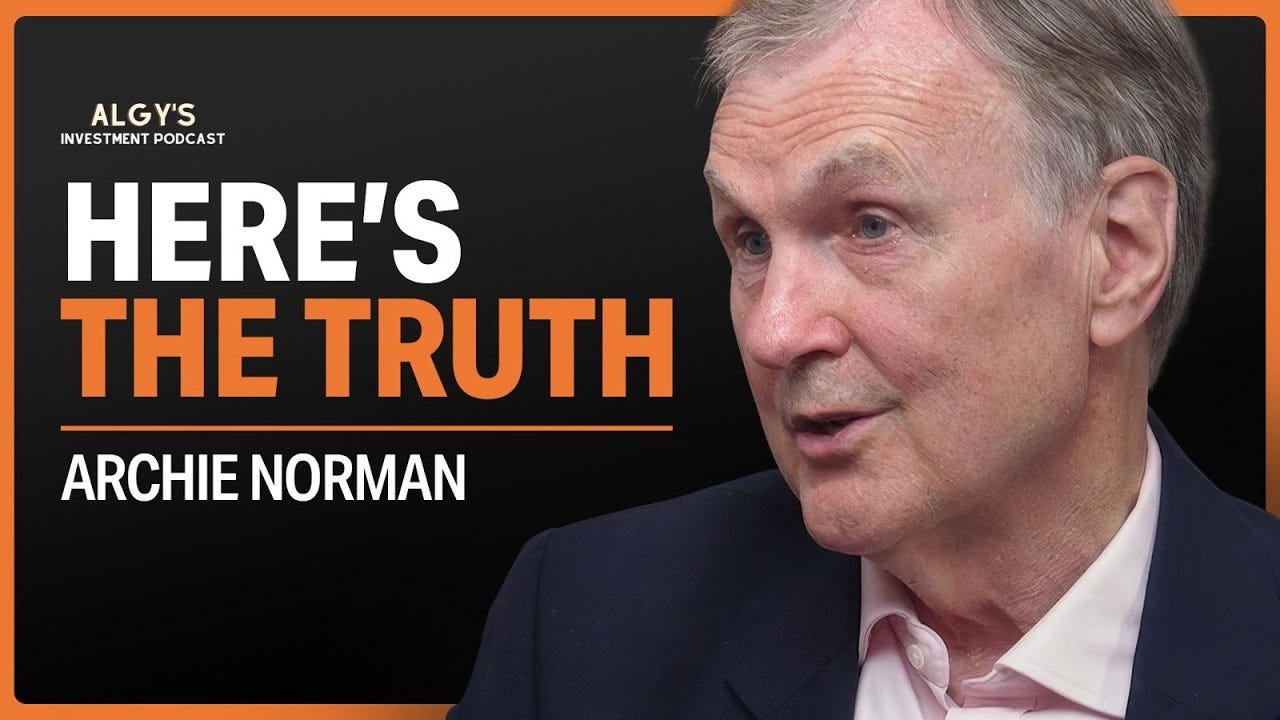
Marks & Spencer's shares have roughly doubled since Archie Norman became chairman in 2017, from about 180p to around 380p. Most new chairmen arriving at a struggling retailer reassure the board the business is basically fine; Archie told Algy Smith-Maxwell on Algy's Investment Podcast that he did the opposite.
"There may be no future for M&S. It's that important. You're on a burning bridge. Unless you change as a business, you can die." — Archie Norman
Archie turned around Asda in the 1990s and chaired ITV through its own recovery before taking the M&S chair in 2017, which is why the board believed him when he said the business had to change.
The full interview is covered here so you can skip it. 57 minutes of audio, 7 minutes of reading.
Here are the 10 lessons that matter.
Key Takeaways
Archie refused the chairman's office on his first day, and the walled executive offices came down within six months
About 35 people he has hired went on to become CEOs or chairmen, though roughly one in five hires "hasn't worked out at all"
Turning M&S around required replacing roughly half the organization, because "people changing means changing people"
M&S's food business has ranked in the UK's top two or three food retailers for six years, built on fresh, short-shelf-life product
Fashion's online sales have grown from 17% to 34%, with a target of 50%, as the store estate shrinks from 225 toward about 180
Archie is roughly doubling M&S's investment rate and expects AI to add jobs at M&S, not cut them
1. A Culture That Hid Bad News
Archie arrived at Marks & Spencer in 2017 to chair a company that had drifted through five changes of chief executive in two decades (Rick Greenbury, Roger Holmes, Luc Vandevelde, Stuart Rose and Marc Bolland) without fixing its deeper problems.
Directors never heard what was actually going wrong
"People don't put up their hand when they see something going wrong... they manicure the presentation. So the board doesn't really hear what's actually happening." — Archie Norman
Failed projects had taught people not to raise their hands, in his account, so presentations reached the board already smoothed over. He found a business that had lost confidence rather than lost its purpose.
The business still had "a soul," but had turned defensive
"What I found is a company with a soul... but it had lost its way, become defensive, hierarchical, resistant to change." — Archie Norman
